
Reviewed · WALKING TOURS
German Footprint & Nazi presence – Walking Tour in Bariloche
Bariloche is famous for snow, lakes, and resorts, but this tour is the German footprint side of the story, including the harder parts of the Nazi presence after World War II. You’ll walk the historic center and hear how immigrant communities shaped the town’s identity over time.
I especially like two things. First, the guide, often Diego (or Federico), tells the story with clear pacing and strong English, so you actually stay with it for the full 90 minutes. Second, the route is built around real places you can see from the street, so the history feels grounded in Bariloche instead of stuck in a textbook.
One consideration: there’s some walking on city streets and occasional inclines, and if your departure ends up on the larger side, street noise can make it harder to catch every word. Plan your energy, and bring your questions.
Key things you should know before you go
- 90 minutes in the historic center: a tight route that gives you context fast
- Story-first guiding: Diego or Federico lead with clear English and strong narration
- Honest, respectful framing: difficult topics are handled with facts and a level tone
- Street-level sights: you learn by looking at historic buildings and neighborhood layout
- Small-group feel, but watch group size: one review noted a group that felt too big for comfort
- Some inclines: it’s not a flat stroll, so comfortable shoes matter
Why German immigration shaped Bariloche in the first place
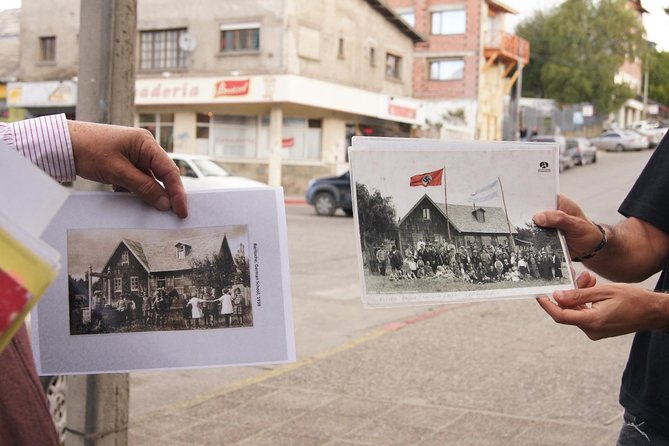
This tour makes one big idea feel obvious: Bariloche did not become what it is today by accident. German-speaking immigration helped steer the town’s early growth, culture, and architecture, and that influence is visible even if you think you are just sightseeing.
What makes it worth your time is the balance. You’re not only hearing about the friendly side of settlement, you’re also learning how communities connect to later, darker history. The guide’s approach, especially with Diego, is often described as factual and respectful, including the controversy around Nazi-era movements and post-war settlement.
If you’ve come for the lakes and mountains, this is a smart “off the beaten ski path” add-on. It helps you understand why Bariloche feels the way it does when you’re walking through town afterward.
More Walking Tours in Bariloche:
- Bariloche: German Immigration and History Walking Tour
★ 4.8 · 169 reviews - Nahuel Huapi Lake Cruise with Victoria Island and Arrayan Forest Walk
★ 3.5 · 50 reviews - Buenos Aires Hop-On Hop-Off Bus, Free Walking Tours & Discounts
★ 4.5 · 2,218 reviews
Meeting at Secretaría de Turismo Bariloche and how the walk flows
The tour starts at Secretaría de Turismo Bariloche, Informes Turísticos, Libertad 56 (right in the town area). It ends back at the same spot, which is convenient if you want to keep your day flexible after the walk.
It’s designed for a wide range of travelers, and you don’t need special gear. That said, it’s still a walking tour in the city center. I’d treat it like an urban stroll with historical stops, not a museum with chairs every two minutes.
Also, the tour is typically a private experience for your group, which usually means you can ask questions without yelling over the crowd. Still, one review mentioned street noise and a group that felt too large, which is your reminder that group size can affect how much you catch.
Centro Civico: where Bariloche’s foundation story begins
You kick off at Centro Civico, and this is where the tour sets its foundation. You learn where, when, and how Bariloche’s early development was influenced by German-speaking immigration.
This first stop matters because it gives you a framework before you start seeing specific buildings. Without that context, the streets can look pretty but feel disconnected. With it, you start noticing patterns: how institutions, neighborhoods, and prominent structures often reflect who had the resources, the networks, and the intention to shape the town.
Good to know: there’s no admission required here, so you spend your time listening and orienting yourself rather than waiting in lines.
Club Andino Bariloche (CAB): historic architecture and neighborhood implications
Next you move toward Club Andino Bariloche (CAB), focusing on the historic area around it. Even from the outside, you get a sense of how the German-speaking community’s presence threaded into Bariloche’s visible institutions and local identity.
The value of this stop is how it connects the dots. The guide doesn’t just point at a building and say it is old. He links it to the broader story of settlement and how those early communities influenced the shape of the town around them.
No entry ticket is needed since you’re viewing from outside, so this part stays efficient. The trade-off is that you are relying on the guide’s storytelling to do the heavy lifting, which is exactly why the English delivery matters so much.
A few more Bariloche days worth comparing
- Bariloche: 7 Lakes & San Martin de Los Andes Road Trip
★ 4.5 · 624 reviews - Bariloche: Circuito Chico with optional Cerro Catedral
★ 4.5 · 316 reviews - Fly Fishing Bariloche
★ 5.0 · 305 reviews - San Martín de los Andes por 7 Lagos
★ 4.4 · 155 reviews
Primo Capraro Institute: a turning point in German influence
At the Primo Capraro Institute, you hear about a key historic moment, described as a breakthrough in German influence in Bariloche and Argentina. Like the CAB stop, you’re not buying tickets or going inside, but you are learning why this location is part of the bigger timeline.
This is one of those stops that works well if you like cause-and-effect history. You’ll start to understand how specific events and institutions helped immigration influence move from “a community here” to “a visible part of the national story.”
Because it’s another street-facing moment, the experience is highly dependent on the guide’s clarity. In the reviews, Diego and Federico are repeatedly praised for strong organization and the way they answer questions thoughtfully, which is what you want on this kind of exterior stop.
Plaza Belgrano: the German neighborhood heart and the Nazi presence discussion
Plaza Belgrano is the heart of the German neighborhood in Bariloche, and this is where the tone becomes more serious. You spend more time here, and the tour focuses on houses and sites tied to both German presence and Nazi-era activity in Bariloche.
This stop is the main reason people book the tour, and it’s also the main reason to pay attention to the guide’s method. Diego is specifically mentioned for presenting Nazi history with facts while avoiding sensationalism, which is an important difference if you’re sensitive to how controversial history is sometimes handled.
I like that this isn’t treated as mystery for shock value. Instead, the tour uses the physical neighborhood space to explain how historical networks can travel, adapt, and leave traces. If you want to understand the “how could this happen?” side of history, this is where you get it.
Practical note: Plaza time is longer than the other stops, about 30 minutes. That means you’ll get a more complete explanation, not just a quick photo moment.
The guides: Diego and Federico, and why delivery is half the value
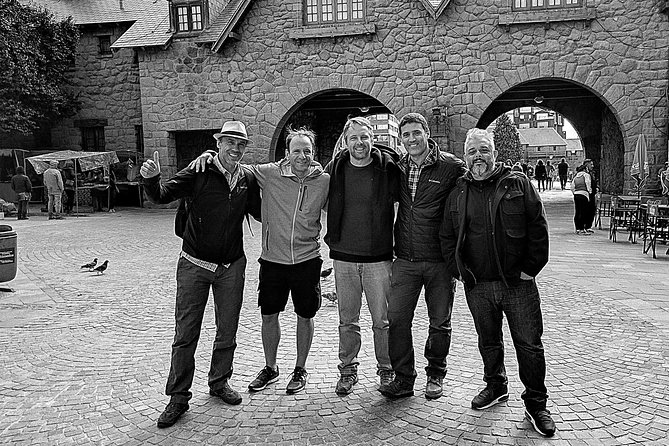
The biggest recurring praise is the way the guide talks. Diego is frequently highlighted for being extremely knowledgeable in the topic and telling it in a way that keeps your attention. Federico is also mentioned as highly skilled, with lots of room for questions.
You’ll notice two things in the quality signals from the reviews:
- Clear English that feels easy to follow
- A respectful, non-glossy tone when discussing the Nazi era
That matters because this tour covers subjects that require care. You don’t want a performer, you want a guide who can explain connections without just dumping facts. The best part of a topic like this is turning “names and dates” into something you can actually place in your mind while walking through town.
Price and value: $41 for 90 minutes with a focused route
At $41 per person for about 1 hour 30 minutes, this tour is priced like a solid value city walk. You’re paying for a guided narrative plus time spent at multiple meaningful locations without needing to figure out the story on your own.
What you get for the money is focus. There’s no long ride, no wandering for half the tour trying to find context. You start at the tourism office, you move through the center with a plan, and the time allocation helps you leave with a coherent picture rather than scattered impressions.
Also, it’s booked ahead on average about 13 days. That’s a hint that demand is real, so if you like to travel with fewer “maybe” plans, reserve early rather than hoping.
What to wear, how to pace yourself, and how to ask better questions
This tour is a walk, not a sit-down lecture. Wear comfortable shoes. One review noted that the route includes inclines, and it may not be ideal if you have ambulatory issues.
If you’re hoping to get the most out of the discussion, go in with at least one question ready. The guide is the kind of person who will answer thoughtfully when you ask, especially about how German-speaking immigration evolved and how post-war movements affected places like Bariloche.
And because you are outside, you’ll want to handle normal street realities. If you end up with a larger group, street noise can interfere. So pick a spot where you can see the guide clearly, and don’t be afraid to request repeats if you missed a key point.
Who should book this tour, and who might skip it
This is for you if:
- You want a history lesson that changes how you see Bariloche
- You like walking tours where the guide gives context as you move between real sites
- You want the subject handled with respect, including the controversial Nazi-era portion
It may be less ideal if:
- You struggle with uphill walking on city streets
- You hate being outside for a full 90 minutes
- You prefer purely positive cultural stories, with no difficult chapters
If your priority is scenery alone, you could skip it. But if you want your Bariloche day to make sense beyond the postcard, this tour does that job well.
Should you book German Footprint & Nazi presence in Bariloche?
Yes, I’d book it if you want a serious but readable explanation of how German-speaking immigration shaped Bariloche, and how that story connects to the Nazi presence after World War II. The strongest selling point is the guide delivery, especially Diego’s clear English and respectful handling of the controversy.
Just go with the right expectations: you’re walking streets, not touring sealed exhibits. Bring comfortable shoes, accept that it’s outside, and come ready to learn. If you do that, you’ll leave with a much deeper grasp of why Bariloche feels the way it does when you’re back on the lakeside and looking at the town as a whole.
FAQ
How long is the German Footprint & Nazi presence walking tour?
It lasts about 1 hour 30 minutes.
What does the tour cost?
The price is $41.00 per person.
Where does the tour start?
The meeting point is Secretaría de Turismo Bariloche – Informes Turísticos, Libertad 56, R8400 San Carlos de Bariloche, Río Negro, Argentina. It ends back at the same meeting point.
Is this tour private or shared?
This is described as a private tour/activity, so only your group participates.
Are admission tickets included for the stops?
Centro Civico is free. The other locations are outside viewing and are listed as not including admission tickets.
Is the tour near public transportation?
Yes, the start location is near public transportation.
Can most people participate?
Most travelers can participate, but it is still a walking tour with some inclines, so choose accordingly if you have mobility limits.
What is the cancellation policy?
The experience is non-refundable and cannot be changed for any reason. If it’s canceled because the minimum number of travelers isn’t met, you’ll be offered a different date/experience or a full refund.
Recently reviewed around Bariloche
- Exclusive Sailboat Trip through the Lakes of Bariloche★ 4.0 · 9 reviews
- Private Transfer from the Airport to Bariloche Center★ 4.5 · 73 reviews
- Snow excursion in Bariloche – Suitable for the whole family★ 4.5 · 3 reviews
- Transfer from the Airport to Bariloche★ 3.5 · 4 reviews
- Tour with Navigation to the Arrayanes Forest and Victoria Island★ 4.0 · 48 reviews
- Kayak paddling adventure around Bariloche★ 5.0 · 49 reviews
- GERMAN TREKKING TO BERGHOF – Mountain stories★ 4.5 · 4 reviews
- 10 Secrets of Bariloche, Nahuel Huapi, and Patagonia★ 5.0 · 46 reviews
Walking Tours, compared.
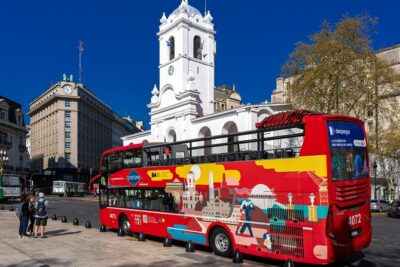
Buenos Aires Hop-On Hop-Off Bus, Free Walking Tours & Discounts
Read our review →
Full Day Buenos Aires Private Walking Tour – Your Own Personal BA 101
Read our review →
Discover Buenos Aires: Walking Tour Through San Telmo & Center!
Read our review →
Nazis in Buenos Aires: a historical walking tour
Read our review →Browse the lists this tour appears in