Reviewed · BUENOS AIRES TOURS
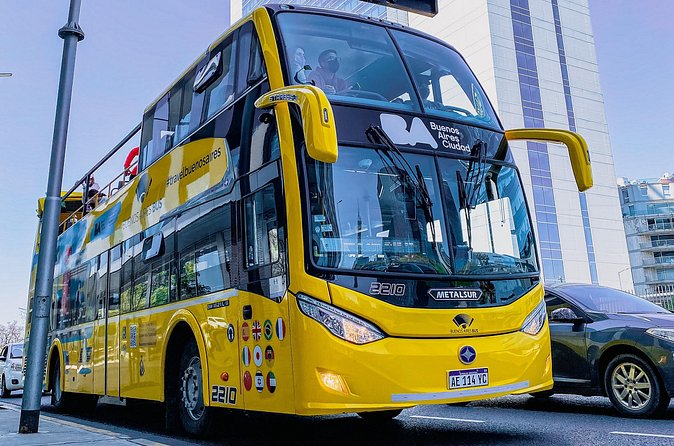
Buenos Aires Bus Hop On-Hop Off and Exclusive Benefits
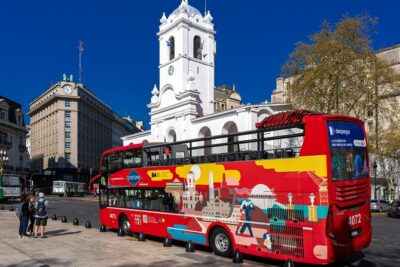
This is an easy, one-day way to get your bearings in Buenos Aires, moving you between the big sights without worrying about each leg of public transit. I like the air-conditioned panoramic buses and I like the guided audio in 9 languages with an accompanying guide on board.
The one drawback to plan for is timing. The full loop can take close to four hours, and if demand is heavy, boarding can get slow, which means some people end up waiting in the heat at certain stops.
Key Highlights Before You Ride
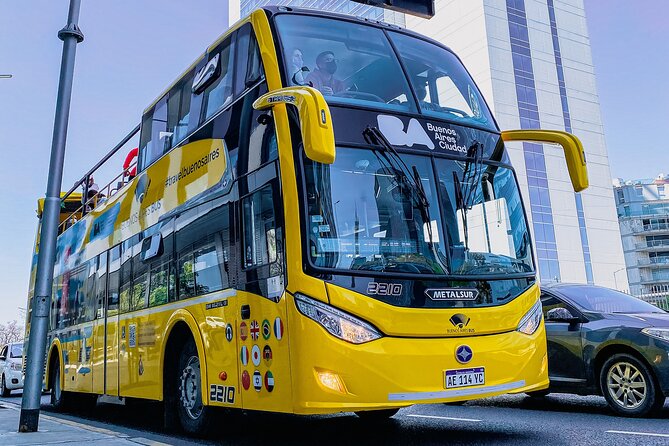
Air-conditioned rides and panoramic views help on hot, long days
Audio in 9 languages plus an onboard guide keeps the story clear
A wide stop list covers Recoleta, downtown, Boca, Puerto Madero, and Palermo
Hop on hop off flexibility lets you pick your pace instead of rushing
- Reality check on logistics like seating, audio working, and boarding code scanning
Price and Value: Is $35 for a Full Day Actually a Good Deal?
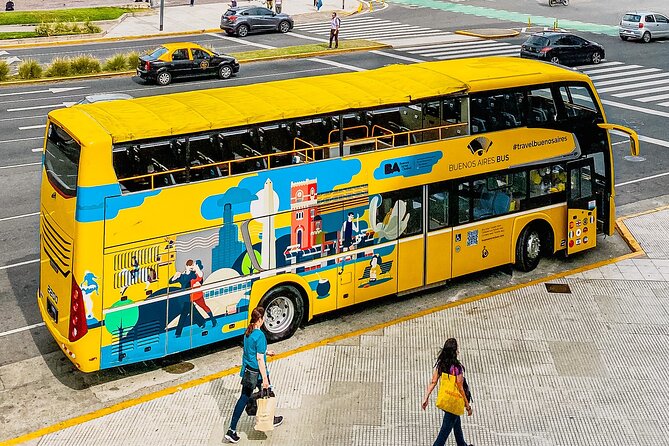
At $35 per person for about a one-day pass, this bus is priced like an efficient “orientation plus extras” ticket. You pay for convenience: air-conditioned transport, panoramic sightseeing from the bus, and an audio tour that explains what you are seeing as you go.
If your time in Buenos Aires is short, you usually spend that time either paying for rides between distant neighborhoods or losing hours figuring out routes. This pass helps you stack neighborhoods in one day, especially if you only hop off at a handful of the stops.
Two things to consider up front. First, the full circuit can take close to four hours even if you do not hop off, so you need a plan for which stops matter most to you. Second, some boarding steps can be a little disorganized when lines build, so arriving early at bus stops helps.
A few more Buenos Aires days worth comparing
- Local Foodie Adventure in Buenos Aires with Sherpa Food Tours
★ 5.0 · 6,875 reviews - Buenos Aires City Private Tour with Local Guide
★ 5.0 · 3,475 reviews - Buenos Aires Small-Group City Tour
★ 5.0 · 2,226 reviews
Route Reality: How Hop On Hop Off Works in Practice
This is a true hop on hop off setup, meaning you can get off, walk around, and get back on later. The catch is that the order of the circuit and the exact driving between stops can vary by day and by driver, even if the main stops are on the list.
That matters because you should not treat this like a precise street-by-street timeline. Instead, treat it like a “neighborhood sampler,” where you choose 1 to 3 areas to explore in more detail and let the rest be quick views from the bus.
Also, plan for crowds. The max group size is 300 people, and some stops are popular enough to create lines. If you are hoping for a smooth boarding experience at every stop, you might be disappointed, but if you travel with flexibility, it works well.
Recoleta to Thays Park: Cemetery, Design, and Sculpture Walks
Start in Recoleta, where the tour hits Recoleta Cemetery, one of Buenos Aires most important landmarks. If you hop off here, you can spend time among elaborate mausoleums and sculptures, and you will quickly see why this place is a photography magnet even for people who are not normally into cemeteries.
A little later, the circuit reaches Thays Park, a green space tied to landscape design and outdoor art. The park is also home to a historic 1915 water tower that now connects to the Museum of Architecture and Design, so it is not just a place to sit quietly, it is a place to look closer.
A practical tip: if you are doing multiple hop offs on the same side of town, you will save time by pairing short walks. Recoleta Cemetery is best for slow wandering, while Thays Park is great as a mid-day reset when you want shade and a little breathing room.
Teatro Colón and Avenida de Mayo: Big Architecture, Short Walks
The bus then gives you a key culture stop at Teatro Colón, Argentina’s major opera house. You can view the area and get oriented around one of the city’s most famous performing arts spaces, even if you are not booking a performance ticket.
From there, you connect to Avenida de Mayo, a major thoroughfare built in the late 1800s that links the Casa Rosada area toward the National Congress zone. If you like grand, European-looking streetscapes, this stretch is an easy way to understand how the city developed its official, political face.
One consideration: this is a bus day. If you want deep museum time at Teatro Colón, you will likely need extra hours beyond a typical hop off visit. Use this stop to get the look, then decide if you want to return later.
A different sort of day out of Buenos Aires:
- Buenos Aires Hop-On Hop-Off Bus, Free Walking Tours & Discounts
★ 4.5 · 2,218 reviews - Buenos Aires: Piazzolla Tango Show with Optional Dinner
★ 4.4 · 2,122 reviews - Buenos Aires: City Highlights Guided Tour with Transfer
★ 4.7 · 1,946 reviews - Buenos Aires: Hop-On Hop-Off City Bus Tour
★ 4.2 · 1,855 reviews
Obelisk, Plaza de Mayo, and the Downtown Core You Will Remember
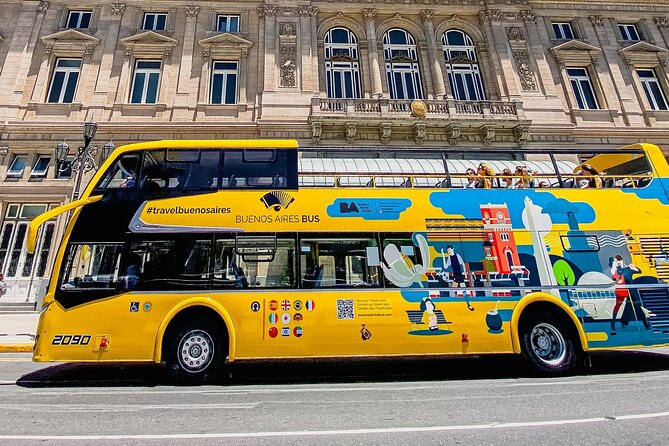
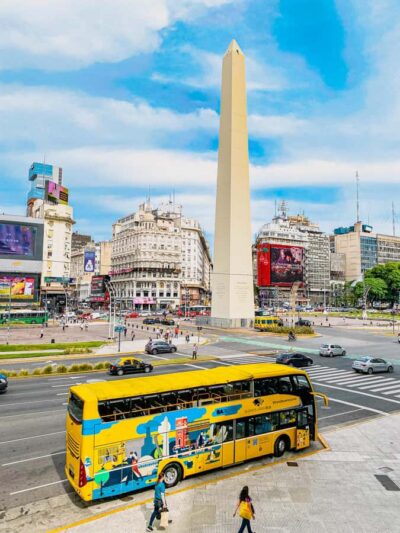
Few cities have a centerpiece as instantly recognizable as the Obelisk. It is the symbol of Buenos Aires and sits right where you feel the city’s energy, so even a short stop here helps you place yourself on a mental map.
Next up is Plaza de Mayo, the oldest and most significant square in Buenos Aires. Around it you have major government and religious landmarks like the Casa Rosada area and the Metropolitan Cathedral, and it is tied to major political events, so it is both a visual and historical anchor.
The bus also passes 9 de Julio Avenue, the city’s widest major avenue, and the whole area works well if you want to walk in a straight, legible way. If your feet get tired, you can always retreat back to the bus and let the commentary narrate what you are missing.
If you are sensitive to heat, this is where planning matters. The downtown core can be exposed. Bring water, and do not assume the bus will arrive right away at the most popular corners.
National Congress and the Historic Center: Where the City’s Layout Makes Sense
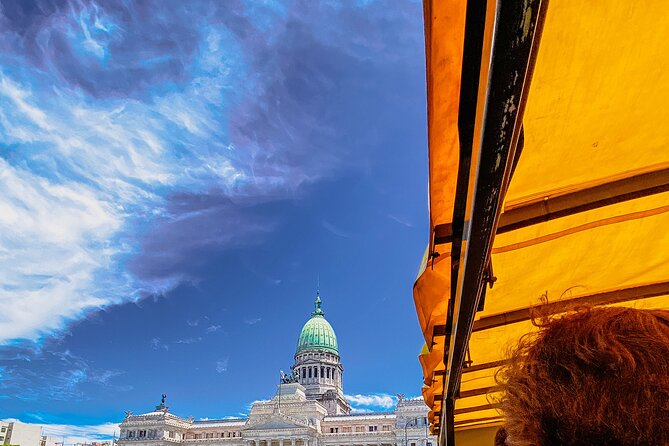
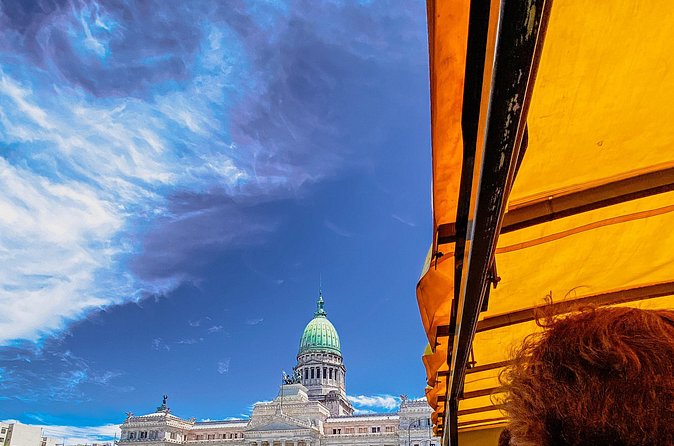
The circuit reaches the National Congress, famous for its green dome and imposing architecture that signals Argentine democracy. Even if you only do a quick look, the building helps you understand why Avenida and the plazas feel connected like a civic system.
Then you get a view of Buenos Aires historic center, including Plaza de Mayo, San Telmo, and parts of Monserrat. This is the zone with cobblestone streets and older architecture, and it is the part of town where walking starts to feel like you are reading the city’s chapters in order.
My advice here is simple. Do not try to do everything on foot from every single stop. Choose one “walk block” that matches what you like most: government architecture, old streets, or neighborhood character. The bus is your transport. Your time is the limiting factor.
San Telmo to La Boca: Old Streets, Tango Connections, and Football Passion
San Telmo is next, and it is one of the city’s oldest traditional neighborhoods. Expect colonial-style buildings, cobblestone streets, and a bohemian feel tied to street culture, tango links, and the famous antique fair atmosphere.
From San Telmo, the route heads toward La Bombonera, the home stadium of Boca Juniors. Even from the outside, it is a recognizable icon, and the stadium’s famous shape and acoustics explain why match day is such a major part of local identity.
Then you arrive at Caminito, a pedestrian promenade in La Boca that is basically an outdoor art gallery. Brightly painted houses, murals, street shows, and craft fairs make it ideal for photos and easy wandering.
A useful pair to remember: San Telmo for older neighborhood texture, Caminito for colorful, structured street culture. If you want one of them to be your “main event,” let that be the one you spend more time in.
Lezama Park and the River Edge: A Softer Break in the Middle of the Day
After the Boca area, you get Lezama Park, a traditional green space in San Telmo. It offers tree-lined walking paths, sculptures, children’s games, and views over nearby historic areas.
This is a smart stop to use strategically. When you have stacked architecture, stadium energy, and photo stops, Lezama Park gives you a reset where you can slow down and cool off a bit.
Then the route moves toward Costanera Sur, a riverside promenade by the Río de la Plata. It is a good walking break, with parks and an ecological reserve feel plus traditional food stalls nearby, so you can grab a snack on the go since meals are not included.
If you get off at Costanera Sur, keep it simple. Walk a loop, enjoy the river air, then head back to the bus for the next neighborhood instead of trying to stretch this stop into a full day.
Puerto Madero: Puente de la Mujer and the Modern Buenos Aires Look
Next you reach Puerto Madero, where the bus hits the Puente de la Mujer. This modern pedestrian bridge is designed to look like a tango dancing couple, and it is also known for its engineering and rotating design.
Puerto Madero also brings you to Buenos Aires River Station, a modern hub for ferries to Uruguay, including Montevideo and Cologne. Even if you are not taking the ferry, the setting is useful for seeing how the city’s riverfront has shifted toward modern infrastructure and tourist-friendly access.
This section is a good “before dinner” zone. The architecture and river views are a visual reward after the older streets and market stops earlier in the day.
Galerías Pacífico and Plaza San Martín: Architecture That Rewards Slow Looking
The bus stops at Galerías Pacífico, an elegant shopping center with impressive architecture and a beautiful dome with murals by Argentine artists. If you step inside, it can feel like a city landmark rather than just a mall stop, and it connects to cultural space like the Borges Cultural Center.
Then you reach Plaza San Martín in Retiro, a historic green space with monuments and centuries-old trees. The surrounding buildings make it easy to combine a short walk with a few minutes of calm away from traffic.
This part of the day is great if you want a blend of indoor and outdoor. You can cool down briefly, then go back outside for a walk that is slower paced and less dependent on constant bus arrivals.
Palermo Culture Stops: Thays Park, MALBA, and the Planetarium Experience
Palermo is where the route spreads out into culture and big-city park space. You get MALBA, a modern museum for Latin American art. If you like art museums, this is one of the stops where getting off can turn a bus day into a meaningful cultural afternoon, especially if you plan your time carefully.
Then there is Galileo Galilei Planetarium in the Tres de Febrero Park area. The building has futuristic architecture, and the shows use state-of-the-art tech including an 8K projection system and 4D seats. The museum displays real meteorites and a moon rock connected to the Apollo XI mission, which is the kind of detail that makes this stop more than just a ride-by.
A practical caution: planetarium visits take time. Do not schedule this stop as a quick photo stop unless you are comfortable with skipping the show. If you are the type who wants to actually watch something, plan to allocate a real chunk of the afternoon.
Palermo Streets for Food, Design, and Shopping: Plaza Italia to Arcos District
You will also hit Plaza Italia, a key Palermo junction near the Botanical Garden and Ecopark. It is useful for orientation in this neighborhood, especially if you want to wander nearby without committing to a long trek from the bus.
Next is Plaza Serrano in Palermo Soho, an area known for original shops and a bohemian, design-forward vibe. This is one of the easiest stops for browsing, people-watching, and grabbing a drink or casual bite at a café.
The tour includes Mercat Villa Crespo, a modern gastronomic market with local and international flavors, plus artisan drinks and cultural events. Since meals are not included, this is where you can turn the hop off into a real meal plan without needing a reservation in advance based on what you find on the spot.
Then come Arcos District, a modern open-air shopping center that blends historic railway structures with contemporary design. It is a nice stop if you like architecture and shopping in a less chaotic, more walkable layout than some other mall-style areas.
Parque 3 de Febrero and the Monument to the Spaniards: Green Space and a Photo Moment
One of the biggest breaks comes at Palermo Forests, also known as Parque 3 de Febrero. This is the largest green area in Buenos Aires, and the stop also connects to the Rosedal, with more than 18,000 rose bushes and artificial lakes. If you want open space, it is one of the most satisfying places on the circuit.
This part of the route also includes the Monument to the Spaniards in Palermo. It is an imposing sculpture and a good mid-walk landmark while you are moving between park paths and nearby sights.
If you want a simple strategy, use this section as your final hop off of the day. It is easier to enjoy large park time when you are not rushing to fit one more museum entry.
Buenos Aires Bus Comfort and Onboard Audio: What to Expect From the Ride Itself
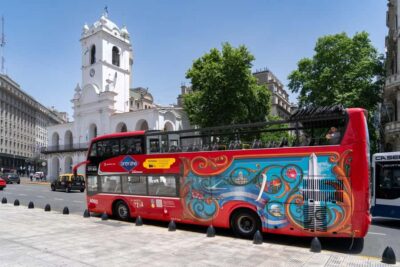
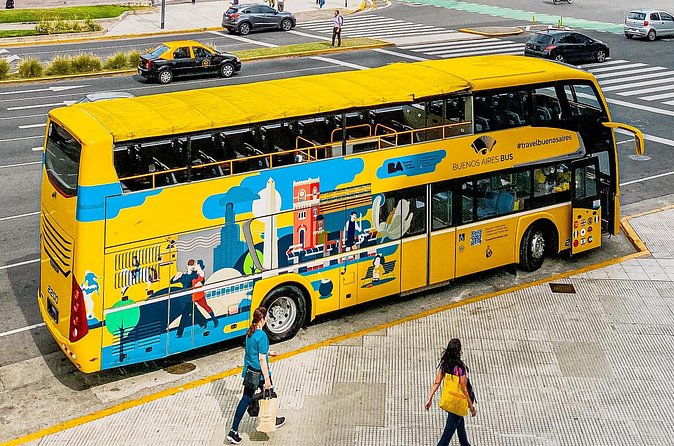
The buses are panoramic and air-conditioned, and you will notice that most seats are rooftop while some seats are below with better air conditioning. If you feel heat easily, try to aim for the lower section when boarding.
The audio guide is offered in 9 languages, and there is also an accompanying guide on board. That combination matters because you get both a guided “story” and a real human presence if questions pop up.
Two comfort points to keep in mind. Bring your own small water bottle for long stretches, and keep an eye on whether your seat’s audio is working. If it is not, switching seats can fix the problem faster than waiting for troubleshooting.
Practical Tips to Avoid the Most Common Snags
Here is how to make this bus day run smoother, based on the kinds of issues that come up in real use.
First, manage boarding stress. When barcode scanning or QR code reading does not work right away, lines can form fast at the ticket booth, and that can waste time at crowded stops. Before you board, double-check that you have the correct ticket or code ready.
Second, plan for a bit of inconsistency between days. The second day of operation may route between stops differently even if the main stops are the same. Your best move is to identify your must-do stops first, then accept that the order of streets may shift.
Third, keep track of your own stop list. If the stop numbering is not clearly announced in audio, it is easy to miss where you are. Screenshot the stop list on your phone before you start, then mark the ones you want to get off for.
Finally, do not force a full-day marathon. A good bus day in Buenos Aires is usually: pick 2 main neighborhoods, hop off for photos and short walks, and reserve deeper time for one museum or one major attraction.
Should You Book This Buenos Aires Hop On Hop Off Bus?
Yes, if you want a low-effort, one-day way to cover major Buenos Aires highlights from Recoleta to Palermo without constant ride planning. It is especially worth it if you like getting city context through guided audio, want air-conditioned comfort, and value a simple hop on hop off rhythm.
No, if you expect perfect timing and frictionless boarding at every stop, or if you want a fast, efficient loop with minimal waiting. Also skip this if your priority is deep, timed museum visits across many stops, because you will still need to manage entry hours and walking time off the bus.
If you book, I’d choose your must-do stops first, then build a relaxed plan around them. Use the bus to travel and orient, then use your best energy for the neighborhoods you truly care about most.
FAQ
How long is the Buenos Aires Bus Hop On-Hop Off pass?
It lasts about 1 day.
What does it cost?
The price is $35.00 per person.
What is included in the ticket?
You get an air-conditioned vehicle, panoramic buses, guided audio in 9 languages with an accompanying guide on board, and a benefits passport.
Are meals included?
No, meals are not included.
Are hotel pickup and drop-off included?
No, in and out to hotels are not included.
Can I cancel for a full refund?
Yes. You can cancel up to 24 hours in advance for a full refund.
Recently reviewed around Buenos Aires
- Meet Locals: Language Exchange Café in Buenos Aires★ 5.0 · 10 reviews
- Piazzolla Tango Show Only In Buenos Aires★ 4.5 · 10 reviews
- Madero Tango Show Including Executive Dinner In Buenos Aires★ 3.5 · 10 reviews
- Private City Tour & Transfer to the International Airport★ 5.0 · 10 reviews
- Esquina Homero Manzi Tango Show Ticket Including Optional Dinner in Buenos Aires★ 4.5 · 10 reviews
- VIP Dinner & Tango Show at El Viejo Almacen★ 4.5 · 10 reviews
- Buenos Aires City Tour★ 4.5 · 11 reviews
- Premium service Buenos Aires city tour for small groups★ 4.0 · 11 reviews
Buenos Aires Tours, compared.
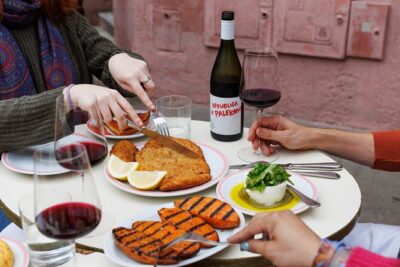
Local Foodie Adventure in Buenos Aires with Sherpa Food Tours
Read our review →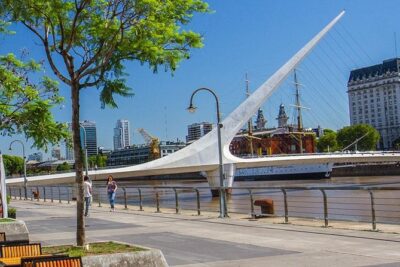
Buenos Aires City Private Tour with Local Guide
Read our review →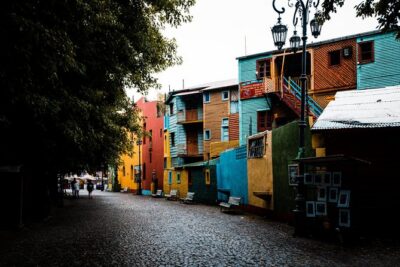
Buenos Aires Hop-On Hop-Off Bus, Free Walking Tours & Discounts
Read our review →