Reviewed · BUENOS AIRES TOURS
Buenos Aires for curious people
Buenos Aires can feel like a blur of tango nights and café stops, but this tour slows you down. It is a guided, conversational walk through the historical center with an anthropological lens, ending at Casa Rosada for a political reality check you can actually talk about.
Two things I really like are the way the guide turns big themes into human-scale questions, and the fact that the route includes places most first-time visitors skip. The one drawback to consider is simple: you are on your feet for about 3 hours, so you will want comfortable shoes and a water bottle.
Key things to love about this Buenos Aires walk
- Conversation-first format where you can ask questions and debate what you hear
- Anthropology-style historical storytelling focused on first inhabitants, immigration, and identity
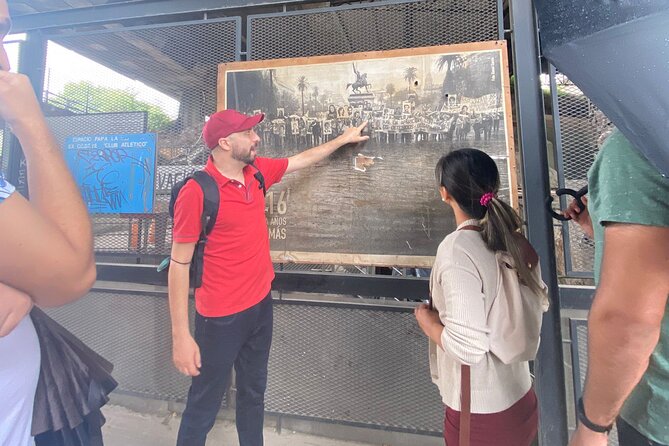
- A stop at Espacio para la Memoria ex CCD Club Atlético that connects the topic of desaparecidos to today
- A real break at San Telmo Market so the tour does not feel like nonstop history
- A strong political finish at Casa Rosada and Plaza de Mayo tied to how power and money shape daily life
A 3-hour walk that treats Buenos Aires like a living argument
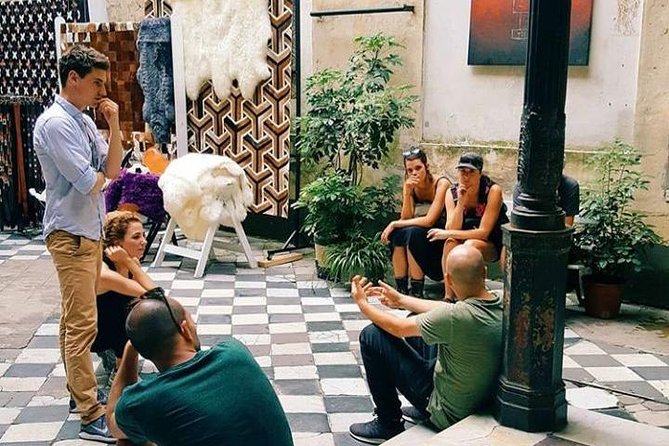
This is not a walk-and-sit tour where you just collect facts. You get a guided experience built around questions, and the best part is you are encouraged to talk back. That matters in Buenos Aires, where history is not something locked in a museum. It is something people argue about in everyday life, politics included.
You start in the area around Bar Británico, then move into the city’s older layers. The pacing is designed to connect past and present without turning it into a lecture. If you enjoy understanding how societies form, how migration changes a city, and why certain memories refuse to fade, you will likely feel right at home.
One more practical point: the tour runs around 3 hours. With that length, you get real context, but it still feels doable even if you are jet-lagged or want to add it to an already packed day.
A few more Buenos Aires days worth comparing
- Local Foodie Adventure in Buenos Aires with Sherpa Food Tours
★ 5.0 · 6,875 reviews - Buenos Aires City Private Tour with Local Guide
★ 5.0 · 3,475 reviews - Buenos Aires Small-Group City Tour
★ 5.0 · 2,226 reviews
Meeting at Bar Británico, then easing into Parque Lezama
You meet at Bar Británico, then head to Parque Lezama for about 15 minutes of guided context. This first chunk of time is there for a reason. You are getting a framework before the route starts stacking up major themes.
Parque Lezama is a good opening because it helps you notice the city as something built by people over time, not just a set of landmarks. You will also get the tour’s main promise, which is to explain Buenos Aires through layered human stories. Think immigration, power, identity, and the way the present grows out of what came before.
From a practical perspective, that early stop is also smart for your body. You can settle in, get oriented, and prepare for more walking through the historic center right after.
Russian Orthodox roots and immigrant echoes at the Holy Trinity Church
Next up is the Russian Orthodox Church of the Holy Trinity, with about 10 minutes for sightseeing and guided explanation. Even if you do not know much about the architecture or church history, you can follow the narrative because the guide keeps returning to big, understandable themes: who arrived, why they arrived, and how communities left marks on the city.
This is one of the tour’s quiet strengths. It does not treat diversity as a footnote. It uses it as a main tool for understanding how Buenos Aires became what it is.
If you prefer history that connects to real people instead of dates only, you will probably appreciate this stop. Short visit, clear framing, and then you keep moving so the story stays alive instead of turning into a checklist.
Club Sueco Restaurante and the city’s European connections
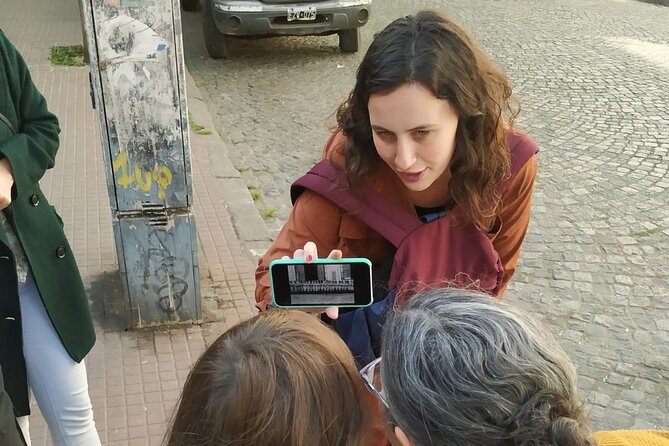
You then pass Club Sueco Restaurante for another 10 minutes of guided look and walking. The name alone hints that Buenos Aires did not develop in isolation. Foreign interest and community networks mattered, and the tour takes time to address that without pretending it is simple.
One of the recurring questions you will explore during the walk is why the British were so intent on these shores. You will also discuss how Argentina became a nation of immigrants, and how those movements reshaped culture and social life.
This stop is not about one building as an isolated “wow.” It is about using a place in the city to understand larger currents. That is a useful habit for your future travels in Argentina, because you start reading the streets instead of only photographing them.
A different sort of day out of Buenos Aires:
- Buenos Aires Hop-On Hop-Off Bus, Free Walking Tours & Discounts
★ 4.5 · 2,218 reviews - Buenos Aires: Piazzolla Tango Show with Optional Dinner
★ 4.4 · 2,122 reviews - Buenos Aires: City Highlights Guided Tour with Transfer
★ 4.7 · 1,946 reviews - Buenos Aires: Hop-On Hop-Off City Bus Tour
★ 4.2 · 1,855 reviews
The heavy turn: Espacio para la Memoria ex CCD “Club Atlético”
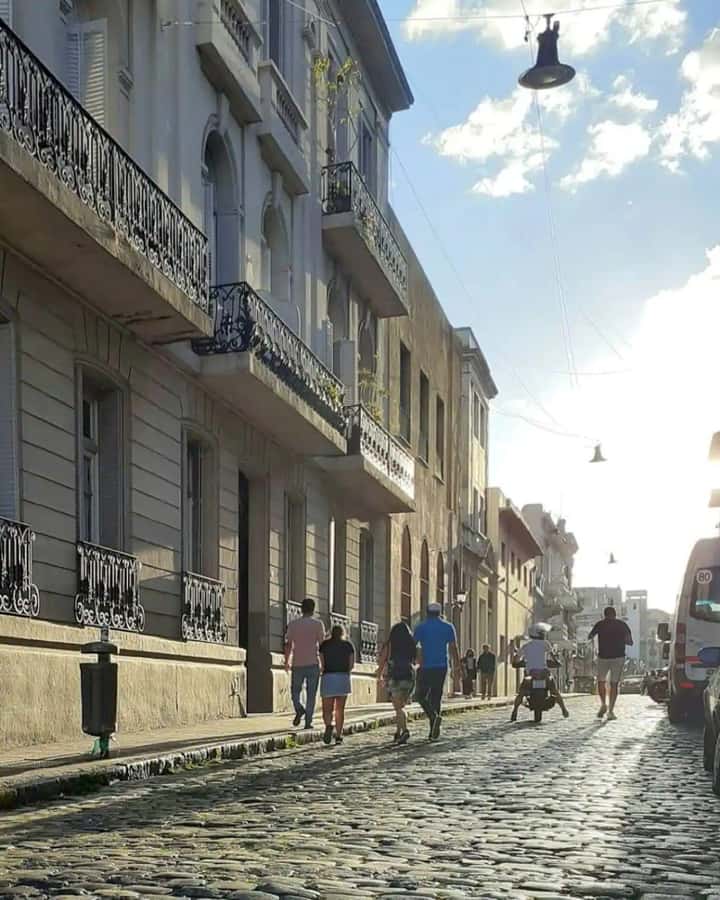
About 10 minutes here at Espacio para la Memoria ex CCD “Club Atlético”. This is the part of the walk where the tone shifts in a necessary way. You are talking about the topic of desaparecidos and how memory shapes modern Argentina.
What makes this stop important is that it is not framed as abstract tragedy. You discuss how remembrance works in a society, and why people keep confronting the past rather than brushing it aside. You get that this is not only national history. It is also civic identity.
If you prefer your tours light and funny the whole time, this might feel intense. On the other hand, this tour is made for curious people, and curiosity includes the uncomfortable questions. If you come prepared for a serious moment, you will leave with a much better sense of what modern Argentina is carrying forward.
Parroquia de San Pedro González Telmo and the old streets of Telmo
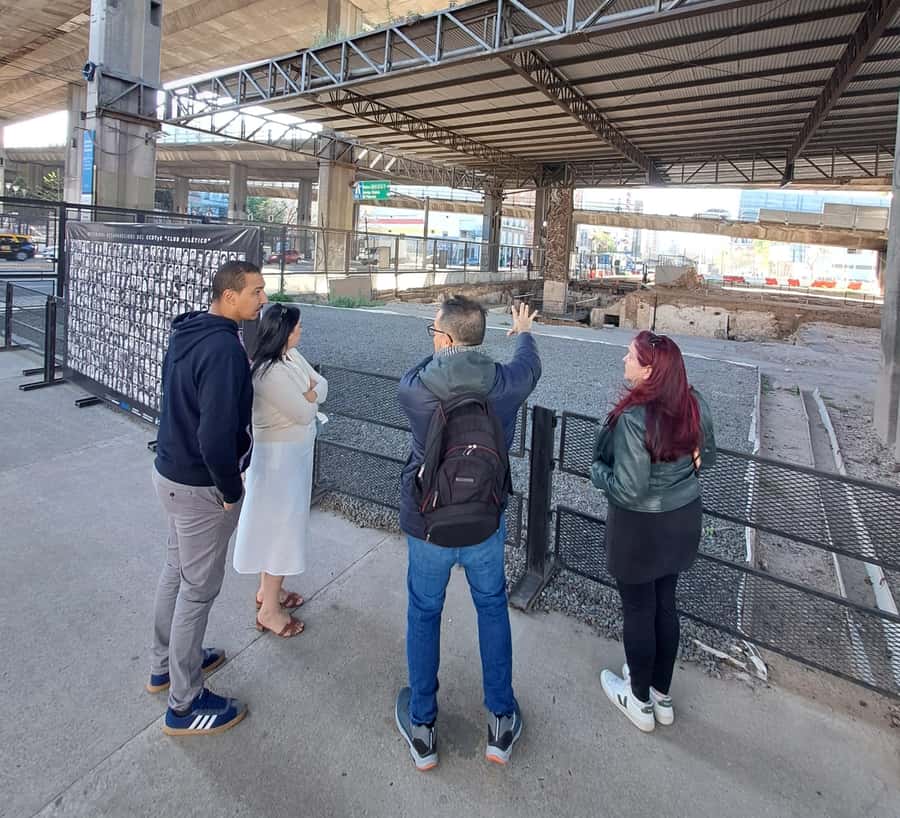
Then you head to Parroquia de San Pedro González Telmo, again for about 10 minutes with guided sightseeing. This is where the route leans into Telmo-style texture, the kind of place where the city’s older religious and community life helps you understand social structure.
Short stop, but it fits the tour’s rhythm. You do not just move from one important site to another. You slow down enough to connect each one to how people lived, organized, and formed communities.
This part also sets up the next phase of the walk, where you start mixing history with neighborhood energy. It is easier to grasp the big political and demographic stories once you have seen enough “everyday” anchors.
Plaza Dorrego and San Telmo Market: the break that makes the tour stick
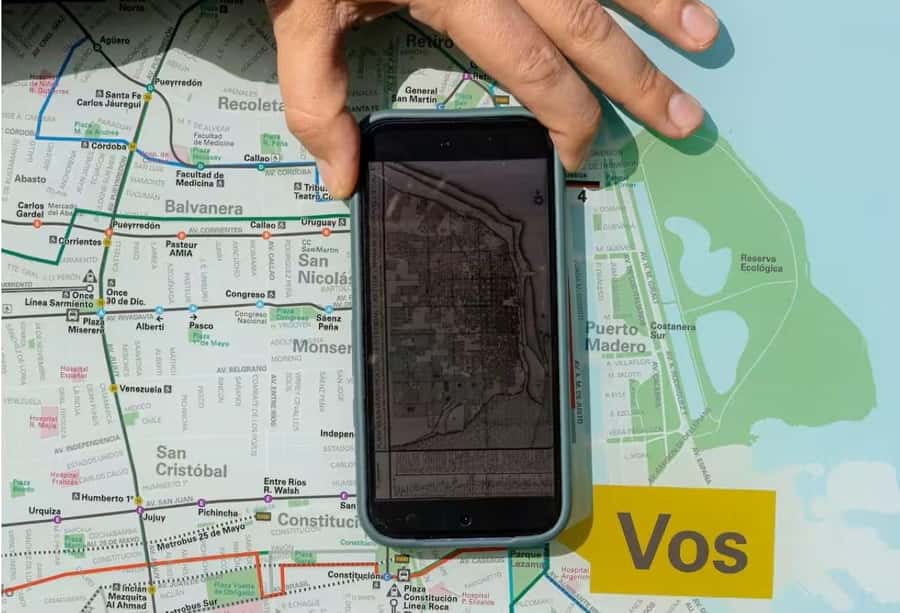
You spend about 5 minutes at Plaza Dorrego, then get a 20-minute break at San Telmo Market. This is where the tour starts feeling like a real Buenos Aires day rather than a study session.
The market break is practical. Your brain absorbs better after a reset, and you get a chance to look around without the guide talking nonstop. You can take photos, snack if you want, and just watch the flow of people.
This is also a good moment to ask the guide questions while it is still fresh in your mind. The whole experience is built around discussion, and the market stop naturally creates that opening.
If you come in hungry, plan to use this break to recharge. Meals are not included, so you are on your own here, but you do get the time.
Academia and ideas near Facultad de Ingeniería and UCA
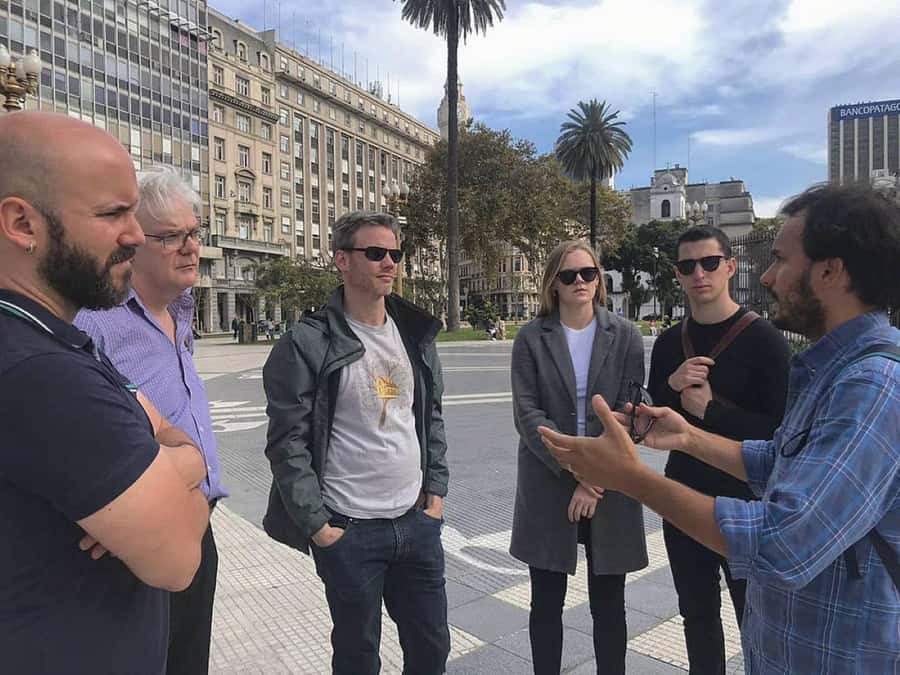
After the market, you keep moving into a more modern intellectual vibe.
You stop for about 5 minutes at Facultad de Ingeniería, then about 10 minutes at UCA Santa María de los Buenos Aires. These are quick visits, and that matters. The tour is not trying to turn into a campus tour. It uses these locations to show that Buenos Aires is not only about colonial or political-era stories.
Instead, the city is also about institutions that shape thought, training, and future leadership. Even in a short time, you get the sense that the present is being built in places like these, not only argued about in plazas.
This section is ideal if you like your history to have a future-facing angle. You get the past, then you see the structures that might influence what comes next.
Puente de la Mujer to Casa Rosada: how politics lands in the streets
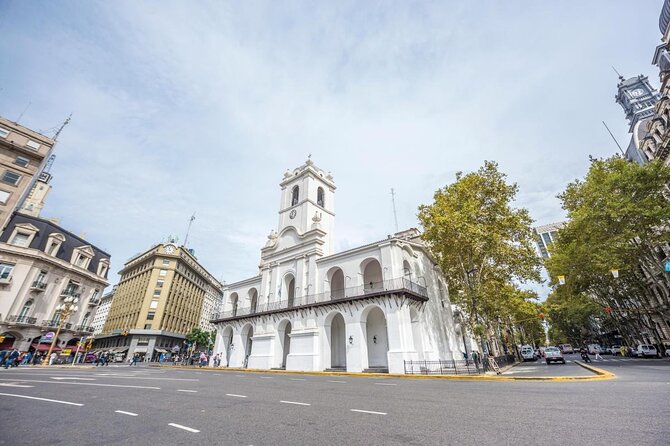
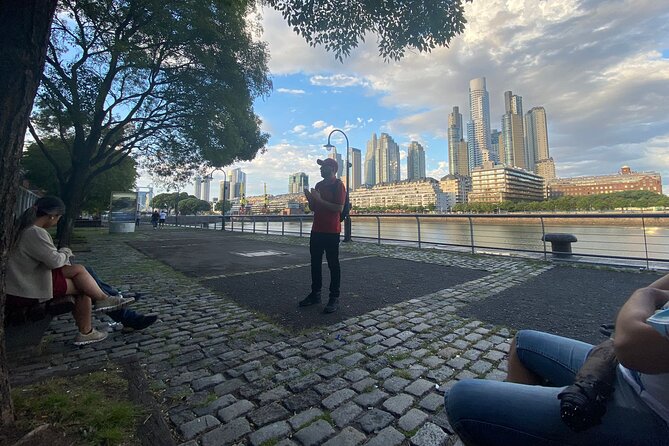
Next is Puente de la Mujer for about 15 minutes of guided sightseeing and walking. After that comes the political center finish, with drop-off options including Museo Casa Rosada, Casa Rosada, and Plaza de Mayo.
This final phase is where the tour brings several of its headline themes together. You discuss Evita and Perón, the ongoing impact of political leaders on Argentina’s identity, and how public memory connects with present-day decision-making.
You also tackle why the US dollar holds such power over the local economy. That topic can sound abstract until a guide frames it within everyday life and political context. The walk helps because you are not stuck reading about it. You see the city’s political heart as part of the story.
If you want a first taste of how Argentina’s politics works, this is a solid way to get it. If you already know the basics, you can use your questions to go deeper, because the format actively invites that.
Price and logistics: is $30 worth 3 hours of serious context?
At about $30 per person for roughly 3 hours, this tour is priced like a thoughtful walking session rather than a full-day excursion. For the money, you are paying for three things you cannot easily replicate on your own without study time: a professional guide, historical insights, and structured discussion time.
You also get value from the route design. The pacing includes early context (Parque Lezama), visible cultural anchors (the church and clubs), a memory site with real emotional weight, and an included market break to prevent information fatigue.
What you should plan around is what is not included: meals and drinks, and transportation to the starting point. You will want to budget for food if you need it during the market time.
If you hate paying for “just a guide to point at buildings,” this might not be your style. But if you like history as a conversation, especially when it tackles immigration, identity, dictatorship memory, and economics, the price looks fair.
Who this walk is for, and who should think twice
This fits best if you are a curious traveler who likes asking questions and getting more than surface-level descriptions. It is also a good option if you want a first introduction to Buenos Aires but you do not want the usual highlights-only route.
It is especially appealing if you care about how societies form: first inhabitants, immigration, and the fate of Buenos Aires’ African-descendant population as part of the city’s story. It is also strong if you are interested in the social memory around the desaparecidos and how that shapes modern Argentina.
Should you think twice? If you are looking for a relaxing stroll with minimal weight, parts of the route will feel heavy. Also, because it is built around walking between stops, you will need decent mobility and comfort on your feet. The tour is wheelchair accessible, which is helpful, but you still want to plan for continuous movement.
What to bring so you feel comfortable the whole way
This is the simple stuff that makes the difference on a walking tour. Bring comfortable shoes, a water bottle, a camera if you like photos, and sunscreen. Weather can change, so expect conditions to shift during your 3 hours.
If you want to ask questions, keep your notes app open. Not for trivia facts, but for themes you want to clarify, like why certain groups shaped the city or how political memory influences daily life.
Should you book Buenos Aires for curious people?
If you want Buenos Aires beyond postcard landmarks, I think you should book it. This tour has a rare mix of approachable conversation, real thematic structure, and stops that explain how Argentina’s past is still active in the present.
Book it if you:
- enjoy history as a dialogue, not a monologue
- want political context at the end, including Evita, Perón, and the role of memory
- like routes that include serious places, not only pretty ones
- want a short day experience that still feels meaningful
Skip it if you want only lightweight sightseeing, or if walking for about 3 hours is a struggle for you.
FAQ
How long is the Buenos Aires walk?
The experience lasts about 3 hours.
How much does it cost?
The price is $30 per person.
Where do I meet the guide?
You meet by Bar Británico.
Where does the tour end?
The tour concludes with drop-off options including Museo Casa Rosada, Casa Rosada, and Plaza de Mayo.
Is the tour wheelchair accessible?
Yes, the experience is wheelchair accessible.
What languages are available for the live guide?
The live tour guide is available in Spanish, French, English, and Portuguese.
What is included in the price?
You get a professional guide, historical insights, and discussion and debate opportunities.
What is not included?
Meals and drinks are not included, and transportation to the starting point is also not included.
What should I bring?
Bring comfortable shoes, a camera, sunscreen, and water.
FAQ
Can I cancel for a full refund?
You can cancel up to 24 hours in advance for a full refund.
Is reserve now and pay later available?
Yes, you can reserve now and pay later.
Is a private or small-group version offered?
Private or small groups are available.
What kind of weather should I expect?
You should be prepared for varying weather conditions.
Recently reviewed around Buenos Aires
- Meet Locals: Language Exchange Café in Buenos Aires★ 5.0 · 10 reviews
- Madero Tango Show Including Executive Dinner In Buenos Aires★ 3.5 · 10 reviews
- Piazzolla Tango Show Only In Buenos Aires★ 4.5 · 10 reviews
- Esquina Homero Manzi Tango Show Ticket Including Optional Dinner in Buenos Aires★ 4.5 · 10 reviews
- Private City Tour & Transfer to the International Airport★ 5.0 · 10 reviews
- VIP Dinner & Tango Show at El Viejo Almacen★ 4.5 · 10 reviews
- Buenos Aires City Tour★ 4.5 · 11 reviews
- Premium service Buenos Aires city tour for small groups★ 4.0 · 11 reviews
Buenos Aires Tours, compared.
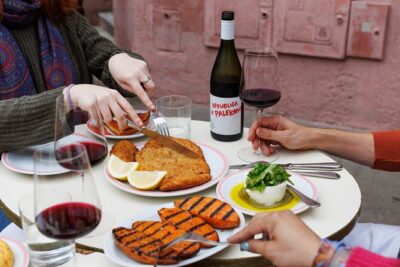
Local Foodie Adventure in Buenos Aires with Sherpa Food Tours
Read our review →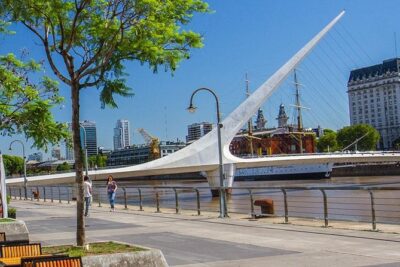
Buenos Aires City Private Tour with Local Guide
Read our review →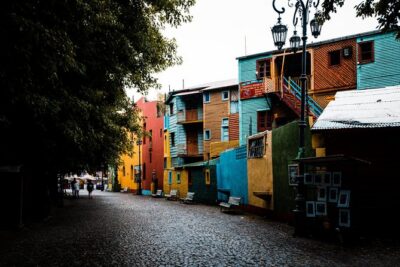
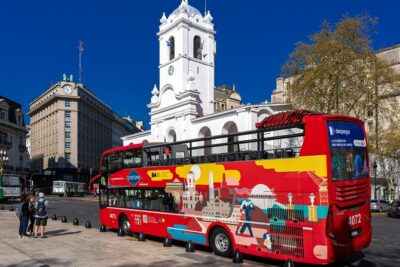
Buenos Aires Hop-On Hop-Off Bus, Free Walking Tours & Discounts
Read our review →