
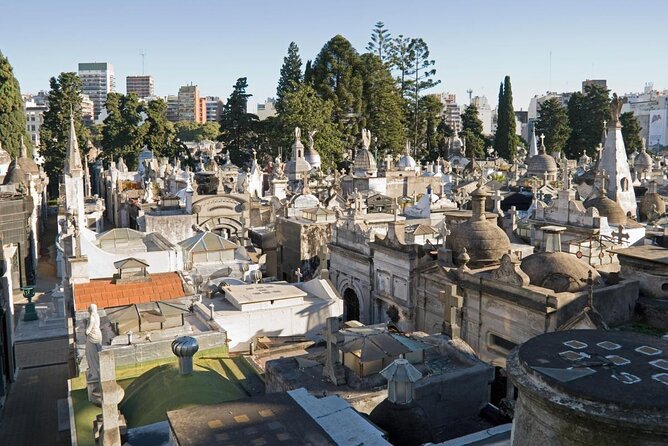
Reviewed · RECOLETA CEMETERY
Recoleta in Depth (not literally) Private Walking Tour
Recoleta has a way of feeling both formal and dramatic. This private walking tour turns that vibe into a story you can actually walk through, from the giant tree by La Biela to the cemetery maze of mausoleums and monuments. You’ll connect Recoleta Cemetery with tango landmarks like Palais de Glace, instead of treating them like random stops.
What I like most is the way the walk threads together art, power, and immigration themes in Buenos Aires. I also like that the guide brings the big names to life, including the stories around Evita Perón’s tomb and the very specific characters you’ll hear about in the cemetery.
One thing to consider is that the cemetery is the centerpiece. If you mainly want a quick photo loop or have one very specific grave in mind, you should plan to arrive ready for a guided narrative and accept that the route can adjust to timing and conditions.
Key highlights worth knowing
- A “story first” route that links cemetery families, church history, and tango origins.
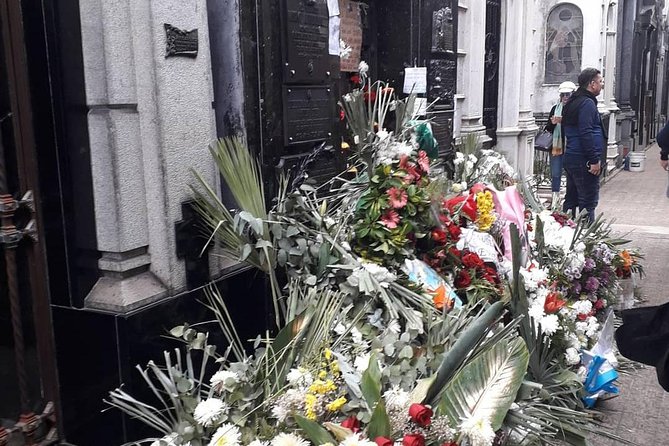
- Evita Perón’s tomb and memorial context, with clear explanations of why she’s buried here.
- Pilar Basilica plus Recoleta’s old religious sites, giving the neighborhood a backbone.
- Palais de Glace as tango’s milestone, framed with ports and immigration history.
- Classic art and architecture stops, including the National Library and National Fine Arts Museum.
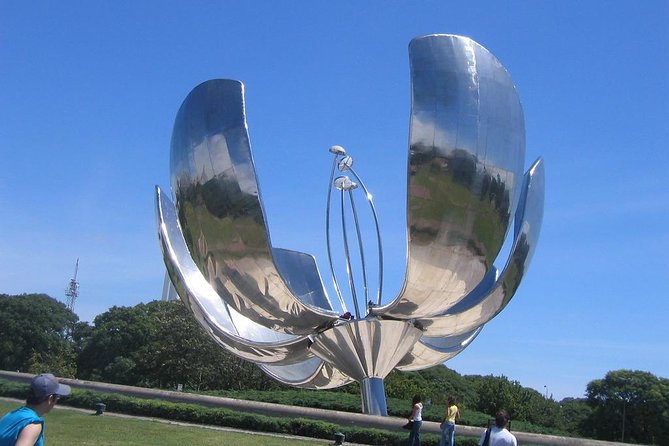
- Modern Buenos Aires at the end, with Floralis Generica and a look at MALBA’s mission.
A Smart Afternoon Plan Through Recoleta’s Key Layers
This tour is built for an afternoon start, so you’re walking in Buenos Aires light when the city feels less like a schedule and more like a place. The route stays easygoing overall, but it’s still a walking tour, about 2 miles across Recoleta.
The big payoff is that the guide does the connecting work. Recoleta can feel like it’s about money, marble, and old-world authority. On this walk, you also get the human side, where you hear how families, politics, and migration shaped what you see today.
You’ll finish with a modern sight too. That matters because Recoleta is often treated as old Buenos Aires only. Ending near Floralis Generica helps you leave with a more complete picture of how the city keeps changing while still honoring its past.
More Walking Tours in Buenos Aires
- Buenos Aires Hop-On Hop-Off Bus, Free Walking Tours & Discounts
★ 4.5 · 2,218 reviews - Buenos Aires: La Boca Guided Walking Tour in English
★ 4.8 · 1,587 reviews - La Boca Walking Tour
★ 5.0 · 1,029 reviews
Meeting at La Biela, Then Letting the Neighborhood Set the Tone
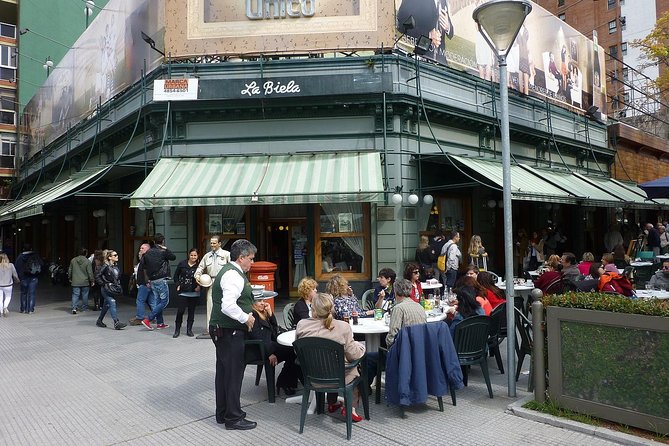
You meet near La Biela Cafe on Av. Pres. Manuel Quintana 596. The instructions are clear and helpful: meet outside the main corner door, close to the red pay phones by the giant gomero tree. Look for a guide carrying a small Walking Tours sign.
That first stop is more than a photo moment. The giant gomero (the tree’s name is part of the local story) becomes a living intro to Recoleta. It’s a good way to start before you hit the cemetery, because it gets you thinking like a local about what’s old, what’s symbolic, and what Buenos Aires repeats in its own way.
One practical note: since the tour runs rain or shine, bring a light layer or umbrella. Afternoon weather can change quickly, and this is an outdoor walking plan.
Recoleta Cemetery: Where Mausoleums Become Biographies
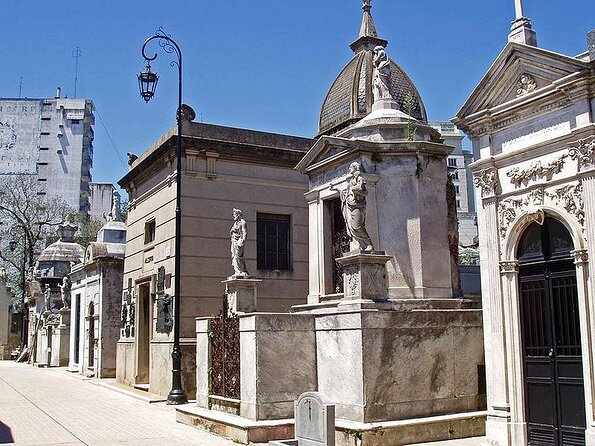
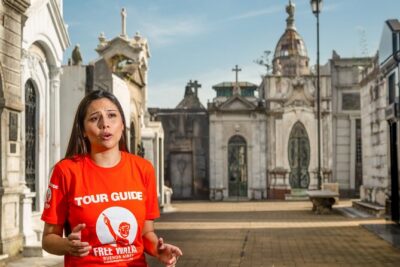
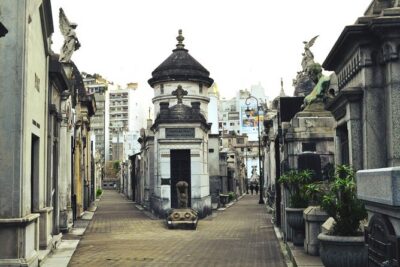
The cemetery visit is the heart of the experience, and it’s the part most worth protecting your time for. You get a detailed visit “in depth” (not literally), with the guide turning the property into a series of mini stories.
Yes, it’s beautiful. But the real value is the guided context. You’ll hear about Evita Perón and her memorial, plus other characters connected to the cemetery’s social history, including the misfortune of Rufina Cambaceres, the tale of Tiburcia Dominguez and her miserly husband, and Admiral Brown. The guide also points out how the ultra-rich Leloir presence shaped the cemetery’s look and reputation.
What you should expect in the way it feels: like walking through a neighborhood of small buildings, each one hinting at who had influence and why. In interviews with locals and guides like Carlos, the best moments happen when the guide slows down and explains what you’re seeing, not just the names on stone.
If you’re a cemetery person, this tour is a strong yes. If cemeteries make you uncomfortable, the guidance can help, because it treats the place as history and architecture, not just a list of graves.
A balanced caution about time in the cemetery
The tour duration is fixed, and the cemetery segment can vary depending on timing and conditions. If your goal is a very particular family plot, ask questions early or confirm priorities with your guide at the start. That way you don’t feel shortchanged if the route needs to move on.
More Recoleta cemetery visits:
- Buenos Aires: La Recoleta Cemetery Guided Tour in English
★ 4.8 · 1,359 reviews - Recoleta Cemetery Walking Tour
★ 5.0 · 668 reviews - Recoleta Cemetery Tour in English
★ 5.0 · 494 reviews - Half-Day Recoleta and Palermo Bike Tour in Buenos Aires
★ 5.0 · 161 reviews
Eva Perón’s Tomb: The Story Behind the Stone
You’ll get a focused stop for Eva Perón’s tomb and a thorough explanation of her life, times, and why she’s buried here. Even if you already know the headline facts, this kind of guided framing helps you understand what the cemetery location means within the wider story of Argentina.
This stop is also useful pacing-wise. After the general cemetery orientation, you get a single anchor that ties emotion and politics to the physical place.
And because this tour is private, you have a real chance to ask follow-up questions without feeling rushed. The guide can steer you toward what to notice next, like surrounding monuments and how people chose to memorialize public figures.
Pilar Basilica and Recoleta’s Old Religious Roots
After the cemetery stories, you head to Basilica de Nuestra Senora Del Pilar. You’ll learn who the Recoletos were and why this colonial church was built for them. A key detail you’ll hear is that it was constructed almost 50 years before the American revolution, which helps you feel the age of the neighborhood’s core institutions.
This stop is short but meaningful. It gives you a different lens than the cemetery. Where the cemetery tells you about families and status, the church helps explain the early structure of the area and how religious communities shaped the urban identity.
If you like architecture, the guide’s explanations make the church’s details easier to read. Even if you only have a few minutes at this stop, you’ll leave with a story you can remember.
Palais de Glace: Tango’s Milestone, Not Just a Pretty Building
One of the most fun pivots in the tour is moving from the cemetery to Palais de Glace, the Ice Palace. This is where tango came of age, and the guide connects that moment to ports and immigration history.
That combination matters. Tango isn’t presented as a dance trivia stop here. You get the social background that ties it to movement of people, new communities, and the mix of cultural influences that Buenos Aires became famous for.
The guide then helps you see the building with tango eyes. You’re not just looking at a facade. You’re learning why the setting mattered at a turning point, which makes the place feel alive even if you’re only passing through.
If you’re into music history or just want to understand why Buenos Aires carries tango so deeply, this section is a highlight for a reason.
National Library, Fine Arts, and the Monument Trail You Can Actually Decode
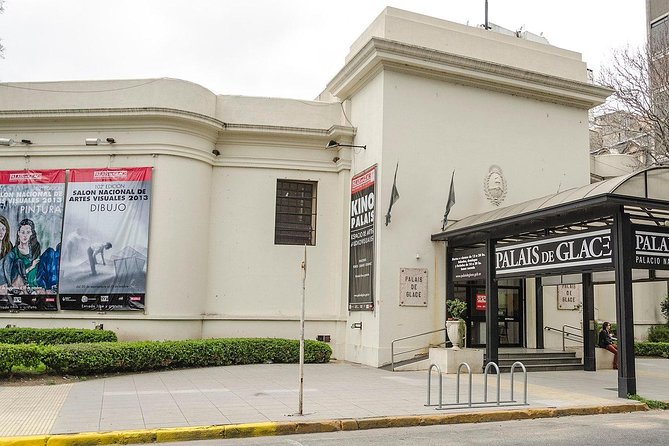
Once the tour moves into the “walkable highlights” stretch, you start seeing how Recoleta balances old and formal Buenos Aires with modern intellectual and artistic identity.
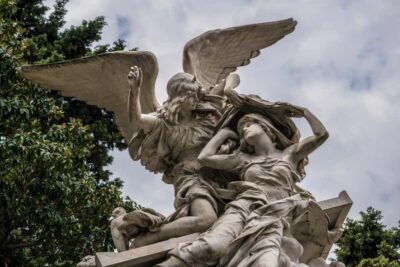
You’ll stop around the National Library and Loma Mitre area, plus Monumento al France a la Argentina, where you’ll hear how to decode the meaning of a sculpted tribute. The guide provides the story behind the monument’s presentation by France to Argentina for its centennial and gives you enough context to understand why it’s positioned the way it is.
Then comes Museo Nacional de Bellas Artes, the National Fine Arts Museum. You’ll also get the story of how this building became a museum, including a note that it was not originally a museum, which gives you a better sense of how institutions evolve.
If you like stopping at art and immediately understanding why the building matters, you’ll appreciate the guide’s approach. It’s the difference between seeing doors and seeing meaning.
Palacio Alcorta, Museo Nacional de Arte Decorativo, and the Wealthy-Era World
In the Palermo Chico neighborhood context, you’ll also see Casa Alcorta. The key detail here is that the Palacio Alcorta originally had a large race and test track on top, and the space was later converted into a luxury housing complex.
That’s a great example of what makes a guided walk work. It’s not just, here is a building. It’s also, here is how the city repurposed itself.
Next, you’ll visit Museo Nacional De Arte Decorativo, housed in the Residencia Errázuriz Alvear mansion from 1917. The tour frames it as a window into early 20th-century aristocratic life, with collections and extravagant belongings, inspired by the Royal Palace of Versailles in France. If you’re into interiors, details, or how wealth shaped design, this is an especially rewarding stop.
This section helps you understand Recoleta and nearby Palermo Chico not only as “pretty places,” but as evidence of cultural aspiration and European influence.
MALBA and Floralis Generica: Ending With a Modern Buenos Aires Note
Near the end, you’ll see MALBA, the Latin American Art Museum of Buenos Aires. You’ll learn the museum’s mission: to collect, preserve, research, and promote Latin American art from the onset of the 20th century to the present. You’ll also hear that the museum was created by Argentine businessman Eduardo Costantini.
Even if you only get a quick look from outside, this stop adds a current layer to your day. It connects the architecture and monuments to living culture, and it helps explain why Buenos Aires keeps investing in art institutions.
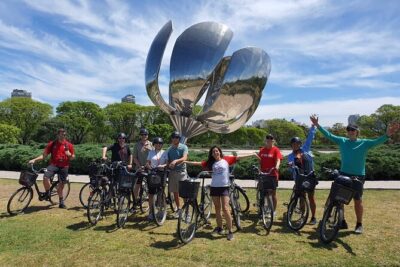
Then the tour finishes at Floralis Generica. This is the giant flower, and the guide shows you and explains who donated it and why. It’s a good final image because it’s not tied to a single historical era. It feels like a city statement, playful but also designed with intention.
Price and What You’re Actually Buying for $109
At $109 per person for about 3 hours, you’re paying for a private local guide plus cemetery admission. The value becomes clear when you look at what’s included versus what most visitors end up doing alone.
On your own, you might walk between a cemetery, a basilica, and a few museums, and still feel like you only absorbed names and photos. Here, you’re getting explanations that turn the stones into characters, and the buildings into stories. That’s exactly what people praise most, the guides who are energetic, clear in English, and strong at storytelling.
Some reviews also mention guides like Marciano, Carlos, and Alex by name, with consistent praise for their English and the way they keep the group moving. That lines up with the main practical reality of this tour: you’ll get more from it if you’re the type who enjoys asking a few questions and paying attention to details.
Who This Tour Suits Best (And Who Might Want a Different Plan)
This is a great fit if you want a focused afternoon with a guide who can connect history, architecture, and cultural influences. It’s also ideal if you like tango context and want tango explained through place, not just as a performance.
It may not be your best match if:
- You hate cemeteries, even guided ones.
- You’re seeking a slow, meandering stroll where you stop for long periods at every site.
- You have one very specific grave location you must reach, because the visit can be time-dependent.
One more tip: wear comfortable shoes. Even though the walk is described as easygoing, several accounts mention a brisk pace, so plan for steady steps, especially in the cemetery section.
Should You Book Recoleta in Depth?
Book it if you want the best kind of Buenos Aires tour, the one that makes famous places feel understandable. You’re not just collecting landmarks. You’re learning why Recoleta looks the way it does, how power and belief show up in stone, and why tango belongs in this neighborhood conversation too.
Skip it or consider a shorter alternative if you mainly want independent sightseeing and you do not enjoy cemetery storytelling. Also, if you’re very sensitive to pace, ask your guide how they plan to manage timing before you commit.
If you want a private guide, English explanations, and a day that feels like it has a point, this is a solid choice.
FAQ
How long is the Recoleta in Depth private walking tour?
It runs about 3 hours (approx.).
About how far do we walk?
The tour is described as a 2-mile walking tour.
Where does the tour meet and where does it end?
You meet outside La Biela Cafe at Av. Pres. Manuel Quintana 596, and you end at Floralis Generica on Av. Pres. Figueroa Alcorta 2301.
What’s included in the price?
A professional English-speaking guide is included, and cemetery admission ticket is included.
What sites are covered around Recoleta Cemetery?
You’ll get a detailed guided visit that includes Evita Perón’s memorial and story, plus other cemetery stories, and time at the Pilar Basilica, Recoleta Cultural Center, and the Old Monastery.
Do we visit Pilar Basilica and Palais de Glace?
Yes. Pilar Basilica is included, and Palais de Glace is also part of the route where tango came of age.
Are any museums included?
Yes. The National Fine Arts Museum is included, and you’ll also see stops like the BA Design Center and Terraces, Museo Nacional de Arte Decorativo, MALBA, and other landmarks.
Is hotel pickup or drop-off included?
No. Hotel pickup and drop-off are not included.
Does it run in rain and can children join?
It operates rain or shine. Children aged 8 and under are free when accompanied by an adult.
Recently reviewed around Buenos Aires
- Meet Locals: Language Exchange Café in Buenos Aires★ 5.0 · 10 reviews
- Piazzolla Tango Show Only In Buenos Aires★ 4.5 · 10 reviews
- Madero Tango Show Including Executive Dinner In Buenos Aires★ 3.5 · 10 reviews
- Private City Tour & Transfer to the International Airport★ 5.0 · 10 reviews
- Esquina Homero Manzi Tango Show Ticket Including Optional Dinner in Buenos Aires★ 4.5 · 10 reviews
- VIP Dinner & Tango Show at El Viejo Almacen★ 4.5 · 10 reviews
- Buenos Aires City Tour★ 4.5 · 11 reviews
- Premium service Buenos Aires city tour for small groups★ 4.0 · 11 reviews
Recoleta Cemetery, compared.
Half-Day Recoleta and Palermo Bike Tour in Buenos Aires
Read our review →
Buenos Aires Bike Tour: North Districts, Recoleta and Palermo
Read our review →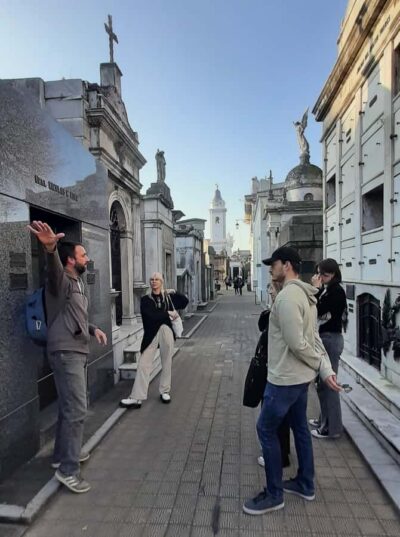
Recoleta Cemetery – Small Group Tour of History & Secrets
Read our review →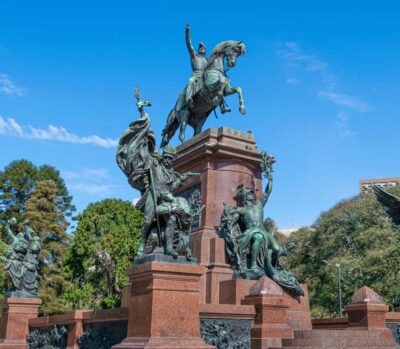

Cultural Experience by Bike around Palermo and Recoleta Max 6 ppl
Read our review →Browse the lists this tour appears in