
Reviewed · RECOLETA CEMETERY
Recoleta & cemetery for curious people
Recoleta and the cemetery are a funny combo, in the best way. This walk is interesting because it helps you connect today’s stylish streets with the forces that shaped Buenos Aires, from railways and foreign capital to the big stone lives inside La Recoleta Cemetery. I love how the route stitches together architecture and economic history, and I love the small-group pace that keeps the conversation going, not a lecture.
One possible drawback is that the cemetery entrance is optional, and the admission ticket is not included. Also, this experience requires good weather, so if rain hits hard, your start may shift or the tour may be canceled and refunded.
Key reasons to do this walk in Buenos Aires
- A focused 2 to 3 hour route across several major Recoleta and central-city landmarks
- University graduate guide and a group size capped at 8 travelers
- British, Austro-Hungarian, and Yugoslav stories tied to what you see on the streets
- Many stops are free to enjoy from the outside, with the cemetery entrance as optional extra
- The ending is inside Recoleta Cemetery, so you do not just look from the gate
Getting Your Bearings in Recoleta, from Plaza General San Martín
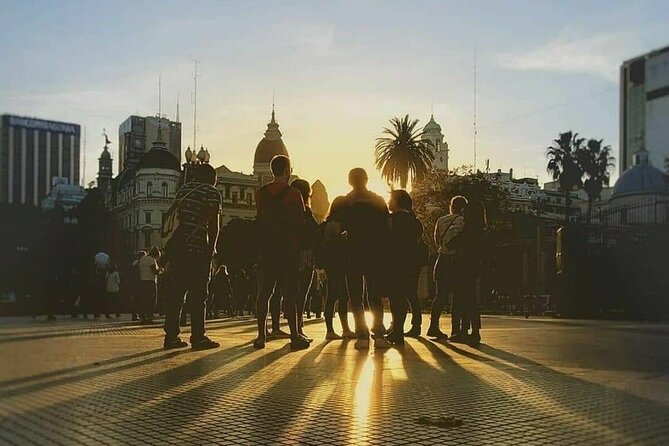
The tour starts at Rapanui, on Av. Sta. Fe 772, and you begin at Plaza General San Martín. This is a smart opener because it gives you a clean “map in your head” before the buildings get grand.
At the plaza, you get context for what came before the neighborhood you see now. Recoleta can look like a self-contained world of elegant facades, but the guide’s job is to show how that world was built, often by money flows and major political shifts far beyond the neighborhood.
The best part here is the tone. This is not a checklist walk. You’re guided through a story chain, so when you reach later stops, you understand why those places exist, not just what they look like.
More Recoleta cemetery visits:
- Buenos Aires: La Recoleta Cemetery Guided Tour in English
★ 4.8 · 1,359 reviews - Recoleta Cemetery Walking Tour
★ 5.0 · 668 reviews - Recoleta Cemetery Tour in English
★ 5.0 · 494 reviews
Plaza to Retiro: Why Buenos Aires Became a Rail-and-Export City
Next you move to Estación Retiro San Martín, which is described as the biggest train station in Latin America. You stand in a place that once mattered to the export economy, and you learn why Argentina ended up with such a large rail system in the first place.
A key theme is agricultural production and how it fed a growth model aimed outward. The guide explains why British capital was interested in developing rail lines, and it makes the whole Buenos Aires story feel less random. The station stops being just impressive architecture and becomes a tool that helped move goods, power, and influence.
This stop is short, around 20 minutes, so it works best as a “set the stage” moment. If you normally like to linger and take lots of photos, do it fast here, then save your longer pauses for Recoleta Cemetery at the end.
Torre Monumental and the British Community in Buenos Aires
From Retiro, you head toward Torre Monumental for a quick, 10-minute stop. The guide uses this landmark to talk about the British community in Buenos Aires and why it showed up on these shores.
Even if you know the broad idea that Britain invested abroad, hearing it tied to a specific building makes it stick. You start noticing how foreign communities left physical fingerprints, especially through finance and infrastructure.
This is also a good moment to look around. The area around a landmark often tells you how the city has moved on, while the tower keeps reminding you of its origin. If you like city “layers,” this is the kind of stop that satisfies.
Edificio Kavanagh and the Belle Epoque Moment
You then reach Edificio Kavanagh for another brief stop, around 10 minutes. Here the focus shifts to the Belle Époque, and how it changed Buenos Aires “for ever,” at least in the way the city brands itself.
This is where the tour gets more visual. You’re not only hearing about influences, you’re connecting them to a specific style in a specific building. The guide also ties the story to the role of large landlords in Argentina’s development, which matters because it explains who had the money to shape the city’s look.
If you prefer tours that show the human side of big changes, this part helps. You get a sense of how wealth and land ownership translated into visible upgrades in the city, not just numbers in a textbook.
A few more Buenos Aires days worth comparing
- Local Foodie Adventure in Buenos Aires with Sherpa Food Tours
★ 5.0 · 6,875 reviews - Buenos Aires City Private Tour with Local Guide
★ 5.0 · 3,475 reviews - Buenos Aires Small-Group City Tour
★ 5.0 · 2,226 reviews - Buenos Aires Hop-On Hop-Off Bus, Free Walking Tours & Discounts
★ 4.5 · 2,218 reviews
Palacio San Martín: Pampa Landlords and Where the Wealth Went
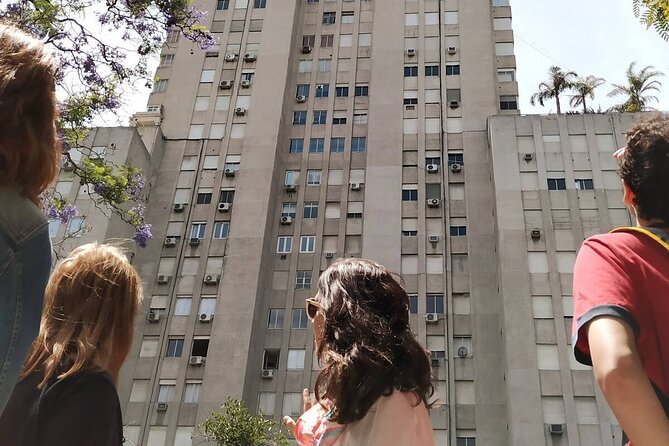
At Palacio San Martín, you continue with that landlord theme. This stop is also around 10 minutes, and the emphasis is on the palaces built by Pampa’s landlords, plus what allowed them to gather so much arable land in the first place.
The question the guide pushes is practical and revealing: where did all that wealth end up? You learn to read the palace as more than a pretty facade. It becomes evidence of power, land control, and the ability to import ideas and style into Buenos Aires.
One thing I like about this segment is that it keeps your feet on the ground. It does not get lost in vague romance about the past. It asks, in plain terms, what these elites did with their advantage.
Edificio Nicolás Mihanovich and the Immigrant Arrivals That Shaped the City
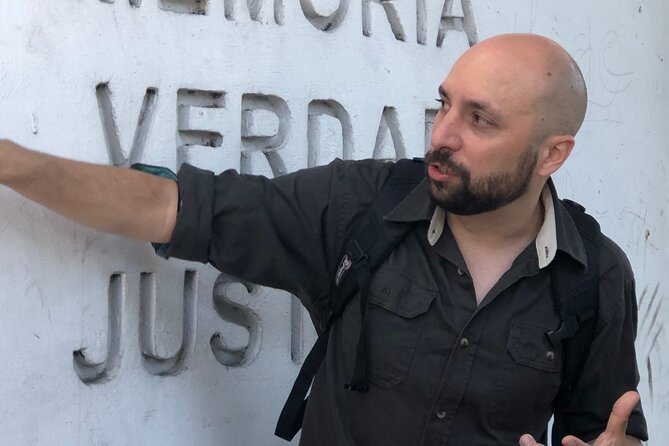
Edificio Nicolás Mihanovich brings the story closer to people, not only institutions. You spend about 20 minutes here, learning about the arrival of Austro-Hungarians and Yugoslavians in Buenos Aires and why so many Europeans came to Argentina.
This is an important balance point. Earlier stops emphasize Britain, finance, and infrastructure. This one highlights that Buenos Aires absorbed waves of people who helped build its social fabric and labor systems.
If your travel style includes learning how migration changes cities, you’ll appreciate this stop. It gives the architecture a wider meaning: buildings and neighborhoods are not only about money, they’re about who moved in and what they needed.
Plazoleta Carlos Pellegrini: The Pampas Were Not Only Cows and Sheep
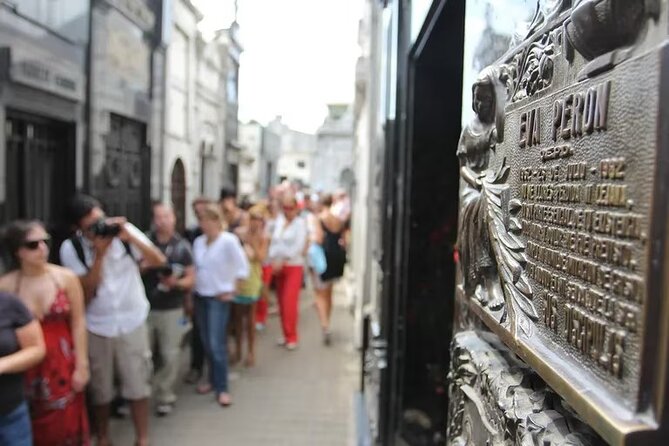
At Plazoleta Carlos Pellegrini, the tour does a quick, 10-minute stop focused on the Jockey Club. The point is clever: the Pampas are not just cows and sheep.
Here the guide ties elite leisure and social institutions to the same broader agricultural economy you heard about earlier. You start seeing that the wealth generated by land also created lifestyle markers, clubs, and networks that influenced how cities operated.
Even if you are not into horse racing or clubs, this stop works because it shows how wealth expresses itself. And it helps explain why Buenos Aires can feel both old-world and completely its own place.
Gomero de la Recoleta and Why Recoleta Has Its Name
Next is Gomero de la Recoleta, another 10-minute stop. The guide connects why Recoleta is called Recoleta with the origin of the huge trees in the area.
This is the kind of stop that feels small until you realize it changes how you walk. Instead of treating the neighborhood’s trees as decoration, you understand them as history clues. The city’s name and its natural features link together, which is exactly what good city walks do.
If you enjoy photo moments, this is a good one. Trees can make the area feel cooler and more shaded, and they give you a calmer counterpoint to the heavy stone and metal of the earlier landmarks.
La Recoleta Cemetery: Optional Entrance, Real Atmosphere, and a Guided Walk Inside
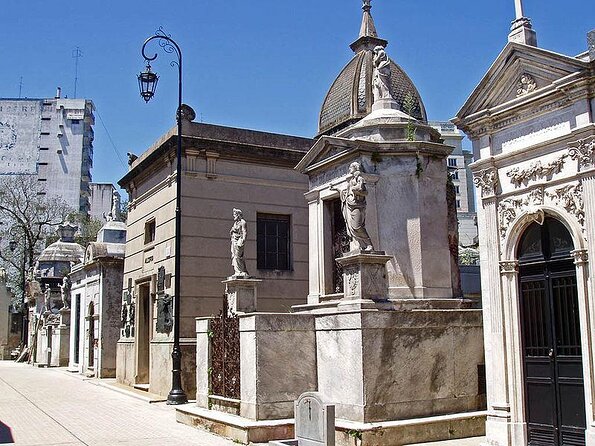
The final stop is La Recoleta Cemetery, with about 20 minutes. The entrance is optional, and cemetery tickets are not included, so plan for the possibility of an extra cost if you want to go in.
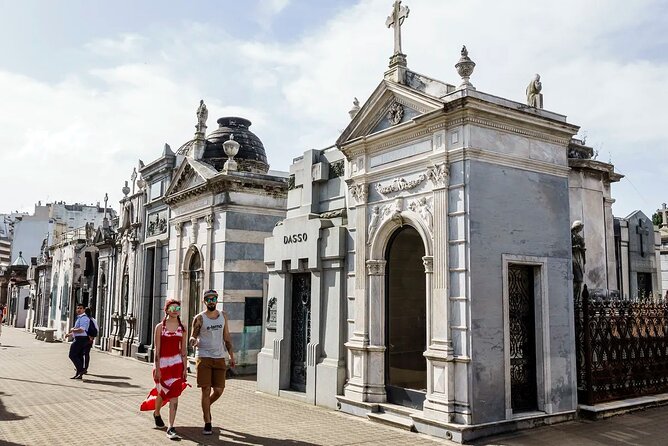
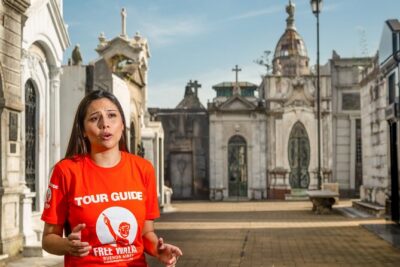
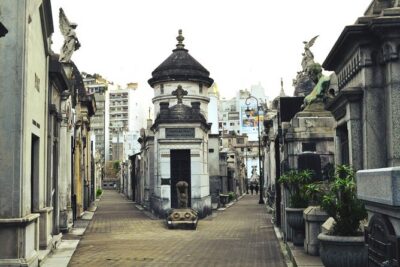
This ending is where the tour earns its title. At the entrance, the guide introduces the cemetery’s inhabitants and the mysteries people talk about. Then, if you choose to enter, you do not just wander. You have a framework for what you’re seeing.
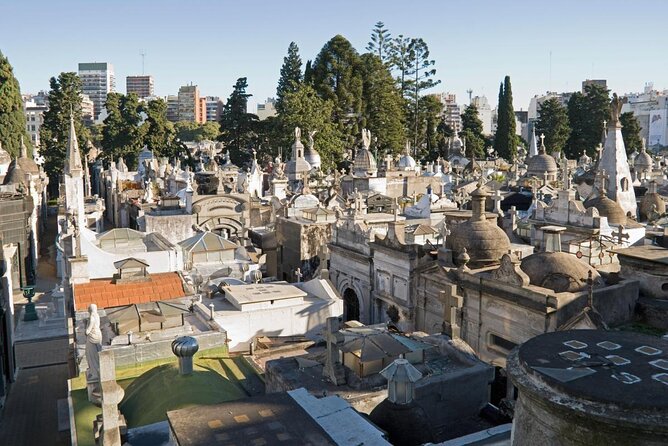
From the outside, the cemetery can feel like a place you visit once and forget. With a guide, it becomes a readable world: symbols, famous burials, and the way the city memorializes important lives. The guide also spends time with you inside, which many people love because it keeps the stories grounded in what you can actually see.
Practical note: since the entrance is optional, decide early if you want to add time inside. You might prefer the outside walk only if you’re pressed for time. If you have the interest, go in and let the guide connect the architecture and symbolism to Buenos Aires itself.
Price and value for a 2 to 3 hour Buenos Aires story walk
At $25.00 per person for a 2 to 3 hour experience, this is strong value for a guided walk that covers multiple top landmarks. Most stops are free to access from the outside, so you’re paying mostly for the guide’s time and the story connections between places.
The small group size, capped at 8 travelers, matters here. It makes it easier to ask questions without feeling like you’re being marched along. This also fits the tour’s style, where the guide keeps things conversational rather than formal.
One extra cost possibility is the cemetery entrance. The ticket is not included, so if you want to go inside La Recoleta Cemetery, budget accordingly. The good news is that you can still enjoy a lot of the experience even if you skip the entrance.
Finally, this tour gets booked ahead, with an average booking window of 31 days. If your dates are fixed, I’d book early. Buenos Aires has no shortage of good walks, but small group tours with high ratings tend to fill.
What it feels like with different guides like Nicolás, Ignacio, or Sophia
The tour can run with different guides, and the tone stays consistent: friendly, story-driven, and built for curious questions. Names you may hear include Nicolás and Ignacio, plus Sophia in at least some departures.
In plain terms, this is the kind of tour where the guide seems to genuinely enjoy the city and wants you to enjoy it too. People often mention the guide making history feel like conversation, with humor and clear explanations. That’s not small talk. It’s how you remember a place, especially in a city where the architecture can look similar until someone points out the differences.
If you learn best by talking and asking, you’re in the right place.
Who should book this walk, and who might want a different style
This tour is a great fit if you want an orientation day for Recoleta plus a real cemetery visit at the end. It also suits you if you like the “why” behind buildings: railroads, foreign capital, immigrant waves, and the elite landowner influence that shaped the city.
It’s also a good choice for people who want structure without feeling rushed. The route is organized, but each stop is short enough that you can keep moving and still take in details.
You might want to pick another option if you prefer long stays at just one site, like spending an hour-plus in the cemetery without a timed group. This one is designed for flow, with the best chunk of time reserved for the ending.
Should you book this Recoleta and cemetery walk?
Yes, if your idea of a good Buenos Aires day includes architecture plus human stories, and you want a guided cemetery visit rather than a lonely self-guided walk. The price is fair for the number of stops you get, and the small group size helps you stay engaged from plaza to tombs.
Book it with the assumption that you’ll want to go into the cemetery. If you skip the entrance, you’ll lose the main payoff, since the tour is built to end inside. If you go, bring comfortable shoes and a weather-friendly mindset, because the experience depends on good conditions.
If your schedule is tight, this is also a smart use of time. Two to three hours gets you a meaningful cross-section of Buenos Aires, from Retiro’s rail legacy to Recoleta’s stone memorials.
FAQ
How long is the Recoleta and cemetery walk?
It runs about 2 to 3 hours.
How much does the tour cost?
The price is $25.00 per person.
Is the cemetery entrance included?
No. The entrance is optional, and cemetery tickets are not included.
Where does the tour start and end?
It starts at Rapanui, Av. Sta. Fe 772, and ends inside La Recoleta Cemetery at Junín 1760.
What’s included in the price besides the guide?
You get a university graduate guide. Many stops are free to view.
What group size should I expect?
The tour has a maximum of 8 travelers.
Is it easy to get to the meeting point by public transport?
Yes, it is near public transportation.
Does the tour require good weather?
Yes. The experience requires good weather, and if it is canceled due to poor weather, you’ll be offered a different date or a full refund.
Recently reviewed around Buenos Aires
- Meet Locals: Language Exchange Café in Buenos Aires★ 5.0 · 10 reviews
- Piazzolla Tango Show Only In Buenos Aires★ 4.5 · 10 reviews
- Madero Tango Show Including Executive Dinner In Buenos Aires★ 3.5 · 10 reviews
- Private City Tour & Transfer to the International Airport★ 5.0 · 10 reviews
- Esquina Homero Manzi Tango Show Ticket Including Optional Dinner in Buenos Aires★ 4.5 · 10 reviews
- VIP Dinner & Tango Show at El Viejo Almacen★ 4.5 · 10 reviews
- Premium service Buenos Aires city tour for small groups★ 4.0 · 11 reviews
- Buenos Aires City Tour★ 4.5 · 11 reviews
Recoleta Cemetery, compared.
Half-Day Recoleta and Palermo Bike Tour in Buenos Aires
Read our review →
Buenos Aires Bike Tour: North Districts, Recoleta and Palermo
Read our review →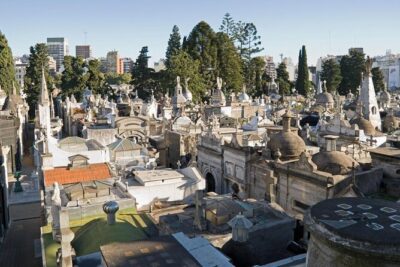
Recoleta in Depth (not literally) Private Walking Tour
Read our review →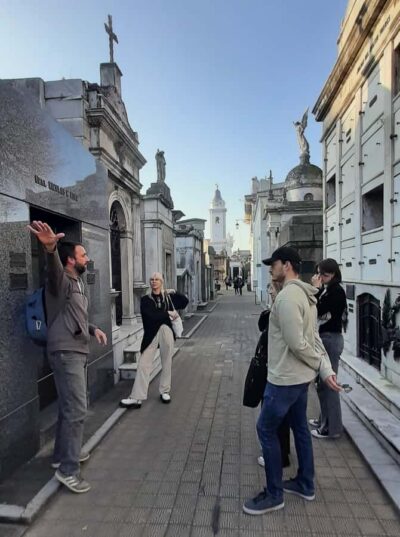
Recoleta Cemetery – Small Group Tour of History & Secrets
Read our review →
Browse the lists this tour appears in