
Reviewed · WALKING TOURS
Shared Afro-Argentine Heritage Walking Tour in Buenos Aires
Buenos Aires has a way of hiding parts of its own story in plain sight. This walking tour is interesting because you move through real neighborhoods and landmark spots, and each stop ties to Afro-Argentine life and culture. You leave with a clearer map of how the city got shaped, and why some chapters were pushed aside (Afro-Argentine history).
I especially like the tour’s focus on named people and specific places, starting with Maria Remedios del Valle at her monument. I also love how the guide connects African roots to everyday Argentinian culture, including tango, asado, and even Lunfardo slang, not just the distant past.
One possible drawback: this is a 2.5 to 3 hour walking tour, so if you want a mostly passive, sit-down sightseeing day, it may feel like too much information while you’re on your feet.
Key highlights you will actually feel
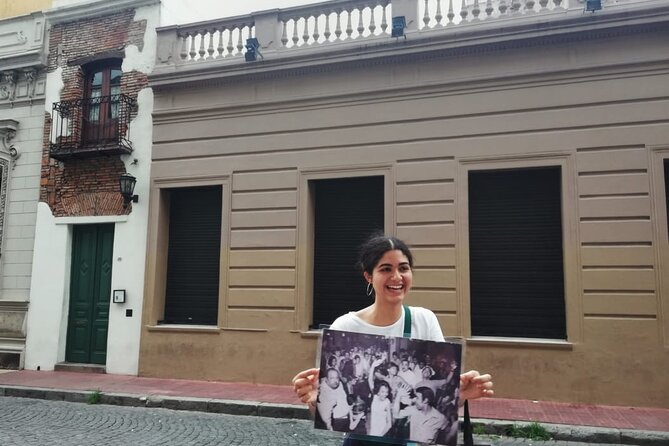
- Small group size (max 15) makes it easier to ask questions and keep the pace human.
- Stop by stop structure keeps the story clear, from Independence War themes to present-day recognition.
- San Telmo conversation time includes a drink break, so it is not just walking and talking.
- Culture connections you can name like tango, asado, and Lunfardo and how African heritage shows up in them.
- Oldest church plus a museum thread through Parroquia de San Pedro Gonzalez Telmo, with pieces over 200 years old.
- Finish at El Tambo Afro, a Black-owned shop where you can use a restroom and support local Black talent.
Why this Afro-Argentine walk makes Buenos Aires click
This tour works because it treats the city like a textbook you can read with your feet. Instead of starting with facts and staying there, it starts with landmarks you pass anyway, then explains what you likely would have missed. The route is compact, mostly in San Telmo and nearby areas, so you are not wasting time crisscrossing town.
What I like most is that the tour is not only about slavery as a topic. It is about how Afro-Argentinians shaped Argentina’s culture and how recognition was later reduced or erased. You can feel the intent behind the pacing, and it comes across in the consistent five-star comments about guides who keep the group engaged and answer questions.
Guides from Lunfarda Travel include leaders such as Karl and Julia, and the tour style lands somewhere between storytelling and a walking lecture. In other words, you are learning, but you are also getting room to talk and connect the dots to the wider African diaspora experience.
More Historical Tours in Buenos Aires
- Historical Sherpa Food Tour of San Telmo with Street Food, Drinks
★ 5.0 · 920 reviews - Nazis in Buenos Aires: a historical walking tour
★ 4.9 · 193 reviews - San Telmo: Historical Guided Tour with Street Food & Drinks
★ 5.0 · 87 reviews
Start at the Maria Remedios del Valle Monument, where the story begins
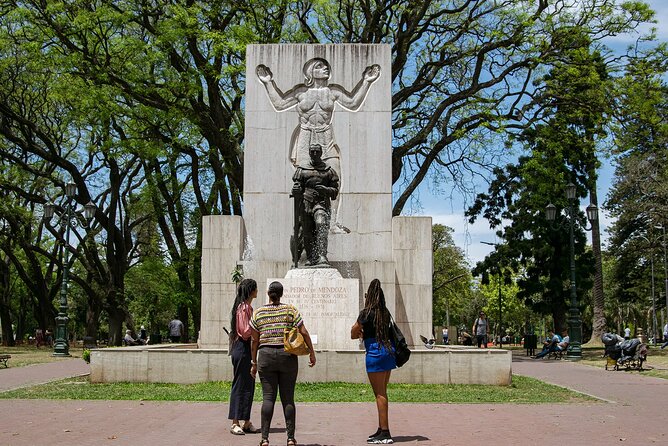
You meet near Estados Unidos, C1072 in Buenos Aires at 2:00 pm. The first stop is the María Remedios del Valle Monument, and you spend about 20 minutes there. This is not a random statue stop. The guide introduces Maria Remedios del Valle as a key historical figure tied to the Independence Wars, and it sets up the whole theme: Afro-Argentine history belongs in the foundation, not in the footnotes.
Even if you are only casually familiar with Argentina’s independence period, this opening makes you pay attention to details you normally ignore, like who gets remembered publicly and who does not. The fact that the admission here is free matters too. You can show up, listen, and keep moving without stopping to plan ticket logistics.
A practical note: start with a mind-set of curiosity. The tour begins with a strong figure and then keeps returning to how that legacy connects forward.
San Telmo stop: where you talk about Africa before colonization
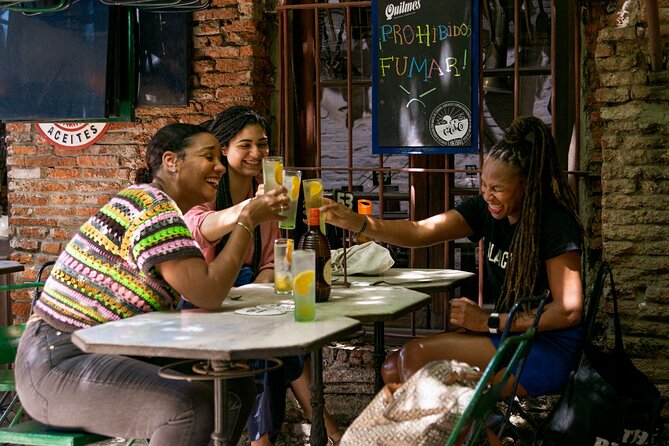
From the monument you head into San Telmo, still about 20 minutes at this stage. San Telmo is a good choice because it is tightly packed with old Buenos Aires vibes, and the guide uses that atmosphere to anchor the conversation. At this stop you get a short break with a drink and a guided discussion about Africa before colonization and about daily life for people who worked in households.
This matters because it shifts the story away from a single moment in time. Instead of framing Afro-Argentine heritage only through loss and forced labor, the tour emphasizes a longer arc, including communities, traditions, and daily realities.
The drink break also helps the tour stay balanced. You get a moment to rest your legs, reset your attention, and then continue with the next layers of history.
Galería del Viejo Hotel: how immigration and erasure reshape culture
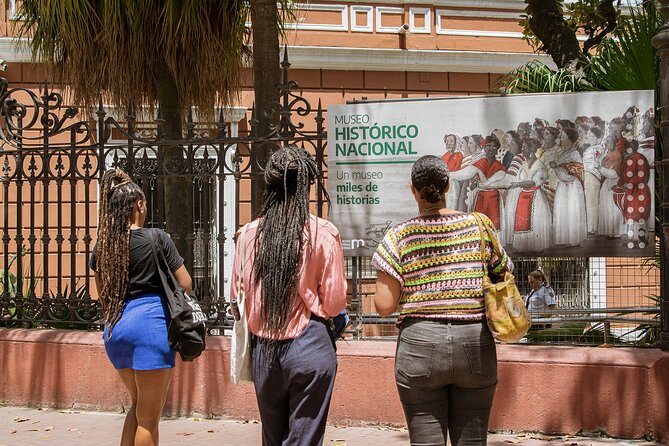
Next you move to the Galería del Viejo Hotel area, with about 15 minutes here. This stop is about the process of European immigration and how, symbolically, it helped erase African heritage from the national story.
What makes this stop effective is the way it connects history to culture you already know. You learn about African roots behind cultural assets people often treat as purely European or entirely local. Tango, asado, and Lunfardo slang are highlighted as examples, which gives you a concrete way to remember what you learned once you are back in your hotel room.
If you are the type of traveler who wants facts tied to real-world meaning, this section will satisfy you. You will walk away asking yourself why these influences were minimized in formal narratives, and how language and music can carry identity long after official stories change.
Admission is listed as ticket free for this stop too, so the value is in the guide’s explanation, not in paying to enter.
More Walking Tours in Buenos Aires
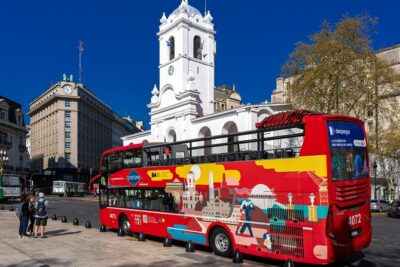
- Buenos Aires Hop-On Hop-Off Bus, Free Walking Tours & Discounts
★ 4.5 · 2,218 reviews - Buenos Aires: La Boca Guided Walking Tour in English
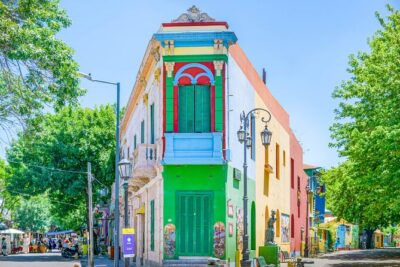
★ 4.8 · 1,587 reviews - La Boca Walking Tour
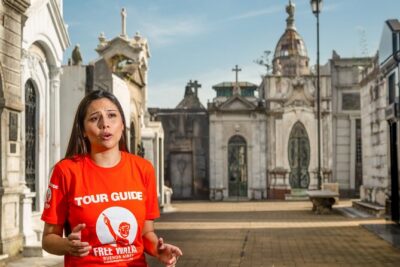
★ 5.0 · 1,029 reviews - Recoleta Cemetery Walking Tour
★ 5.0 · 668 reviews
Parroquia de San Pedro Gonzalez Telmo: oldest church, museum pieces over 200 years old
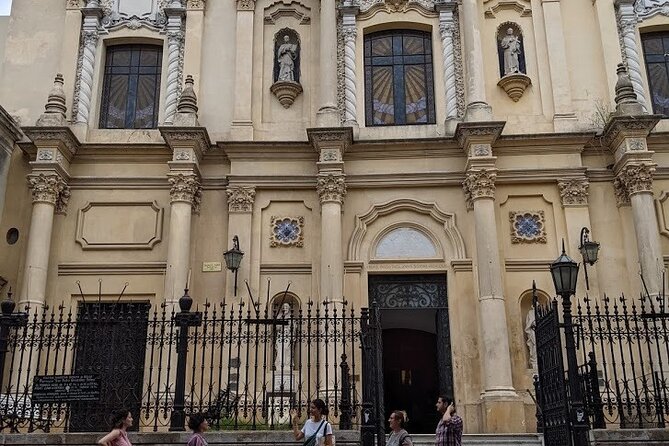
The fourth stop is the Parroquia de San Pedro Gonzalez Telmo, with about 10 minutes. Work began in 1735, and the guide brings in a major historical detail: under the expulsion of the Jesuits, the Bethlemite religious order continued the work. There is also a museum component mentioned, with pieces dating back over 200 years.
This stop adds texture. You get a feel for the older Buenos Aires built environment, and then the tour uses it to talk about how institutions preserved certain records while other histories were weakened or ignored. Even though the time here is shorter than some other stops, the guide’s framing makes it count.
One small consideration: since the visit window is short, you may not get a full museum exploration. Plan to treat this as a stop for context and interpretation, not for deep self-guided museum time.
Again, the stop is free to enter according to the tour details, which keeps the schedule straightforward.
Plaza Dorrego: the antiques square and the bigger question of memory
You then pass by Plaza Dorrego, about a quick scenic and interpretive section. This square is famous because the antiques market takes place here on Sundays. The guide uses the location to support the theme of what Buenos Aires chooses to surface in public spaces.
This part works best if you are paying attention to the meta-story. Antiques markets can tempt you into thinking the past is only objects, décor, and collectibles. The tour asks a better question: whose history is treated as valuable, and whose story gets left out of the display?
Even if your visit day is not Sunday, the stop helps you see the neighborhood rhythm, and it gives you time to look around before the final history-heavy sections.
Parque Lezama: origins of the Afro population in the Rio de la Plata
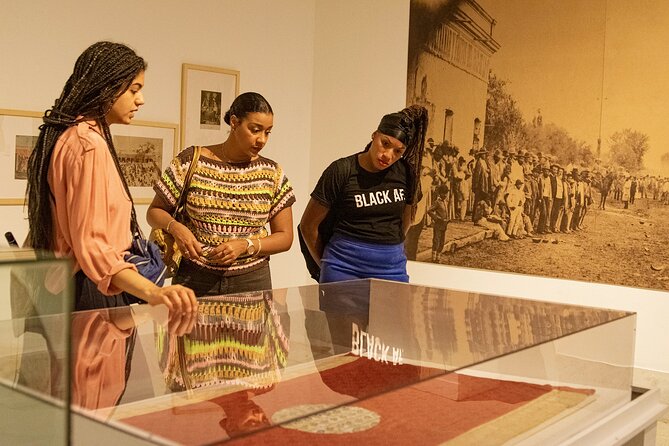
The tour meets you at Parque Lezama for about 20 minutes. This is where the tour zooms in on the origins of the African population in the Rio de la Plata region, including the slave trade in what today is Argentina.
If you care about accuracy and clarity, this stop is one of the most important. It is not only emotional. It is also explanatory, connecting the arrival and forced movements of people to the later presence of Afro-Argentinians in Argentine society.
It also gives your earlier stops more power. When you understand the roots of the population, the earlier discussion about erasure and cultural influence starts to feel less abstract. You can connect the dots between “how people were brought here” and “how their cultural impact survived even when recognition did not.”
Admission is listed as ticket free, so the cost of the tour is really paying for the guided interpretation that you would not get on your own.
Finish at El Tambo Afro: support Black talent and use the restroom
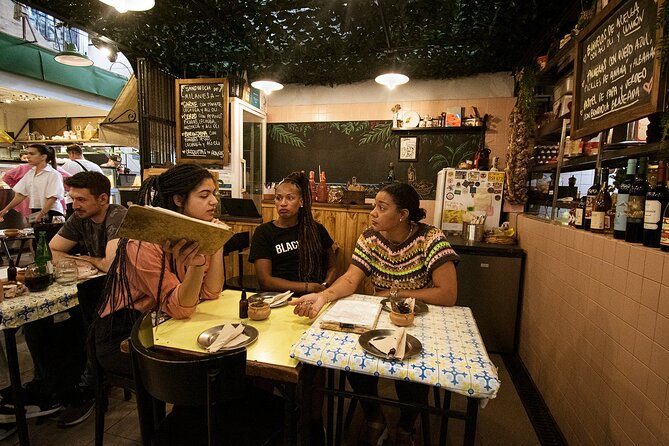
The tour ends at El Tambo Afro, at Bolívar 1063. This is the first shop in Argentina described as created for Black talents, and it acts as a meaningful finish line.
In the real world, ending at a business matters. It turns what you learned into something you can reinforce with action. The tour also mentions that you can use the restroom before continuing your day, which is a tiny detail, but a genuinely useful one.
The final stop is short, about 10 minutes, but it leaves you with something practical: a place to step into after a history-focused walk, and a chance to support a Black-owned space.
Price and value: what $70 buys you in the real world
The price is $70 per person for a shared walking tour lasting about 2 hours 30 minutes to 3 hours. That sounds like a chunk until you look at what is included. You get guiding services through multiple stops, the tour is capped at 15 travelers, and the stops are set up with free admission at the listed points.
Where the value really lands is in the format. A small group plus structured stops means you are not just paying for someone to point out buildings. You are paying for a guided narrative that connects history to language and culture, including specifics like Maria Remedios del Valle and how African roots show up in tango and Lunfardo.
Also, the tour is booked on average 39 days in advance, which usually signals steady demand. If you are traveling in a peak period, you will likely have better odds reserving earlier rather than waiting until the last minute.
Tips for guides are not included, and they are always welcomed by the team. If you felt your guide kept the group engaged and answered your questions well, setting aside a tip is a fair way to support that work.
What to expect from the guide style (Karl, Julia, and the team tone)
From the way guides are described, the guiding style is active. Guides like Karl and Julia are described as engaging, friendly, and able to answer questions rather than only reading a script. People also mention that the tour feels paced, not rushed, and that there is time to talk during breaks.
In plain terms, if you prefer a walking tour where you can ask why something matters, this format usually fits. If you want purely silent sightseeing with minimal talking, you may find it less your speed, since the guide is constantly interpreting what you see.
You will likely get a lot of small but memorable details tied to each place. That is why the stops feel connected rather than like a checklist.
Who this tour is best for in Buenos Aires
This tour is a strong fit if you want to understand Afro-Argentine identity in a way that connects to culture you can recognize in everyday life. It is also a great choice for first-time visitors because it helps you interpret Buenos Aires beyond postcard scenes.
It can be especially meaningful for travelers who have felt like Black history was missing or watered down in other destinations. The tour is designed around visibility and recognition, not vague representation.
It may be less ideal if you:
- get tired of walking for long stretches,
- want a nightlife or food-first day with minimal history,
- prefer only broad overviews rather than specific named context.
On the plus side, the tour says most travelers can participate, and service animals are allowed. It is also near public transportation, which makes it easier to work into your day.
Should you book this Afro-Argentine Heritage Walking Tour?
I think you should book it if you want Buenos Aires to make more sense to you. This is one of those experiences that changes how you read the city while you are still there. The combination of small group size, named historical anchors like Maria Remedios del Valle, and culture connections such as tango and Lunfardo gives you practical takeaways you will remember.
I would skip it only if you are not in the mood for a guided history-style walk or if you simply do not like spending multiple hours moving and listening. Otherwise, it is a high value use of time, and it ends at El Tambo Afro, which lets you turn learning into support.
FAQ
How long is the tour, and what time does it start?
It lasts about 2 hours 30 minutes to 3 hours and starts at 2:00 pm.
How much does the tour cost?
The price is $70.00 per person.
Where do I meet and where does the tour end?
You start at Estados Unidos, C1072 in Buenos Aires and end at Bolívar 1063 at El Tambo Afro.
How big is the group?
This is a shared tour with a maximum of 15 travelers.
What is included in the price?
The tour includes guiding services.
Are any admissions required at the stops?
The tour details list admission ticket free for the stops included in the walk.
Is cancellation free?
Yes. You can cancel up to 24 hours in advance for a full refund.
Is the tour suitable for most travelers, and are service animals allowed?
The tour states that most travelers can participate, and service animals are allowed. It is also near public transportation.
Recently reviewed around Buenos Aires
- Meet Locals: Language Exchange Café in Buenos Aires★ 5.0 · 10 reviews
- Piazzolla Tango Show Only In Buenos Aires★ 4.5 · 10 reviews
- Madero Tango Show Including Executive Dinner In Buenos Aires★ 3.5 · 10 reviews
- Private City Tour & Transfer to the International Airport★ 5.0 · 10 reviews
- Esquina Homero Manzi Tango Show Ticket Including Optional Dinner in Buenos Aires★ 4.5 · 10 reviews
- VIP Dinner & Tango Show at El Viejo Almacen★ 4.5 · 10 reviews
- Buenos Aires City Tour★ 4.5 · 11 reviews
- Premium service Buenos Aires city tour for small groups★ 4.0 · 11 reviews
Walking Tours, compared.
Buenos Aires Hop-On Hop-Off Bus, Free Walking Tours & Discounts
Read our review →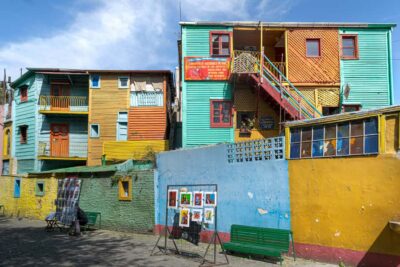
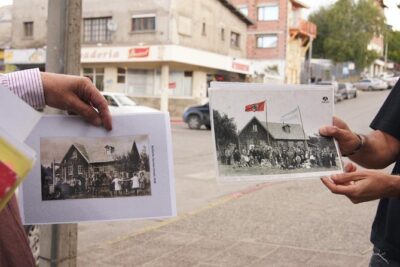
German Footprint & Nazi presence – Walking Tour in Bariloche
Read our review →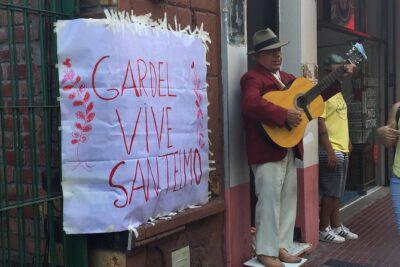
Full Day Buenos Aires Private Walking Tour – Your Own Personal BA 101
Read our review →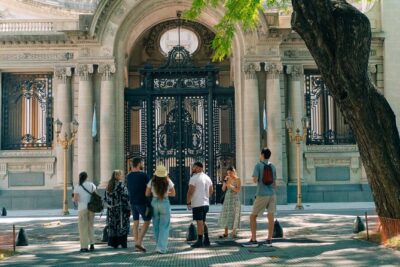
Discover Buenos Aires: Walking Tour Through San Telmo & Center!
Read our review →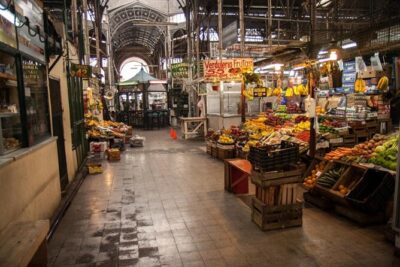
Browse the lists this tour appears in