Reviewed · BUENOS AIRES TOURS
Small-Group Buenos Aires Graffiti Art NorthTour
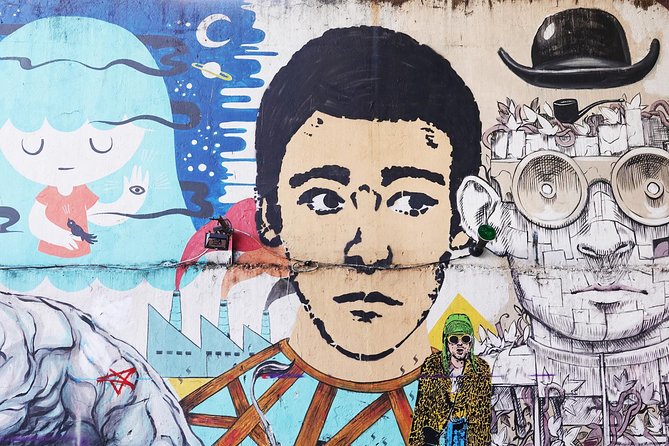
Buenos Aires graffiti is street-level communication, part art, part politics, part neighborhood memory. I like that this tour focuses on meaning behind the murals instead of just pointing at pretty walls. I also like the small group size (max 25), which makes it easier to ask questions and get real backstory. One thing to keep in mind: the total time is about 2 to 3 hours, and if you prefer wall time only, some of the early narration may feel like too much background.
You’ll hit street art strongholds across the north side of the city, moving by minibus and on foot. Expect open-air galleries, graffiti hotspots, and even a stop at a street art bar. If you want the city beyond the main sights, this is a smart way to do it without spending your whole day figuring out where to go.
Key things you get with this Buenos Aires Graffiti North Tour
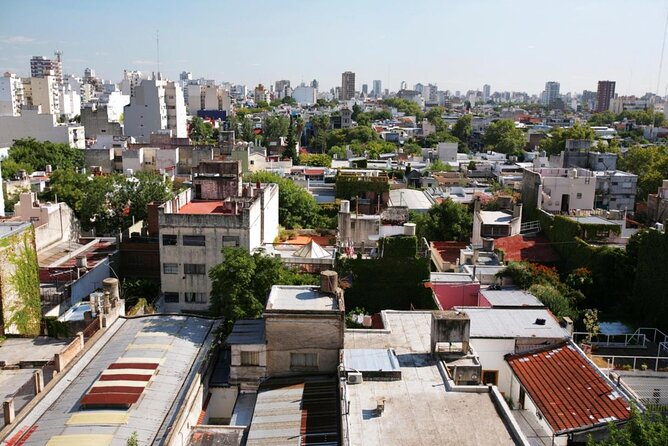
- Small group of up to 25 for a more personal pace
- Neighborhood mix in the north including Palermo, Colegiales, Chacarita, and Villa Crespo
- Street art bar stop plus open-air mural walls and graffiti hotspots
- Mini guidebook to help you keep the context after the tour ends
- Option to see and buy art from artists (with affordable pieces)
- Non-profit angle where proceeds support Buenos Aires urban art
Why Buenos Aires graffiti fans will like this approach
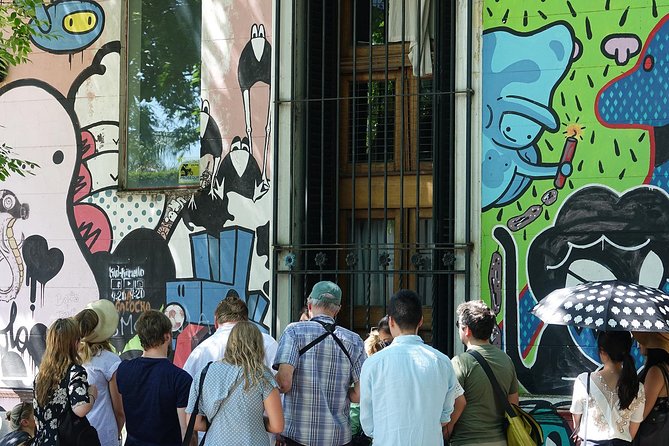
This tour is built for people who want to see Buenos Aires as a living city, not a museum of famous landmarks. The core idea is simple: street art in Buenos Aires often carries messages, social commentary, and local history. If you’ve only ever looked at graffiti as decoration, you’ll start seeing it as language.
The best part for me is the balance. You’re not stuck in one neighborhood. You move around enough to notice style differences and how artists respond to each area. You also get a guide who can explain what you’re seeing, including how murals and stencils grew into a bigger cultural conversation.
The other big plus is the small-group format. With a max of 25, it’s easier to gather close for photos and questions, and harder for the tour to feel like a conveyor belt. That matters, especially in busy street settings where you can easily lose the plot.
A few more Buenos Aires days worth comparing
- Local Foodie Adventure in Buenos Aires with Sherpa Food Tours
★ 5.0 · 6,875 reviews - Buenos Aires City Private Tour with Local Guide
★ 5.0 · 3,475 reviews - Buenos Aires Small-Group City Tour
★ 5.0 · 2,226 reviews
Meeting at Conde 391 and ending near Honduras and Carranza
The tour starts at 4:00 pm at Conde 391, C1426. The meeting point is a street art gallery run by Graffitimundo, which is a nice way to settle in before you head out. The tour ends at the intersection of Honduras and Ángel Justiniano Carranza (C1414).
Because there’s no hotel pickup, you should plan to get yourself to the start point using public transportation or a short cab ride. Also, the tour does not loop back to your starting spot, so you’ll want a plan for how you’ll get home afterward.
Timing is another practical detail. Some versions of the experience are described as about 2 hours, while others are described as a 3-hour graffiti tour. Either way, it’s a compact outing, which is great for a first visit day. But if you’re trying to cram in other afternoon plans, give yourself a cushion.
Stop one in Palermo: street art from local and international artists
Palermo is the opening act, and it makes sense. It’s a neighborhood where you can often spot a mix of local voices and international influences. You get about 30 minutes here, and the goal is to set the visual tone for the rest of the tour.
In practice, this kind of start helps you learn how to look. Instead of only asking what the artwork is, you start asking why it’s there. Palermo also gives you a quick sense of how street art fits into daily urban life, not just into dedicated mural walls.
A possible drawback is pace. Since it’s early in the tour and time is limited, you might feel like you are speeding past some walls if you’re the type who wants to slow down for every detail. If that’s you, ask your guide to point out one or two specific works to focus on during the first stop, then take your own time with the rest.
Colegiales and the flea market world of murals and stencils
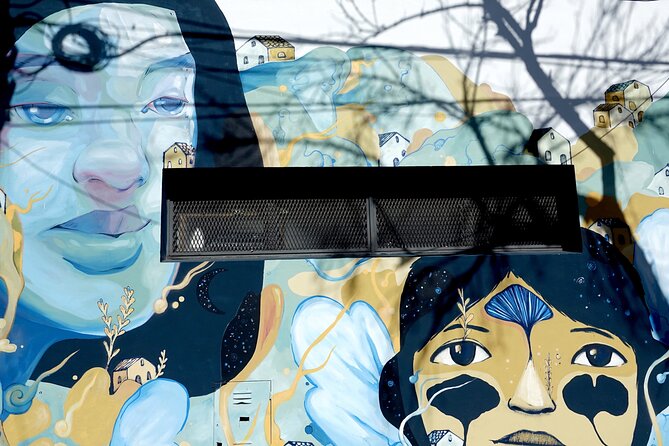
Colegiales is where the tour shifts into “residential neighborhood” mode. You get about 1 hour 30 minutes here, and it’s framed around the Flea Market area, where you can see murals, stencil works, and paste-ups all around.
This is usually the kind of stop that makes the tour feel worth it. The neighborhoods around markets tend to be layered: you see artwork, commercial energy, everyday foot traffic, and the sense that the walls belong to local life. Colegiales is also a strong place to learn how street artists choose surfaces, not just themes.
If you come in expecting only large spray-painted pieces, the stencils and paste-ups will likely surprise you. Stencil art can carry sharp political or social messages with fewer strokes, and paste-ups can feel more like posters that got promoted to the street.
One practical consideration: the street noise can make it harder to hear your guide in real time. A small mic would help, but you can still fix this yourself by standing closer to the guide during key explanations and taking photos during quiet moments instead of over-talking the audio.
A different sort of day out of Buenos Aires:
- Buenos Aires Hop-On Hop-Off Bus, Free Walking Tours & Discounts
★ 4.5 · 2,218 reviews - Buenos Aires: Piazzolla Tango Show with Optional Dinner
★ 4.4 · 2,122 reviews - Buenos Aires: City Highlights Guided Tour with Transfer
★ 4.7 · 1,946 reviews - Buenos Aires: Hop-On Hop-Off City Bus Tour
★ 4.2 · 1,855 reviews
The north route includes Chacarita and Villa Crespo, plus a street art bar
Even though the tour description gives more detail for Palermo and Colegiales, it also clearly states you’ll visit Chacarita and Villa Crespo. These are the neighborhoods that round out the “north side as an art map” idea.
Chacarita is often the kind of area where street art feels less like an accessory and more like part of the neighborhood identity. Villa Crespo fits a similar vibe, with plenty of wall space for different techniques and styles. The real value of including both is that you can compare how artists adapt their work to different streets and different community rhythms.
Then there’s the stop that most standard city tours skip: the city’s only street art bar. It’s a chance to see how street art culture lives off the walls too, not just on them. If you’re the kind of person who likes art that feels social and current, this can be a fun mid-tour reset.
A small heads-up from how these tours are described and how they’re run: the mix of minibus time and on-foot time means you’ll still be walking some streets. You’ll want comfortable shoes, and you’ll want to keep your phone charged for the photo moments.
Mini guidebook, artist stories, and buying art responsibly
You should plan on receiving a mini guidebook for artistic Buenos Aires. That matters more than it sounds. A guidebook helps you remember what you saw, and it gives you a way to keep interpreting the city after the tour ends. Street art can look random until someone gives you the framework, then suddenly you start noticing patterns.
The tour also includes time to learn about the cultural and political meaning behind many artworks. That’s not just trivia. It helps you avoid treating murals like wallpaper. Instead, you learn to read them as statements: who is speaking, what problem they’re highlighting, and how the artist is using the city as their canvas.
There’s also the possibility to purchase affordable pieces from the artists themselves. This is a huge value add when it’s done well. You get to support the people making the art, not just the businesses selling prints of it. If you’re considering a purchase, go slow. Look closely, ask what inspired the work, and make sure you’re comfortable with what you’re buying, not just excited in the moment.
How much it costs, and when $38 is a great deal
At $38 per person for about 2 to 3 hours, this isn’t a luxury add-on. It’s priced like a practical outing that gives you both art and context. The value comes from three places.
First, you get multiple neighborhoods, not just one “photo stop” area. Second, you get a guide who can explain what you’re seeing. Several guides are credited by name in past experiences, including Kat, Lucresia, and Anna, and the common thread is that the tours focus on details and meaning, not generic talking points. Third, the non-profit angle means your money supports Buenos Aires urban art.
Could it still feel expensive if you only want quick photos? Sure. If you’re not interested in understanding the messages behind street art, you might find the storytelling-heavy format less satisfying. But if you want your photos backed by understanding, this price tends to feel fair.
Getting the most out of your guide and your 4:00 pm start
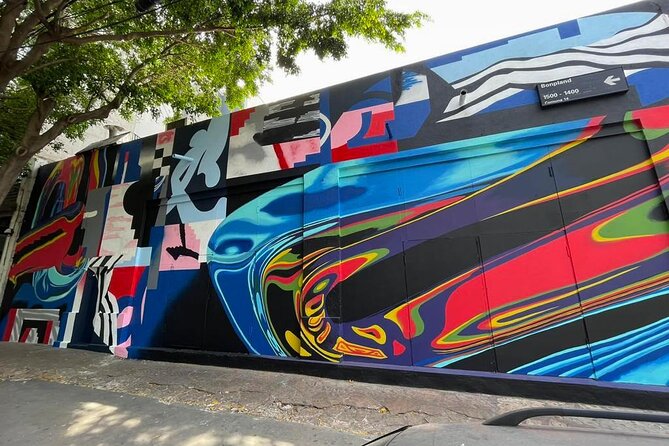
A 4:00 pm start is smart for street art. You avoid the harshest midday heat, and you still get enough daylight for clear photos. It also fits well after a morning of classic sights, which is exactly how many people structure a first visit.
To maximize your experience, go in with two habits:
1) Ask one or two questions about meaning, not only about technique.
2) Don’t just photograph. Pay attention to where the artwork sits and what the guide says about why that matters.
If you’re sensitive about hearing, stand where you can clearly listen during explanations. Street corners in Buenos Aires are loud, and in at least one experience the lack of a small mic was noted. You can’t control the city’s background noise, but you can control your position and timing.
Also, if you’re expecting a purely visual walk with zero theory, adjust your mindset. Some tours lean heavier on background early on. A good approach is to let that setup help you look better later, then focus on the walls once you’re in the neighborhoods.
Reliability and the one thing to plan for
One negative data point matters: there have been cases where a guide did not show due to an accident and lost communications for hours, leading to refunds and invitations to other dates. That’s not the norm, but it does mean you should keep your plans flexible.
Practically, I recommend you travel with a backup option for the rest of your afternoon, especially if you’re on a tight schedule. The tour can also be weather-dependent, since street walking is part of it.
Who should book this graffiti North Tour
Book this if you want Buenos Aires from the sidewalk level. It’s a great fit for art lovers who like context and for curious travelers who want a route that takes you into neighborhoods you might skip on your own.
It also fits well for couples, solo visitors, and anyone who enjoys asking why things are placed where they are. If you’re the type who loves history but wants it told through real street scenes, you’ll likely enjoy the guide’s explanations.
If you only want famous landmarks, or if you strongly dislike walking in noisy areas, you may find other tours better suited. This one is about street art culture, not polished interiors.
Should you book it or skip it?
I’d book this tour if you want a compact, small-group way to see real street art across Palermo, Colegiales, Chacarita, and Villa Crespo, with an actual explanation of what the work means. At $38, it can be excellent value, especially if you care about the stories behind the murals and stencils, not just the images.
I’d think twice only if you’re very schedule-tight, hate any background narration, or you know you’ll struggle hearing your guide in street noise. If that sounds like you, you might still love the visuals, but you’ll want to manage your expectations.
FAQ
How long is the Buenos Aires graffiti North Tour?
The tour is described as about 2 hours, and it’s also referred to as a 3-hour graffiti tour. Plan for a half-afternoon outing.
Where do the tour start and end?
The tour starts at Conde 391, C1426, at the Graffitimundo street art gallery. It ends at Honduras & Ángel Justiniano Carranza, C1414.
What neighborhoods will you visit?
You’ll see street art across Palermo, Colegiales, Chacarita, and Villa Crespo.
What is included in the price?
A professional guide is included. The experience description also says you’ll receive a mini guidebook.
Is hotel pickup included?
No, hotel pickup and drop-off are not included.
What if the weather is bad?
The experience requires good weather. If it’s canceled due to poor weather, you’ll be offered a different date or a full refund.
Recently reviewed around Buenos Aires
- Meet Locals: Language Exchange Café in Buenos Aires★ 5.0 · 10 reviews
- Madero Tango Show Including Executive Dinner In Buenos Aires★ 3.5 · 10 reviews
- Piazzolla Tango Show Only In Buenos Aires★ 4.5 · 10 reviews
- Esquina Homero Manzi Tango Show Ticket Including Optional Dinner in Buenos Aires★ 4.5 · 10 reviews
- Private City Tour & Transfer to the International Airport★ 5.0 · 10 reviews
- VIP Dinner & Tango Show at El Viejo Almacen★ 4.5 · 10 reviews
- Buenos Aires City Tour★ 4.5 · 11 reviews
- Premium service Buenos Aires city tour for small groups★ 4.0 · 11 reviews
Buenos Aires Tours, compared.
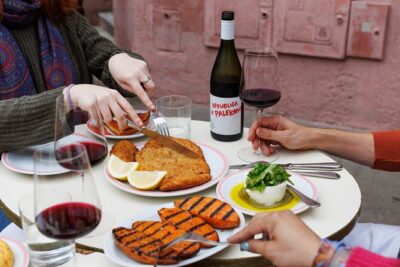
Local Foodie Adventure in Buenos Aires with Sherpa Food Tours
Read our review →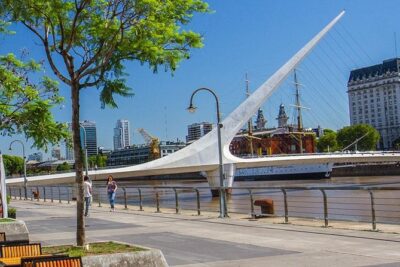
Buenos Aires City Private Tour with Local Guide
Read our review →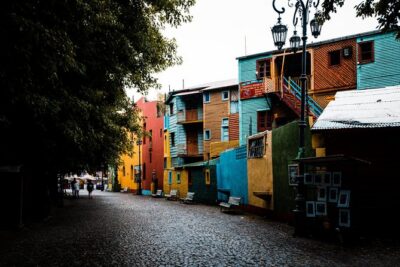
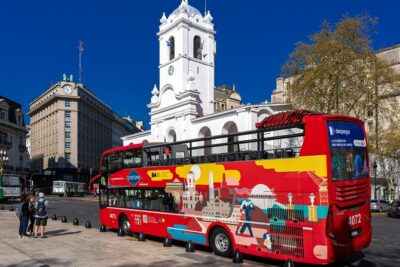
Buenos Aires Hop-On Hop-Off Bus, Free Walking Tours & Discounts
Read our review →