
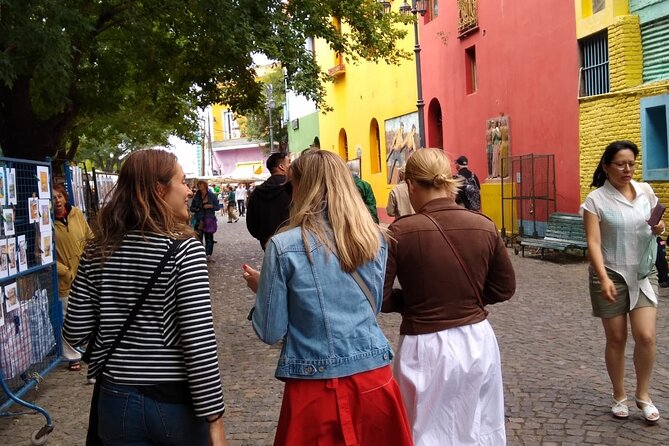
Reviewed · LA BOCA & CAMINITO
Social History and Secrets of La Boca (pick up option)
This tour is interesting because it reads like a shortcut through La Boca’s everyday life, from an unusual bridge to real community spaces. You get big-picture context, but it stays grounded in what’s in front of you. I like that it mixes engineering curiosity with neighborhood institutions, not just photo stops.
I love two things most. First, Paola De Luca keeps the pace friendly and makes room for questions, so the history lands in a way you can actually use. Second, the time inside Conventillo Historico 1881, where you meet its artist owners, turns a building into a living story you can understand.
One possible drawback to think about: you learn about the Bombonera and Benito Quinquela Martin at the right points, but you do not go inside the Boca Juniors stadium museum or the Quinquela Martin Fine Arts Museum. If you want indoor museum time, you might want to plan that separately.
Key highlights to look for
- Puente Transbordador Nicolas Avellaneda: you learn how a transporter bridge worked, and why this one is rare (one of 8 still existing in the world).
- Bomberos Voluntarios de La Boca: you visit the volunteer fire station, said to be the first in the country, plus a small museum with late 19th-century trucks.
- Conventillo Historico 1881: you step into a tenement house and meet the artist owners.
- La Bombonera, outside view only: you hear history, customs, and folklore, then you see the stadium from the street.
- Bar La Perla coffee stop: you take a break that fits how porteños slow down for a drink, with coffee and/or tea included.
A 2.5-hour La Boca walk that feels personal, not rushed
Social History and Secrets of La Boca is built like a guided route you can follow without getting lost in jargon. The total time is about 2 hours 30 minutes, and the tour is capped at a maximum of 10 people, which matters because it keeps the conversation moving. It also means Paola De Luca can tailor explanations on the fly, especially if you ask questions.
You start at Martín Rodríguez & Avenida Don Pedro de Mendoza and end at Caminito. That’s convenient for planning your afternoon, since Caminito is a common place to continue exploring on foot. Also, the start location is near public transportation, so you do not have to fight complicated logistics before your walking shoes even warm up.
The price is $35 per person. For that, you get a lot of “real stops,” meaning places you can see and enter where it counts. Conventillo Historico 1881 and the Volunteer Fire Station are included with admission. Coffee and/or tea are included too. And even when admission is free at other points, the guide context turns them from scenery into meaning.
More Historical Tours in Buenos Aires
- Historical Sherpa Food Tour of San Telmo with Street Food, Drinks
★ 5.0 · 920 reviews - Nazis in Buenos Aires: a historical walking tour
★ 4.9 · 193 reviews - San Telmo: Historical Guided Tour with Street Food & Drinks
★ 5.0 · 87 reviews
Puente Transbordador Nicolas Avellaneda: transporter bridge mechanics, explained simply
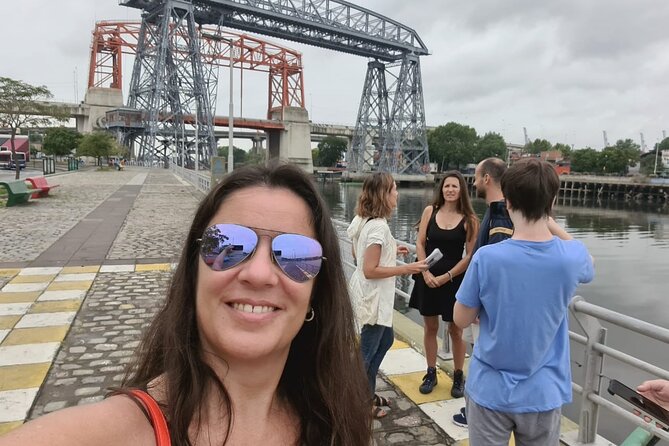
Your first stop is Puente Transbordador Nicolas Avellaneda, and the point is not just to admire a bridge. You learn how a transporter bridge worked, plus why this one is special: it is one of only 8 still existing in the world.
Why this is worth your time: bridges like this are the kind of object you might otherwise walk past with a quick photo. In this stop, you get the “okay, now I get it” version of how the system functions, which helps you read the structure instead of guessing. Even if you are not an engineering person, it is usually the kind of explanation that clicks fast, because the bridge is visual.
What to watch for: treat this like a short lesson. Listen for what moves, what stays fixed, and what purpose the design serves. Then look back at the bridge with that explanation in your head. It is the fastest way to turn a landmark into real understanding.
Time at this stop is short, about 10 minutes, so come ready to absorb rather than analyze. If you love technical details, ask Paola to repeat the explanation in plain terms.
Bomberos Voluntarios de La Boca: the volunteer fire station and its late 1800s trucks
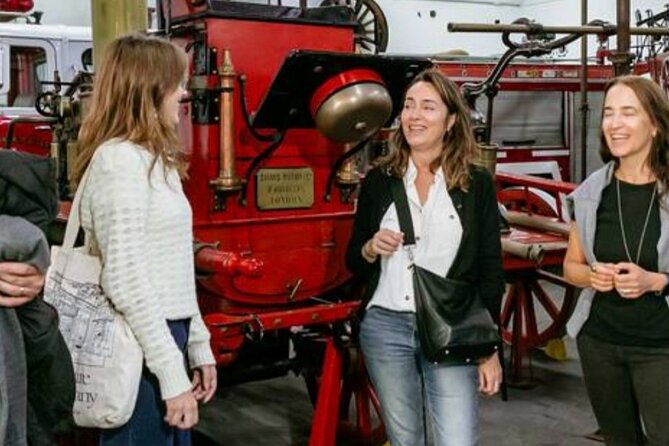
Next you head to Plazoleta Bomberos Voluntarios de La Boca, where you visit the Volunteer Fire Station. The tour also highlights that it was the first in the country, and you see a small museum that displays the first trucks used in the late 19th century.
This is the stop that often changes how you see La Boca. A fire station is not the first place most people think of when they imagine the neighborhood. But that’s exactly why it works. You are getting a slice of civic life, where the community organized its own safety.
Why the museum matters: seeing older equipment in its setting gives you scale. It is one thing to hear that communities used to rely on early infrastructure, and another to stand where that equipment is remembered. Even the short visit is enough to make the idea feel concrete.
Practical note: this is about 15 minutes total at the plaza and station area, and admission is included. Wear shoes you can move in comfortably, because you are going from walking mode to viewing mode and back again.
Conventillo Historico 1881: tenement house + artist owners, not just a photo stop

The heart of the tour for many people is Conventillo Historico 1881. You go inside a tenement house, and you get to meet its artist owners.
This combination is powerful because it connects two layers. You learn about a shared living space and its social meaning, then you meet people who use that space in creative ways. The tenement is not treated like a sealed historical artifact. It is treated like a home that still has a voice.
Why I think this stop is a smart use of your time: it answers the question most visitors accidentally skip. Not just what something looked like, but how people shaped it and lived in it. When you meet the artist owners, the building stops feeling like a prop and starts feeling like a continuation.
This stop runs about 30 minutes, and admission is included. Take your time here. Ask questions. If you care about art, ask how their work connects to the space. If you care about daily life, ask what it means to live and create in a place with this kind of past.
More of La Boca and Caminito:
- Buenos Aires: La Boca Guided Walking Tour in English
★ 4.8 · 1,587 reviews - La Boca Walking Tour
★ 5.0 · 1,029 reviews - Buenos Aires: Tickets to Boca Juniors Museum & Stadium
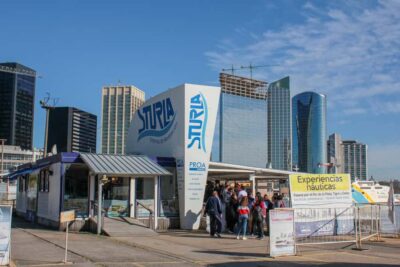
★ 4.5 · 581 reviews - Buenos Aires: Navigation from Pto. Madero to La Boca
★ 4.1 · 147 reviews
La Bombonera from the outside: history, customs, and folklore you can feel
From Conventillo, you head to Estadio Alberto J. Armando (La Bombonera). You see the stadium from the outside, then you learn about its history, customs, and folklore.
Even without entering, the guide context makes this stop worthwhile. Stadiums have their own language, and La Boca’s stadium is tied to identity. You will likely notice details around the exterior that feel less random once you know what the customs and folklore refer to.
Time here is about 15 minutes, admission is free for the outside view, and the goal is orientation plus story. If you expected a museum ticket, note what you get here instead: you get the neighborhood link to the stadium, not the indoor exhibits.
Caminito: the open-air museum walk, paced for pictures and context
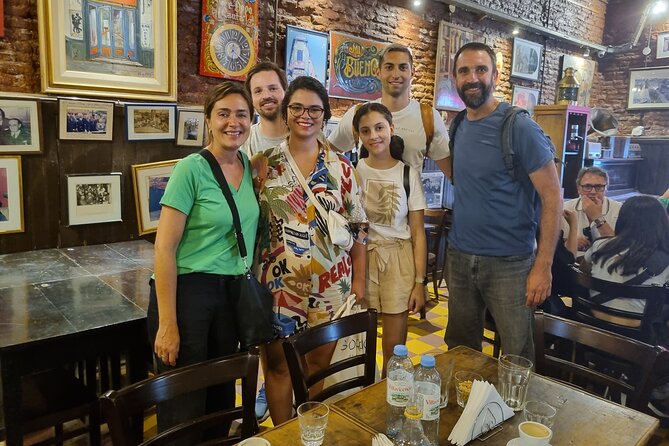
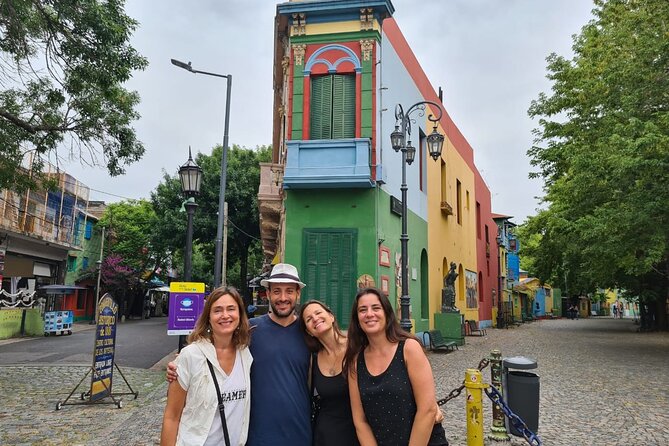
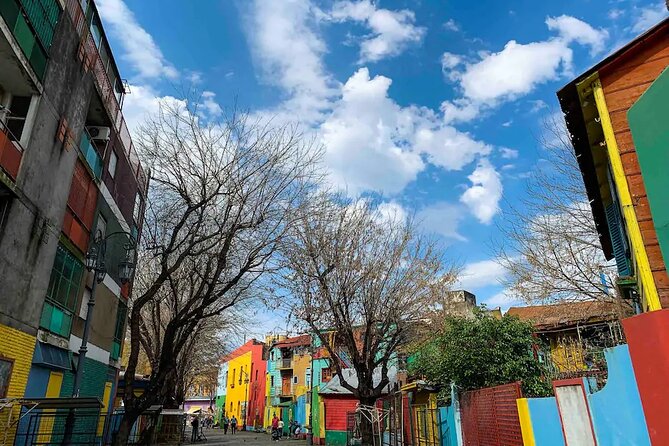
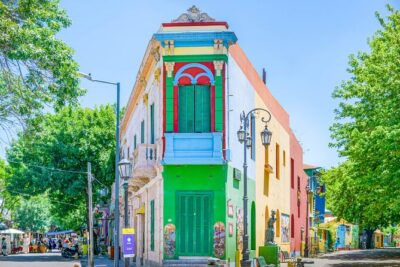
You then walk through Caminito, described as an open-air museum. You get about 20 minutes here, and admission is free.
This is a different kind of learning. You are not inside an exhibition. You are moving through a space where art, buildings, and street character sit next to each other. The guide framing helps you look beyond surface color. You start noticing themes, how the area is organized, and why this place draws people in.
Tip for your visit: use Caminito time for two things. First, take a few slower looks at the details you genuinely like. Second, get one or two photos quickly and then stop, so you do not spend the whole walk snapping and missing the vibe.
Because the tour ends at Caminito, you can extend your exploration after the guide finishes. If you want more time, this is the easiest place to linger.
Bar La Perla and the coffee pause that keeps the tour human
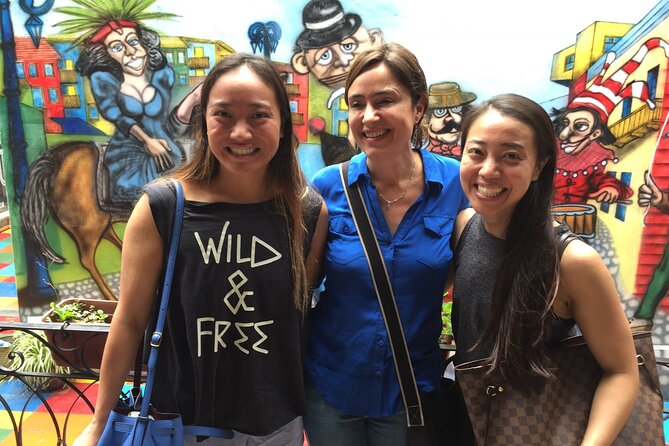
About two-thirds of the way in, you stop at Bar La Perla. You get a coffee and the tour follows the idea that you should take a break in a way that feels local, like porteños usually do. Coffee and/or tea are included.
This stop lasts about 40 minutes, and that duration is not accidental. It gives you time to reset, ask follow-up questions, and settle your feet. A walking tour can get mentally heavy. A café pause makes it lighter.
What I like about this design: you are not rushed through the most “touristy-looking” moment. You eat and drink, then you keep going with fresh energy for the last stretch.
Small advice: bring a little patience and treat the coffee pause as part of the story. You are learning about places and people, and cafés are where conversations happen.
Colegio San Juan Evangelista: Salesian church tied to immigrants
Next is Colegio San Juan Evangelista, a Salesian School and Church. The tour explains that it arrived with the immigrants to La Boca.
This stop is short, around 3 minutes, and that’s exactly right for a site like this. When you see a school and church connected to immigration, you get a quick but meaningful clue about how communities recreated support systems in a new place.
Even in a brief stop, you can ask questions that connect to your interests. If you care about education, ask how the school functioned. If you care about religion and community, ask about the church’s role in daily life.
Because it is a brief stop, do not treat it like a full church visit. Treat it like a signpost that helps you understand the neighborhood’s structure.
Museo Benito Quinquela Martin: learning who he was, without museum time
The final stop on the route is Museo Benito Quinquela Martin, focused on the story of Quinquela, often described here as the father of the La Boca neighborhood.
The important detail for planning: you do not enter the Quinquela Martin Fine Arts Museum. Admission is listed as free for the stop, but the tour’s time with Quinquela is about the background, not indoor museum browsing.
This still works well, especially if your time is tight. It gives you the “who and why” behind a person connected to the neighborhood. Then you can decide later if you want to spend extra time inside a museum at your own pace.
What to do at this stop: listen for the key idea the guide wants you to take away about Quinquela. Then look around the area like you are mapping the neighborhood to a person, instead of treating it as one more exterior photo.
Price and practical value of $35 for 8 meaningful stops
Let’s talk value plainly. $35 for about 2.5 hours sounds modest, and in this case it lines up with what you actually receive.
You get:
- multiple stops that cover different types of places (infrastructure, civic services, housing, sports culture, street art)
- admissions included for Conventillo Historico 1881 and the Volunteer Fire Station
- a coffee and/or tea break at a notable café
- a small group size, up to 10 people, which makes the explanations more usable
- guided time that stitches stops together so you understand what you are seeing
If you try to DIY this route, you would spend money on admissions and you would likely spend time figuring out which stops have the best “story value.” Here, the guide chooses those points for you, and Paola De Luca keeps the flow readable and question-friendly.
In other words, you pay for context, access, and pacing. That is the part that adds up.
Who should book Social History and Secrets of La Boca
This tour is a good fit if you:
- want to see La Boca beyond the obvious photo streets
- like your history explained in a way you can talk about
- enjoy small-group tours where questions are welcome
- prefer a manageable half-day walk rather than an all-day marathon
It also suits solo visitors, couples, and anyone who likes structure but still wants room to ask questions during the walk.
If you are the type who only likes big museum time, you might feel the limits, because the route includes several “learn but do not enter” segments, like the Bombonera and the Quinquela museum exterior-focused approach.
Should you book this La Boca history walk
Yes, if you want a guided route that mixes uncommon sights with real community places, and you like explanations you can ask about. The strongest reason to book is the way the tour is paced for understanding, with Paola De Luca giving space for questions. That makes the difference between seeing La Boca and getting the neighborhood’s logic.
Book it particularly if you value:
- Conventillo Historico 1881 with artist owners
- the Volunteer Fire Station museum with early trucks
- a walk that ends in Caminito, so you can keep going afterward
Skip or supplement it if your priority is indoor museum time inside the Boca Juniors stadium museum or the Quinquela Martin Fine Arts Museum. In that case, add those separately to your plan.
FAQ
How long is the Social History and Secrets of La Boca tour?
It runs for about 2 hours 30 minutes.
Where does the tour start and end?
It starts at Martín Rodríguez & Avenida Don Pedro de Mendoza and ends at Caminito.
What does the $35 price include?
Coffee and/or tea are included, plus entrance to the Conventillo and the Volunteer Fire Station.
Do you enter the Boca Juniors stadium museum?
No. The tour does not include entering the Boca Juniors Stadium Museum.
Do you enter the Quinquela Martin Fine Arts Museum?
No. The tour does not include entering the Quinquela Martin Fine Arts Museum.
How big is the group?
The tour has a maximum of 10 travelers.
Can I cancel for free?
Yes. You can cancel up to 24 hours in advance for a full refund.
Recently reviewed around Buenos Aires
- Meet Locals: Language Exchange Café in Buenos Aires★ 5.0 · 10 reviews
- Madero Tango Show Including Executive Dinner In Buenos Aires★ 3.5 · 10 reviews
- Piazzolla Tango Show Only In Buenos Aires★ 4.5 · 10 reviews
- Esquina Homero Manzi Tango Show Ticket Including Optional Dinner in Buenos Aires★ 4.5 · 10 reviews
- Private City Tour & Transfer to the International Airport★ 5.0 · 10 reviews
- VIP Dinner & Tango Show at El Viejo Almacen★ 4.5 · 10 reviews
- Buenos Aires City Tour★ 4.5 · 11 reviews
- Premium service Buenos Aires city tour for small groups★ 4.0 · 11 reviews
La Boca & Caminito, compared.

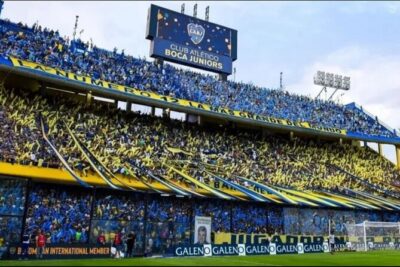
Boca Juniors Tickets for a Match at La Bombonera
Read our review →
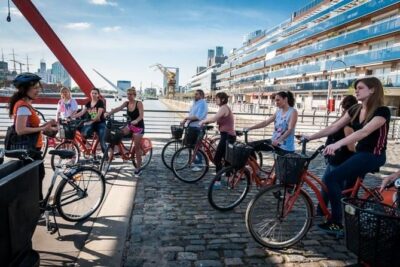
Buenos Aires Bike Tour: San Telmo and La Boca Districts
Read our review →
Browse the lists this tour appears in