
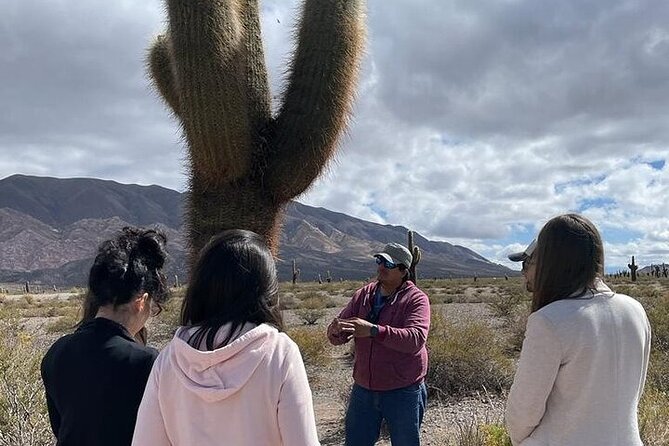
Reviewed · SALTA TOURS
6-Day Northern Adventure: from Salta to Jujuy
This trip works because it strings together big, memorable stops across Salta and Jujuy, with time at viewpoints so you are not just staring out a bus window. I love the chance to photograph the impossible whiteness of Salinas Grandes, then look for condors on the Cuesta de Lipán. I also like the way the itinerary hits iconic towns of the Quebrada de Humahuaca, including Purmamarca, Tilcara, Uquía, and Humahuaca. One possible drawback to plan for: it is a fixed route with meals mostly on your own, so you’ll want cash and snack flexibility.
If you want a mostly organized road trip, this fits. Pickup is handled based on your flight arrival, the group stays to a maximum of 40, and English is offered. You’ll still spend plenty of hours in transit, so the value depends on whether you enjoy moving day after moving day.
Key highlights worth your attention
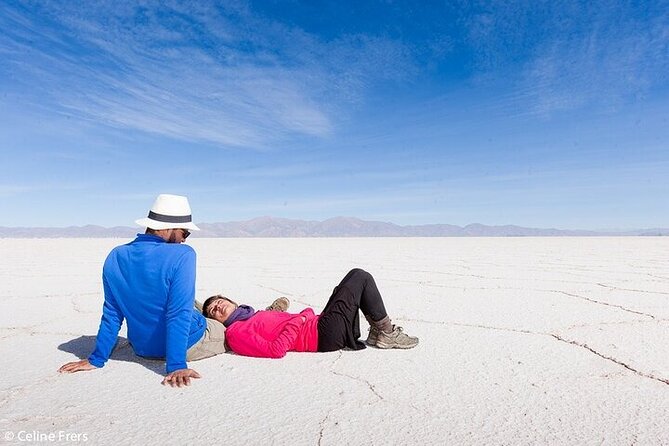
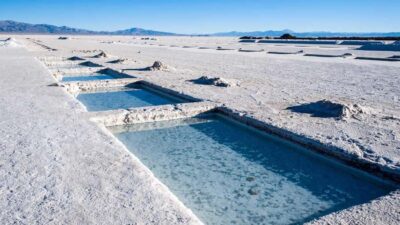
- Salinas Grandes photo time with free time to take in the stark salt flats near the Salta-Jujuy border
- Ruins of Tastil paired with remote, high-altitude driving through history and scenery
- Cuesta de Lipán condor chances during the descent, with major viewpoint energy
- Quebrada de Humahuaca classic towns in one go: Purmamarca, Tilcara, Uquía, and Humahuaca
- Cafayate overnight stop so you do not rush wine country
- Breakfast included for most mornings, plus airport transfer on the final day
Getting started in Salta: airport pickup that sets the tone
Your trip begins at Gen Belgrano Airport in Salta. If you arrive by flight, you will be met and transferred to your hotel in the city center, based on your arrival time. That matters more than it sounds. When your first day is already scheduled, you avoid the common chaos of figuring out local transport after a travel day.
Day 1 is intentionally light. There are no major timed excursions listed, just rest time to get oriented and prepare for the next days of driving. For me, that kind of buffer is valuable because northern Argentina can feel thin and dry at higher elevations, and you want an easy start before the route stacks up.
This is also where you should think about your travel style. This is a group tour with set stops, not a free-form wander. If you like a clear plan and want someone else handling the logistics, you’ll likely enjoy how smooth it feels. If you prefer total control of your schedule, you might feel boxed in once the van starts rolling.
A few more Salta days worth comparing
- From Salta: Full-Day Trip to Salinas Grandes and Purmamarca
★ 4.6 · 914 reviews - From Salta: Full-Day Tour to Cafayate with Wine Tasting
★ 4.5 · 478 reviews - From Salta: Salinas Grandes, Purmamarca & Los Colorados Hike
★ 4.3 · 356 reviews
Day 2 Northbound: Tastil ruins, Salinas Grandes, and Cuesta de Lipán viewpoints
Day 2 is the visual heavyweight. You leave central Salta with a guide and head first to the Ruins of Tastil. The visit is short, around 30 minutes, but the payoff is big: ancient ruins in a region that feels remote and high. Even with limited time, this stop adds a historical layer before the day turns more into raw nature and road-trip photography.
Next comes San Antonio de los Cobres for about 2 hours. This is one of those practical stops that keeps the schedule human. You get a reset, and the program mentions lunch here, though lunch is not explicitly listed as included. Either way, it is a good point in the day to eat, refill water, and check your camera batteries.
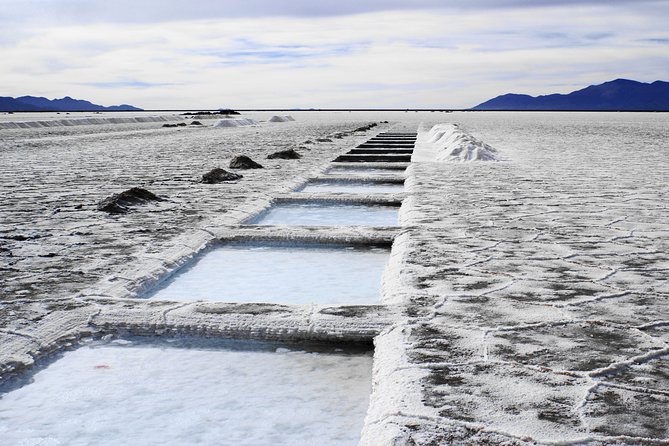
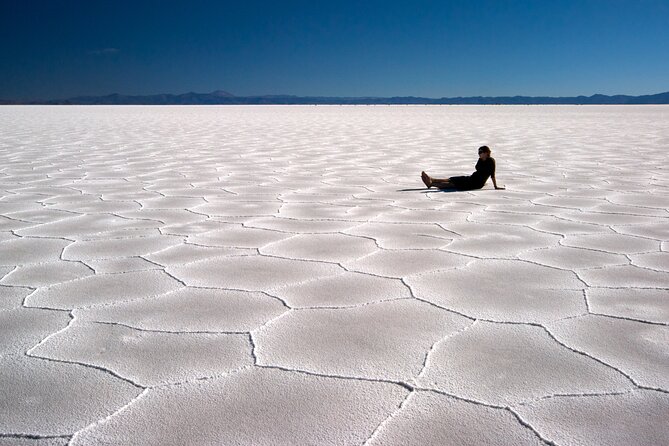
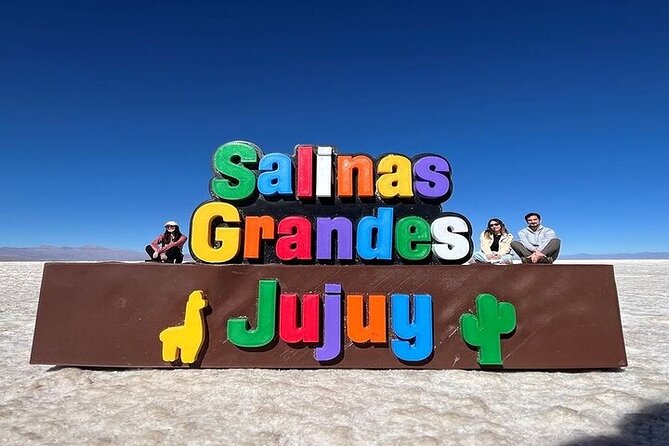
Then you reach Salinas Grandes, near the border between Salta and Jujuy, via Route 40. You get around 2 hours, plus free time for photographs. This is not subtle. The salt flats read like white space under bright sky. Bring something for the glare, and consider wearing layers if the wind picks up.
After that, the day continues to Cuesta de Lipán for another viewpoint-focused segment of about 2 hours. The program explicitly suggests a chance to spot condors in their natural habitat. Even if you do not see one, the descent itself is the point: you’re driving through dramatic grades with regular viewpoint moments. If you are traveling with someone who loves animals and big sky moments, this is where their excitement usually turns on.
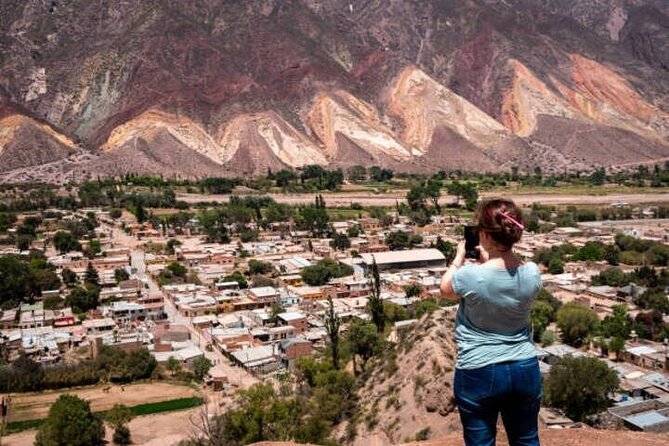
Finally, you arrive at Purmamarca. You get about 30 minutes, and the program highlights the Cerro de los Siete Colores view. It is a quick visit, but it is iconic. The tradeoff for an itinerary this full is that Purmamarca is not long enough to deep-dive, but it is long enough to understand why it’s famous.
You return to Salta after the day’s loop, dropped off at your hotel in the city center.
Day 3 Through the Quebrada: Purmamarca, Tilcara, Uquía, and Humahuaca
Day 3 is about the Quebrada de Humahuaca, starting with pickup at your hotel. The route threads through Purmamarca and Tilcara, then continues toward Uquía and Humahuaca.
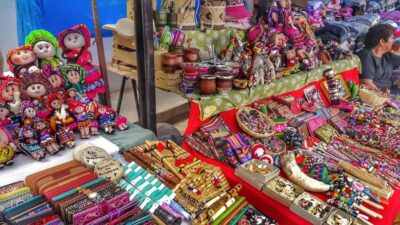
You start in Purmamarca again, this time around an hour. You’ll see Cerro de Los Sietes Colores, plus the church and the craft market. This is a good mix: one part of the stop is pure viewpoint, and the other part is human scale, local crafts, and small-town rhythm.
Next you head to Tilcara for Pucará de Tilcara, about an hour. The program calls it an ancient fortress, and it’s a different kind of experience than the salt flats. Instead of open space, you’re looking at structures and how people used the land in earlier times. Along the way, the tour passes the Posta de Hornillos, adding another stop that feels like a nod to travel history.
From Tilcara, the day moves toward Huacalera and the Tropic of Capricorn pass. This segment is listed as a chance to admire the colors of a hill called Pollera de la Colla. It’s one of those “drive, pause, look” parts of the route. If you like geography and weird mineral colors, you’ll appreciate it. If you only care about towns, you might want more time on main streets.
Then comes Uquía, about 30 minutes, with the Church of Uquía. The standout detail here is the mention of impressive paintings of the Arquebusier Angels. It’s a compact stop, but it adds religious art to the Andean mix, and it gives you a quiet contrast to the bigger open-air views.
After Uquía, you head to Humahuaca, where you visit the cathedral and the Independence Monument, also known as El Indio, by sculptor Soto Avendaño. Lunch happens here but is not included, and then you return to Salta. The drive also includes a panoramic view of “The Painter’s Palette,” framing the town of Maimará.
Day 3 is a long day because it is doing a lot: multiple towns, one fortress, one church, and several famous landmarks. It’s also one of the best days for first-time visitors because it shows you what makes this region so different from the lowlands.
Day 4 Toward Cachi and Cafayate: Lerma Valley roads and Cuesta del Obispo
Day 4 starts with a road trip through the Lerma Valley to Carril. From there, the route continues through Chicoana and enters Quebrada de los Laureles, then Quebrada de Escoipe. You reach Maray, a small mountain village, and then enter the Cuesta del Obispo, described as a winding route with panoramic views of the Enchanted Valley and small houses with corn and fruit crops.
This is the day that feels like it was designed for people who like roads as much as stops. Instead of only “arrive, see, leave,” you get a long chain of changing views and villages. The program does not list exact durations for each segment after the initial route description, but it is clearly structured as a moving day before the bigger town arrival.
You arrive in Cachi and spend about 2 hours. There’s a panoramic view of Nevado de Cachi and Payogasta, plus a visit to the Museum of Archeology and the Church. The museum is listed as free in the program, but museum tickets are also listed as not included in the overall tour notes. Translation: expect some places may be covered and some may not, depending on how the stops are handled on the day. If you want certainty, ask the provider when you confirm.
Then you continue along Route 40 for mountainous landscapes and towns along the Calchaquí River, crossing Quebrada de Las Flechas, San Carlos, and Animaná, arriving in Cafayate. You spend the night in Cafayate. That overnight is a real benefit. Cafayate is not an “ideal hour here” stop. It deserves a night so you can enjoy evening time and not just speed through.
If you get motion sick easily, this is a day to plan for it. The Cuesta del Obispo’s curves are part of the point, so you might want to bring what works for you.
A different sort of day out of Salta:
- Full-Day Tour Cafayate Calchaqui Valleys with Wine
★ 4.5 · 347 reviews - From Salta: Cafayate, land of wines and imposing ravines
★ 4.4 · 347 reviews - From Salta: Serranías del Hornocal & Hill of 14 Colors Tour
★ 4.4 · 339 reviews - From Salta: Cachi and Los Cardones National Park Tour
★ 4.5 · 285 reviews
Day 5 Cafayate wine town and the Quebrada del Río de las Conchas
Day 5 keeps you in the Calchaquí Valley loop. You start in Cafayate, described as the youngest city in the Calchaquí Valleys and internationally recognized for wines, especially Torrontés. The program says Torrontés can be tasted on winery visits, whether handmade or industrial. You get about 3 hours here.
This is a good moment to match your expectations to your time. A 3-hour town block plus the driving schedule after it means you will not become a sommelier. But it is enough time to understand why Cafayate is a destination and to do one winery visit if you choose. If you drink, plan your pace so you can still enjoy the afternoon road portion.
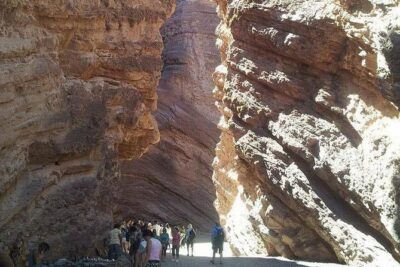
After lunch, which is not included, you head back toward Salta through the Quebrada del Río de las Conchas. Here the program lists wind and water eroded formations: dunes, the toad, the bishop, the devil’s throat, castles, and the amphitheater. This part is all about shapes, colors, and rock formations from different angles.
The guide drops you off back at your hotel at the end of the tour. That’s helpful because it reduces the uncertainty of where you end up after a long day of canyon stops.
This is also where it helps to travel with the right mindset. You get repeated viewpoint opportunities, but it is not a hiking trek described in the program. If you love long walks, you might wish for more time on foot. If you prefer photo stops and driving views, you’ll probably be happy.
Day 6: make your flight on time with the final transfer plan
Day 6 is essentially your wrap-up day. After marveling at the region’s landscapes, the program ensures you arrive on time for your return flight from Salta airport. Depending on your flight schedule, they organize a transfer from your hotel to the airport.
So you do not need to stress about juggling taxis or timing your departure. It also means you can keep your last day realistic. You can spend a bit of time getting your bearings in Salta without gambling on unreliable last-minute transport.
One more practical note: this kind of itinerary works best when your flight schedule has some buffer. If you book a very early flight and you hate being rushed, you’ll want to think carefully. The program says they’ll organize you to arrive on time, but real life always has traffic variables.
Price and value: what $1,730 really buys you
At $1,730 per person for about 6 days, you’re paying for organization and movement: accommodations nights, the excursions and transfers described in the program, and 5 breakfasts. You are not paying for flights, and you are not paying for museum tickets in the general inclusions.
Here’s how I’d judge value for your trip style.
1) If you want to see a lot of northern Argentina in one shot, and you do not want to plan routes, lodging changes, and pickup logistics, this can be good value. The itinerary strings together several major areas: Salta city base, Quebrada de Humahuaca, Cachi, and Cafayate.
2) If you already like doing road trips on your own, this might feel expensive because it is largely transport plus scheduled stops. The fix is simple: compare the cost of hotels and rental car plus fuel plus parking plus time. If you price everything, you might still find the tour worth it for convenience.
3) Meals are mostly on your own. The program clearly states lunch is not included on some days. Breakfast is included, but plan for lunches and dinners as extra spending. That also means your choices and budgets will matter.
Also watch the dates. Rates are not valid for Carnival, Easter, long weekends, winter holidays in July, conferences, and special dates. If your dates are flexible, you may find better value outside peak calendar moments.
Practical tips so you don’t lose time in Salta and Jujuy
This region is rewarding, but small friction can waste a whole day. Here are the practical things I’d do before you go, based on the real-world issues that come up.
First, carry cash. One warning from the area: some restaurants in Humahuaca do not accept debit cards and require cash, and during a holiday there may be trouble even getting cash from ATMs. I do not love hearing that, but it’s the kind of information that keeps your trip smooth. Even if most places accept cards, a cash backup prevents the worst-day scenario.
Second, expect uneven inclusions at museums and meals. The program lists many admission tickets as free at specific stops, yet it also says museum tickets are not included. The easiest way to avoid confusion is to ask the provider what is covered on your specific departure, especially for the Museum of Archeology in Cachi.
Third, pack for bright light and wind. Salinas Grandes is bright, and high-altitude areas can feel sharp in the sun. Even if the forecast looks mild, the glare and sun angle can surprise you.
Fourth, treat driving time as part of the experience. The best moments here are not just standing in towns, they are the long stretches of roads through valleys and between viewpoints. If you go in expecting van time, you’ll enjoy it more and complain less. (And you will be less tired for the Uquía and Humahuaca stops.)
Lastly, with a maximum group size of 40, it should feel manageable. Still, bring patience. The tour is full, and the stops are timed. You’ll get into the rhythm fast.
Who this tour suits best, and who should pass
This tour is a strong match if you:
- Want a structured way to combine Salta and Jujuy highlights without planning every step
- Like road-trip viewpoints and short town stops that still cover major landmarks
- Prefer having transfers and lodging handled, with breakfasts included
- Are comfortable with a schedule that includes multiple towns in a row
You might want to pass or choose another format if you:
- Hate being on a fixed timetable
- Need long free time in each town instead of a tight loop
- Want food included beyond breakfast and planned lunches
- Are very sensitive to motion, because several segments include winding roads and full travel days
Should you book the Salta to Jujuy 6-day adventure?
I’d book it if you want maximum variety with real logistics support. The strongest reasons are the mix of signature viewpoints like Salinas Grandes and Cuesta de Lipán, plus a classic Quebrada de Humahuaca day built around Purmamarca, Tilcara, Uquía, and Humahuaca. The Cafayate overnight is also smart, because it gives you time to enjoy the wine town and not just pass through.
I would not book it if your dream trip is slow travel, lots of independent wandering, and fully included meals. This is a group road itinerary with meals largely on your own.
If you do book, go in prepared: bring cash, pack sun protection, and plan your expectations around viewpoint stops and driving time. Do that, and you’ll come away with the kind of northern Argentina memories that feel bigger than a single city break.
FAQ
Where does the tour start?
The tour starts at Gen Belgrano Airport in Salta, Argentina. You are met there according to your flight arrival time.
Do I get pickup from the airport?
Yes. After you arrive in Salta, you are transferred from the airport to your hotel in the city center based on your arrival time.
How many days is the tour?
It is about 6 days, with multiple excursions and transfers across Salta, Jujuy, and the Calchaquí Valley area.
What is included in the price?
The price includes accommodation nights, the excursions and transfers described in the program, and breakfast for 5 days.
What is not included?
Flights or airline tickets are not included. Tickets to museums are listed as not included, and extras, meals, drinks, and services not detailed in the program are also not included.
Is the tour offered in English?
Yes, it is offered in English.
How big is the group?
The tour has a maximum of 40 travelers.
Are meals included besides breakfast?
Breakfast is included. Lunch is stated as not included in at least some parts of the itinerary, and the rest of your meals are not listed as included.
How does the return to the airport work on the last day?
On Day 6, you are transferred from your hotel to Salta airport so you arrive on time for your return flight, based on your flight schedule.
Can I cancel for a full refund?
Yes. Free cancellation is offered, and you can cancel up to 24 hours in advance for a full refund.
Recently reviewed around Salta
- Full Day Excursion to Cafayate from Salta★ 3.0 · 3 reviews
- Tour to the magical town of Cachi in the Calchaquíes Valleys!★ 5.0 · 3 reviews
- 8 Days Private Salta and the North West Luxury Tour in Argentina★ 5.0 · 3 reviews
- Saver Combo: Cafayate, Humahuaca, Transfer and Free Walking Tour★ 4.5 · 3 reviews
- Promo Cultura Humahuaca y Cachi★ 5.0 · 3 reviews
- From Salta 3 Day Tour to Cafayate Humahuaca and Salinas Grandes★ 4.0 · 3 reviews
- Day long Hike to Inca ruins★ 5.0 · 3 reviews
- 4-Day Trip to Salta by Air from Buenos Aires★ 4.5 · 3 reviews
Salta Tours, compared.
Full-Day Trip to Salinas Grandes and Purmamarca
Read our review →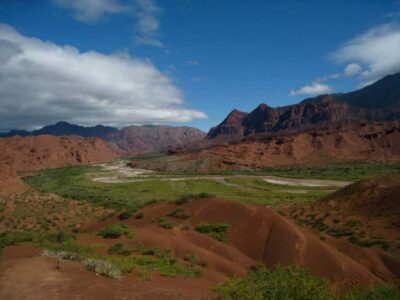
Salinas Grandes, Purmamarca & Los Colorados Hike
Read our review →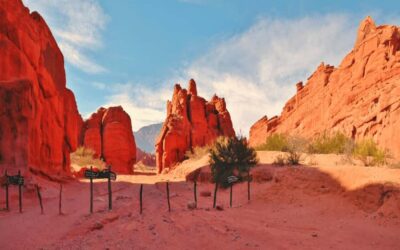
Full-Day Tour Cafayate Calchaqui Valleys with Wine
Read our review →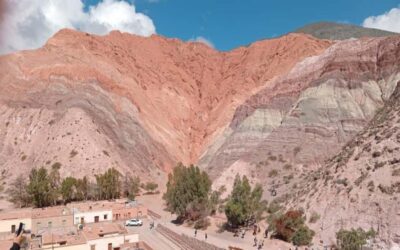
Serranías del Hornocal & Hill of 14 Colors Tour
Read our review →
Browse the lists this tour appears in