Reviewed · BUENOS AIRES TOURS
From Colonialism to Eclecticism, Buenos Aires arquitectonica
Buenos Aires has plenty of grand landmarks, but this tour is interesting because it uses buildings as clues. You start at Plaza de Mayo and work your way through Microcentro, Corrientes Avenue, and up to Teatro Colón, picking up both famous faces and surprising styles along the way.
I especially like how guides such as Juan Ignacio and Loli turn quick stops into real context. You’ll get design details, names of architects, and stories tied to the city’s shifts from colonial days to later eras and eclectic mixing. One thing to consider, though, is that it’s still a walking tour, so you’ll want comfortable shoes if you’re not used to city pace.
In that same practical spirit, the tour also gives you a small break with water, a traditional snack, and a mate tasting. The only downside is that Teatro Colón interior entry is optional and not included, so plan for that if you want to go inside.
Key things I’d plan around
- Classic plus off-route buildings: you’ll see the headline sights, then keep going to less expected façades
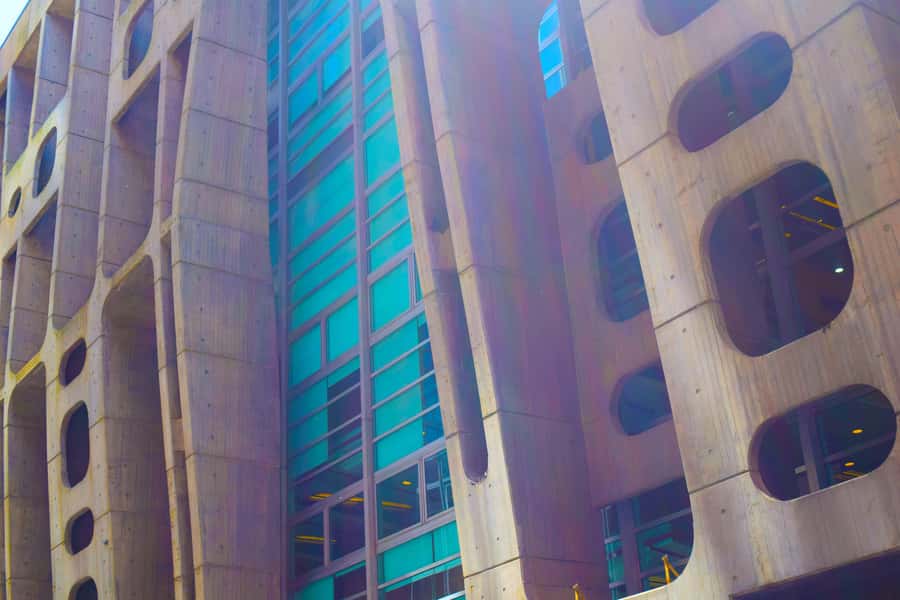
- Brutalist detour at the Banco Hipotecario, a style you don’t usually picture in this part of town
- Corrientes Avenue culture stops with photo time near the Gran Rex and the Opera
- Mate tasting as a real cultural moment, not just a gimmick
- Small group (up to 4) so questions get answered and the pace stays human
- A guide who can track architects and periods without making you guess what you’re looking at
A walk that turns Buenos Aires into a living architecture map
This experience is built for people who love looking closely. Instead of marching you through a single “top 10,” it uses a smart route across Buenos Aires’ most architectural neighborhoods. The payoff is that you stop treating the city like a set of disconnected postcards. You start seeing patterns: how styles overlap, how power and money leave architectural fingerprints, and how public spaces shape daily life.
The tour runs for about 3 hours in a small group limited to 4 participants, which matters more than you might think. With fewer people, you get time for questions and photo moments without the guide having to rush past every doorway and cornice. And since it’s a walking format, the buildings aren’t just seen. They’re inspected from the street where most of us will actually experience Buenos Aires.
A few more Buenos Aires days worth comparing
- Local Foodie Adventure in Buenos Aires with Sherpa Food Tours
★ 5.0 · 6,875 reviews - Buenos Aires City Private Tour with Local Guide
★ 5.0 · 3,475 reviews - Buenos Aires Small-Group City Tour
★ 5.0 · 2,226 reviews
Juan Ignacio and Loli: the guide combo that makes the details stick
What makes this kind of tour work is not the list of sights. It’s the way someone connects those sights to the bigger story. Based on the guide style you’ll experience, that connection is the heart of it.
I like the way Juan Ignacio and Loli handle questions. One review highlights how Juan Ignacio keeps architectural names and periods straight and answers follow-ups without getting vague. That shows up in how the tour feels: confident, but still friendly. Loli adds the cultural layer, so you’re not just learning dates. You’re learning why people built the way they did, and how culture travels through cities.
If you’re the kind of traveler who pauses for 10 extra seconds when something catches your eye, this tour fits. The format is designed for those pauses.
Price and value: what you really get for about $25
At $25 per person for roughly 3 hours, the main value isn’t only “a tour.” It’s what’s included: an English-speaking guide, water, a traditional Argentinean snack, and a mate tasting.
For a city like Buenos Aires, that inclusion matters. You are getting cultural basics inside the program, not as an afterthought. Mate is a key part of everyday Argentine life, and the tour gives you a simple tasting plus some of the tradition behind it. Add the street-level architecture coaching, and the price starts to make sense fast, especially in a small group.
The only thing you’re likely to pay extra for on your own is the Teatro Colón interior visit, if you choose to do it. Entrance there is listed as not included, so factor that into your priorities.
Plaza de Mayo start: Cabildo, Cathedral, Casa Rosada, and the finance of power
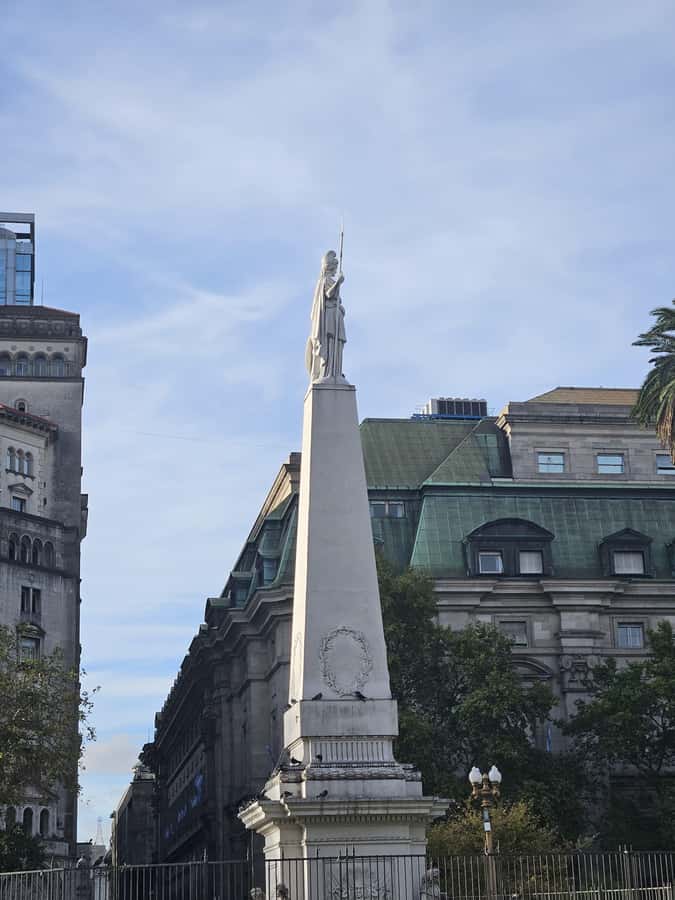
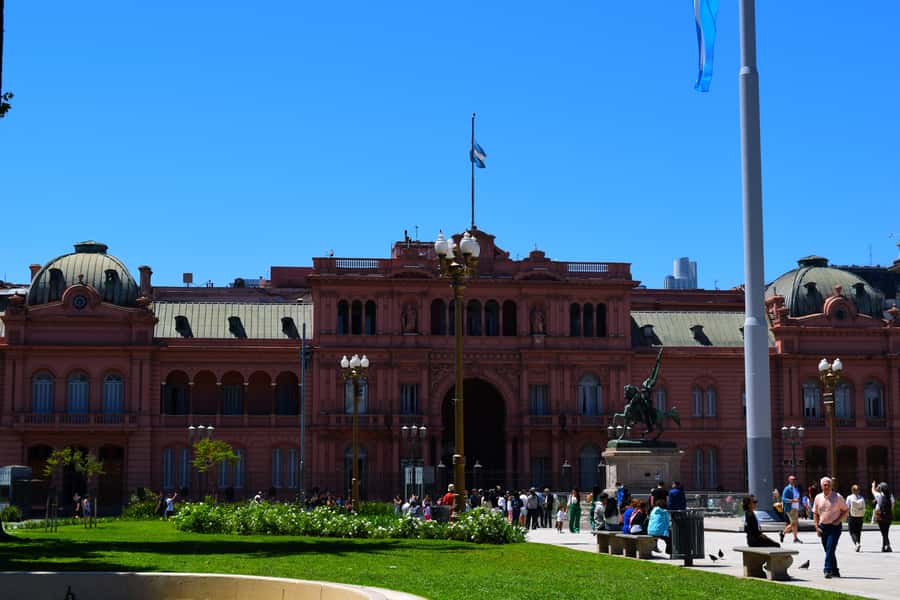
You begin in Plaza de Mayo at the intersection of Bolívar and Avenida de Mayo. This is a smart way to begin because everything you’ll see feels anchored to national life. Plaza de Mayo is where Buenos Aires performs politics and history in public, and the architecture reinforces that.
From there, you’ll look at major civic landmarks in a logical sequence. Expect stops focused on the Cabildo, the Metropolitan Cathedral, Casa Rosada, and Banco Nación. The tour also brings you into the mood of Microcentro, so you feel how government, religion, and commerce share the same stage.
What I like here is that you’re not only staring at famous façades. You’re learning “why this shape, why here, why this period.” In practice, that makes it easier later when the buildings start shifting styles and you can spot the transitions.
A different sort of day out of Buenos Aires:
- Buenos Aires Hop-On Hop-Off Bus, Free Walking Tours & Discounts
★ 4.5 · 2,218 reviews - Buenos Aires: Piazzolla Tango Show with Optional Dinner
★ 4.4 · 2,122 reviews - Buenos Aires: City Highlights Guided Tour with Transfer
★ 4.7 · 1,946 reviews - Buenos Aires: Hop-On Hop-Off City Bus Tour
★ 4.2 · 1,855 reviews
Reconquista Street and the surprise of Banco Hipotecario’s brutalist face
After the first civic cluster, you head north along Reconquista Street. Microcentro is where Buenos Aires can feel like a style collision, and this tour leans into that. You don’t just pass by offices. You stop at buildings and get the story behind the architecture decisions.
Then comes a highlight: a visit to the Banco Hipotecario headquarters, including its Brutalist façade. Brutalism can be polarizing in any city, so the value of a guided stop is that you learn how to look at it. Instead of thinking only that it looks severe, you learn what it was trying to communicate, and how that fits into the city’s later development.
If you love architecture styles beyond the usual tourist photos, this is the kind of stop that makes the tour feel more personal. You get a moment that most people skip because it’s not the postcard version of Buenos Aires.
Centro Cultural Kirchner and the old Post and Telegraph Palace façade
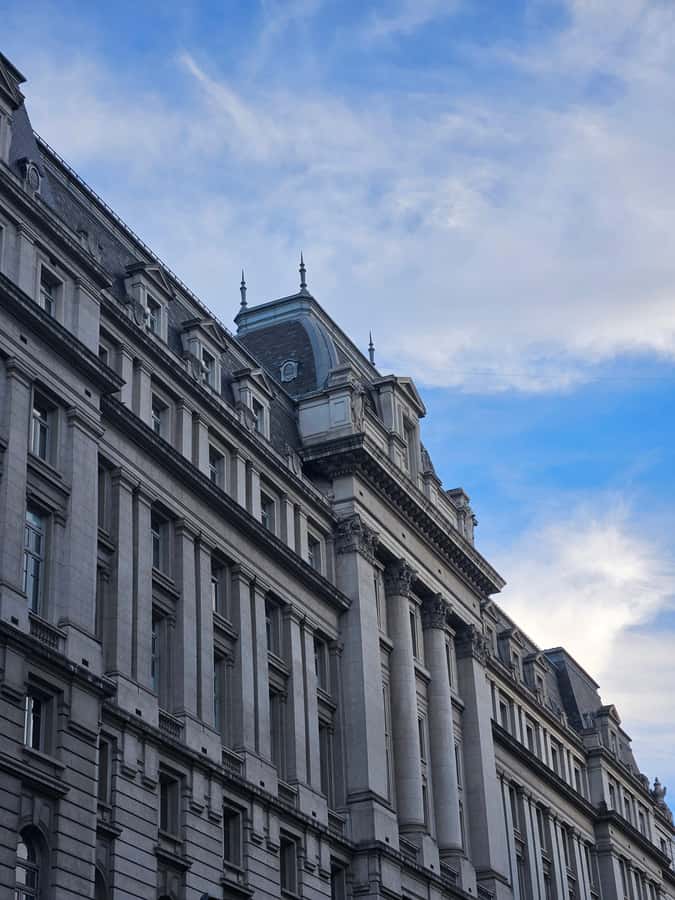
As you move onward, the tour includes a look at the Centro Cultural Kirchner, tied to the former Palacio de Correos y Telégrafos (Post and Telegraph Palace). This is one of those architectural transformations that helps you understand how cities reuse their own structures.
The practical benefit is that you’re not just collecting buildings. You’re collecting the logic of repurposing. When you see an old communications palace turned cultural center, you understand the city’s shift from information for systems toward information for people, art, and public gatherings.
You’ll also have walking time that keeps the route flowing through Microcentro, so it doesn’t feel like you’re stuck at one spot too long.
Corrientes Avenue icons: Gran Rex and the Opera in their real setting
Then you reach Corrientes Avenue, the street many people connect with nightlife and culture. The tour passes the icons: the Gran Rex and the Opera.
These buildings matter because they’re not simply architecture objects. They’re social magnets. Even if you’ve seen photos online, being there in the street context helps you notice the scale and the way the buildings frame the flow of people.
Expect photo opportunities and a guided walkthrough that connects the façades to their cultural “heyday” and their continuing role as meeting points. The tour doesn’t only point out what’s pretty. It helps you understand why these theaters and entertainment buildings keep pulling crowds.
Obelisco and Plaza de la República: the political heart you can read in stone
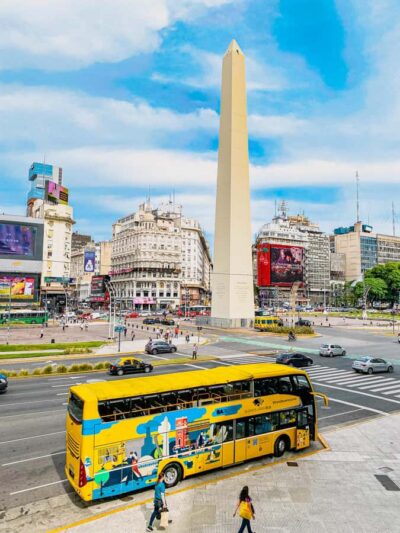
The first major segment ends near the Obelisk and Plaza de la República. This is a good stopping point because it anchors your route. You’ve been moving through finance and media-style buildings, and then the city’s symbolic center brings it back to political and social meaning.
You’ll learn about the Obelisk’s history and importance for public life. What I like is that the guide connects “big monument” to “how people use it,” which makes the space feel less like a background photo and more like a functional piece of the city’s identity.
After that, you continue along Diagonal Norte. There’s a brief pause on the Obelisk staircase for a panoramic view. This is where you can look outward at the busy intersection of Av. 9 de Julio and Corrientes and understand why Buenos Aires feels so wide and so monumental. You get the sense of scale, which makes the architecture stops earlier feel even more meaningful.
Plaza Lavalle stops: Courts Palace and the Julio Argentino Roca School
As the tour enters its last stretch, you reach Plaza Lavalle with two notable buildings: the Courts Palace and the Julio Argentino Roca School.
Courts and schools are everyday institutions, but their architecture shows what a society values. You get a guided read on those buildings, and the contrast works well after theaters and finance. It helps you see how civic function shows up in design, materials, and façade choices.
This part of the route also helps with pacing. By the time you reach this plaza, you’ve already walked enough to feel the city, but you still have energy left for the finale.
Mate tasting plus a traditional snack, done the Argentine way
This tour makes mate tasting part of the experience, and it’s one of the most memorable breaks. You’re not just sipping. You’ll learn a bit about mate and its tradition in Argentinean culture.
Alongside that, you get water and a traditional Argentinean snack. From the way the guides share it, this feels like a small cultural lesson wrapped into something you can enjoy without fuss. You’ll likely leave thinking about what you tasted for longer than you expect, because it’s tied to the cultural explanation rather than handed to you without context.
If you’ve never tried mate before, this is a low-pressure way to learn the basics with a guide present. If you already know mate, it still gives you a reason to pay attention to the tradition instead of treating it like a one-off drink.
Teatro Colón finale: photo stop now, interior visit if you want it
You finish at Teatro Colón. The theater is the perfect ending point because it ties together the tour’s themes: power, public culture, and the way architecture gathers crowds.
You also have the option to stay for a guided visit inside the theater. Just note that entrance to Teatro Colón is listed as not included, so your decision should match your budget and your appetite for theater interiors.
After the tour, it also indicates the activity concludes back at the meeting point. So think of Teatro Colón as the final focal moment, then you’ll wrap up the walk.
Who this tour suits best, and who might want a different plan
This is ideal if you want:
- Architecture with context, not just sightseeing
- A guided route that mixes famous Buenos Aires with buildings you might miss on your own
- A small group format where you can ask questions
- A cultural stop for mate tasting that doesn’t feel tagged on
You might want to pick a different style of tour if you hate walking, or if you only want to spend time inside buildings with guaranteed entry. Here, you’ll mainly experience architecture from the street, and Teatro Colón interior visit depends on choosing the optional guided visit.
Should you book this Buenos Aires architectonica tour?
Yes, if you care about seeing Buenos Aires with sharper eyes. The small group size, the strong guide presence from Juan Ignacio and Loli, and the mix of architectural styles make it a practical way to learn without feeling stuck on a checklist.
I’d especially recommend it if you like architectural contrasts, like getting a Brutalist façade moment in the middle of a classic city walk. And if you want culture that you can taste, mate plus a traditional snack are a real bonus that matches the city’s everyday life.
If your priority is only museum interiors or fast photo stops, you might feel the walking and street viewing focus more than you want. But for most visitors who want a guided understanding of Buenos Aires through its buildings, this is a solid value at $25 and a genuinely satisfying half-day plan.
FAQ
Where does the tour start?
It starts in Plaza de Mayo, right at the intersection of Bolívar and Avenida de Mayo.
How long is the tour?
The tour lasts 3 hours.
How much does it cost?
The price is $25 per person.
Is it a small group?
Yes. The tour is limited to 4 participants.
What languages are offered?
The live guide speaks Spanish and English.
What’s included in the price?
Included are an English-speaking tour guide throughout, water, a traditional Argentinean snack, and mate tasting.
What is not included?
Entrance to Teatro Colón and lunch are not included.
Does the tour visit Teatro Colón?
Yes, the tour finishes at Teatro Colón, with an option to stay for a guided visit inside. Entrance is not included.
Can I customize the tour based on my interests?
Yes. The tour can be customized based on your tastes and/or interests.
What are the cancellation and payment options?
You get free cancellation up to 24 hours in advance for a full refund, and there is a reserve now & pay later option, meaning you can book your spot and pay nothing today.
Recently reviewed around Buenos Aires
- Meet Locals: Language Exchange Café in Buenos Aires★ 5.0 · 10 reviews
- Madero Tango Show Including Executive Dinner In Buenos Aires★ 3.5 · 10 reviews
- Piazzolla Tango Show Only In Buenos Aires★ 4.5 · 10 reviews
- Private City Tour & Transfer to the International Airport★ 5.0 · 10 reviews
- Esquina Homero Manzi Tango Show Ticket Including Optional Dinner in Buenos Aires★ 4.5 · 10 reviews
- VIP Dinner & Tango Show at El Viejo Almacen★ 4.5 · 10 reviews
- Premium service Buenos Aires city tour for small groups★ 4.0 · 11 reviews
- Buenos Aires City Tour★ 4.5 · 11 reviews
Buenos Aires Tours, compared.
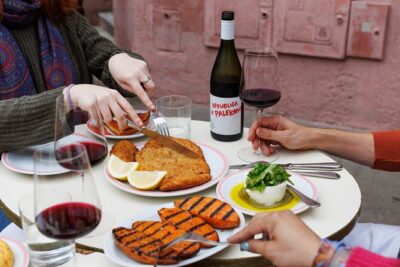
Local Foodie Adventure in Buenos Aires with Sherpa Food Tours
Read our review →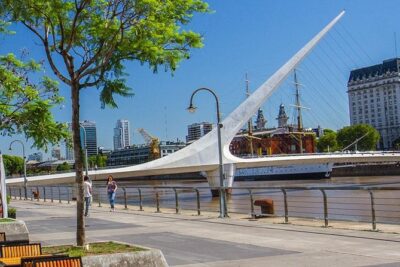
Buenos Aires City Private Tour with Local Guide
Read our review →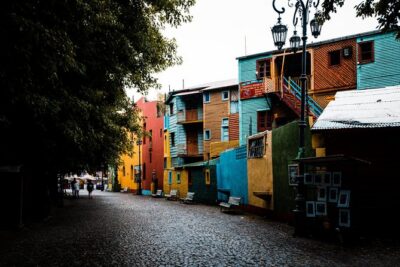
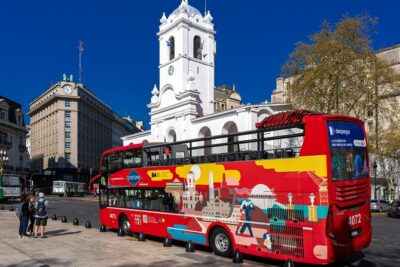
Buenos Aires Hop-On Hop-Off Bus, Free Walking Tours & Discounts
Read our review →