
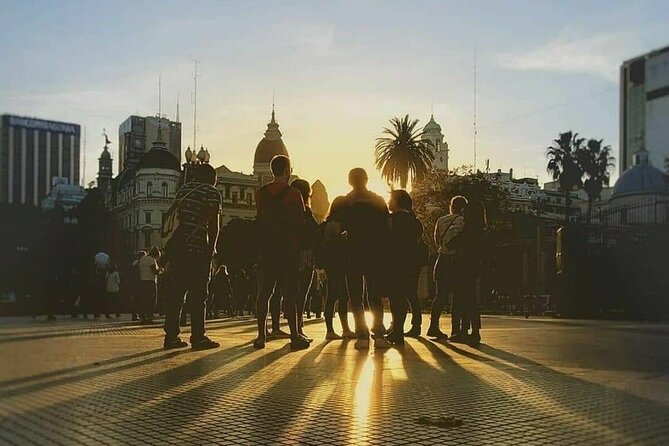
Reviewed · RECOLETA CEMETERY
Recoleta & Cemetery for curious people
Recoleta Cemetery is interesting because it turns a famous postcard setting into a living social document. You walk through Buenos Aires as if you are reading a book, then you face the last page in Recoleta Cemetery with an anthropological lens, not a lecture voice.
I like two things a lot. First, the tour feels truly interactive, with discussion and plenty of room for questions, not just a one-way talk. Second, I love how the guide links buildings, neighborhoods, and attitudes into one story about Argentina’s elites and their dream of Europe, that Buenos Aires nickname people talk about.
One possible drawback: actual entry to the cemetery is optional, and the ticket is not included, so you will want to budget time and buy access if you want to go inside.
Key highlights you should clock early
- Interactive, discussion-led walk where you can steer what you want to focus on
- Small-group vibe that leaves room for individual questions and side anecdotes
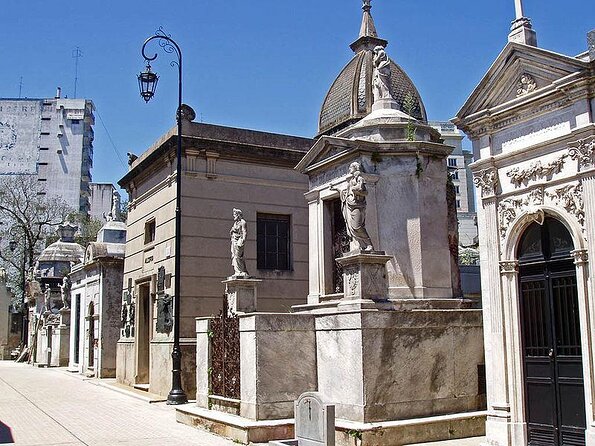
- Architecture as evidence of elite ambition as you move through Recoleta
- The City of the Dead theme: who gets remembered, who fades, and why it matters
- Argentina’s rise, fall, and future explored through the country’s capital story
- Recoleta Cemetery with a guided focus for about 45 minutes if you choose entry
Why Recoleta Cemetery reads like sociology, not sightseeing
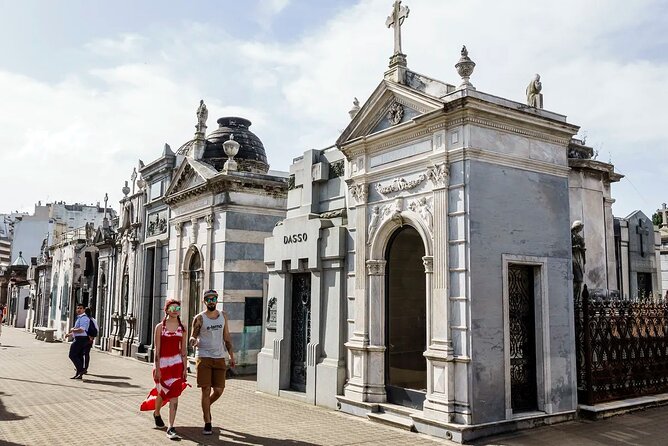
Buenos Aires has plenty of grand sights, but Recoleta has a special kind of tension. It looks like celebration, marble, and status. Then you realize the cemetery is not just decoration. It is an archive of power, taste, and memory.
What makes this experience work is the way you are invited to question the story you are seeing. This is not “look at the monuments, take a photo, move on.” It is a guided walk where your guide keeps nudging you to interpret the why behind the what. In other words, you are not only learning names and dates, you are learning how a society chooses symbols, builds reputations, and decides who belongs in the spotlight.
I also like that the tone matches the neighborhood. Recoleta is full of polished surfaces, but the discussion is grounded. You will talk through themes like the Parisian illusion (the ambition to look European), the rise and fall of Argentina as a potential world power, and the idea of the city of the dead as a mirror of society. Those themes do not float in theory. They show up as you walk.
More Recoleta cemetery visits:
- Buenos Aires: La Recoleta Cemetery Guided Tour in English
★ 4.8 · 1,359 reviews - Recoleta Cemetery Walking Tour
★ 5.0 · 668 reviews - Recoleta Cemetery Tour in English
★ 5.0 · 494 reviews
Price and what $34 buys you in a 150-minute format
At about $34 per person for a 150-minute experience, you are paying for a guided, discussion-led walk plus time in the cemetery area. The real value is not just proximity to famous spots. It is the university-degree style guide approach, where you do more than listen.
You also get practical flexibility: cemetery entry is optional, and the guide’s approach is interactive. Some guides keep strict timing and steamroll questions. Here, the vibe is the opposite. In real sessions, guides like Nico and Ignacio are described as answering individual questions, including ones that connect to local context, and doing it with humor and patience.
Does that mean every second feels perfectly packed? Usually yes. But because it is interactive and small-group friendly, it does not feel like a factory line. If you like history that connects to current attitudes and power, this format tends to click.
The only cost caveat is the cemetery ticket. The tour itself does not include it. If you want full inside access, you should plan on buying it.
Meeting at Rapa Nui Store, then walking into the story
The meeting point is the Rapa Nui Store. From there, the tour starts with a guided intro at Plaza General San Martín. In practical terms, that opening matters because it frames what you are about to see in Recoleta, so the walk does not feel like random architecture hopping.
From the first minutes, the guide sets the rules of the experience: you are invited to ask questions, and you are meant to follow threads. Instead of treating each landmark as separate trivia, you connect them to the big ideas of the tour. That is why you will likely feel more engaged than with a purely observational city walk.
Also, you are on foot long enough that comfort matters. Bring shoes you can stand in for a while. You are exploring a neighborhood on purpose, not sprinting between stops.
Plaza General San Martín to classic Recoleta landmarks
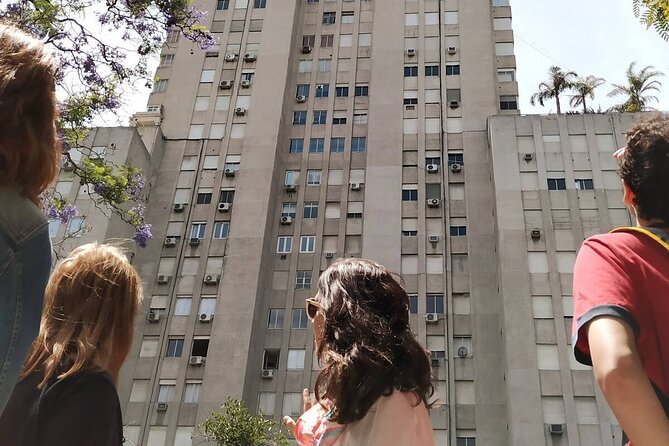
After Plaza General San Martín, you move through a run of emblematic Recoleta sights while the guide keeps the conversation going. You will spend time at spots like Edificio Kavanagh and Torre Monumental, plus stops tied to prominent residences and institutions in the area.
Here is what I think you will actually notice, if you let yourself look with the guide’s framing:
- Architecture becomes a language for ambition. The guide encourages you to decode what the style is trying to say about wealth and aspiration.
- You start thinking about “who built this” and “who benefited,” not only “what year is it.”
- You get a sense of how Buenos Aires tried to model itself through elite tastes, which connects directly to that Parisian illusion theme.
A few more Buenos Aires days worth comparing
- Local Foodie Adventure in Buenos Aires with Sherpa Food Tours
★ 5.0 · 6,875 reviews - Buenos Aires City Private Tour with Local Guide
★ 5.0 · 3,475 reviews - Buenos Aires Small-Group City Tour
★ 5.0 · 2,226 reviews - Buenos Aires Hop-On Hop-Off Bus, Free Walking Tours & Discounts
★ 4.5 · 2,218 reviews
A quick break that does not interrupt the flow
There is a short break built in at Carrefour Express. This is a real-life detail that helps. You can grab water or a small snack and reset your brain before you head into the more reflective part of the tour.
Mansión Estrugamou and Palacio San Martín: where status becomes address
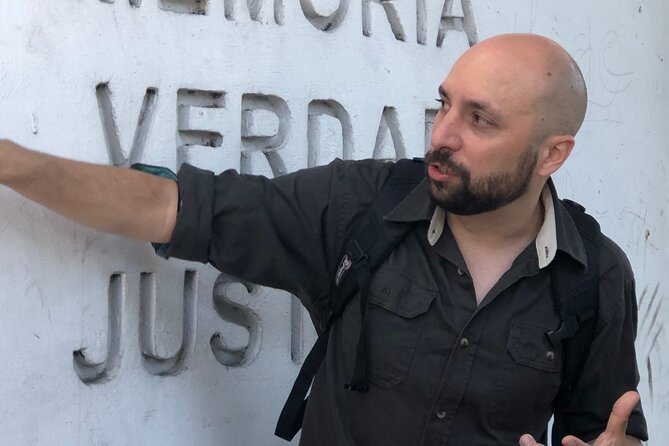
One of the reasons this tour feels different is that it keeps circling around the elite as a social force. You visit areas connected to notable residences, including Mansión Estrugamou (Casa Basavilbaso) and Palacio San Martín.
This is where the anthropological angle becomes tangible. These places are not just pretty façades. They represent the idea that power often lives in everyday streets, not only in palaces on postcards.
What to do as you walk:
- Listen for how your guide explains the role of the elite in Argentina’s story.
- Pay attention to how the tour connects wealth to influence, and influence to what gets remembered later.
- Ask questions when you feel the guide is about to move on. The best sessions are the ones where you steer the conversation to what you actually care about, whether it is economics, social change, or how narratives get shaped.
If you are someone who likes to understand the “why,” this section is a strong payoff.
France at the embassy, Jockey Club, and the Park Hyatt edge
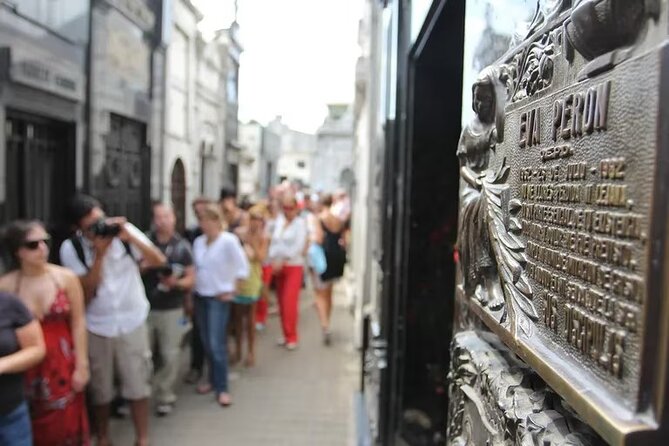
A key part of the walk includes the Embassy of France, then the Jockey Club, and exterior time near Palacio Duhau (Park Hyatt Buenos Aires).
Even if you are not an architecture expert, you can still get a lot out of this sequence. Your guide is using these stops to support the big theme: Buenos Aires projecting a European image and the kind of elite culture that came with it.
In practice, you will get more out of this stretch if you keep asking yourself:
- Who does this environment serve?
- What kind of reputation does it project?
- How does it connect to memory, like who is later memorialized in spaces such as the cemetery?
One thing I appreciate is the conversational style. Guides like Guise Nicolas have been praised for handling individual questions and adding local anecdotes. That matters, because these places can feel distant if you only get generic history.
Recoleta Cemetery: optional entry, big meaning
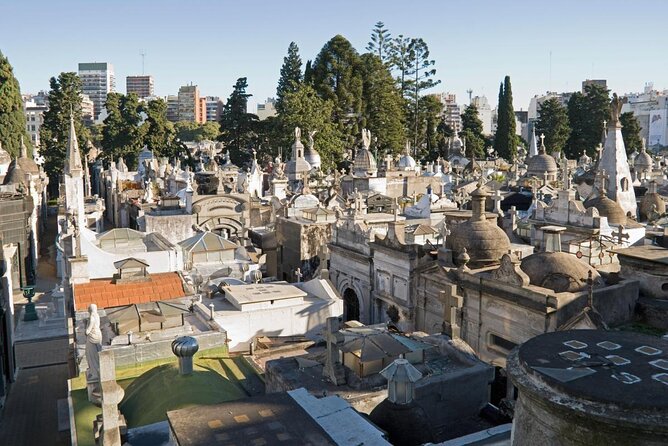
The walk ends at La Recoleta Cemetery for a guided session of about 45 minutes. Entrance itself is optional, and tickets are not included in the tour price. You can usually buy tickets at the entrance or in advance online.
If you are deciding whether to pay for entry, here is my practical take: if you are choosing this tour for the “curious people” part, you should strongly consider going in. The whole point is the cemetery as a mirror of society. Seeing it from outside can give you mood and context. Going inside gives you the real material the guide is talking about, the way memory is staged in stone.
What the guide helps you look for
The cemetery is introduced as the City of the Dead theme. The guide’s focus tends to be less about trivia and more about interpretation. You will talk through questions like:
- who gets remembered
- who gets forgotten
- what those choices say about the society that built the system
This is where the tour’s anthropological approach becomes more than a marketing phrase. You start to see that elite power does not disappear. It changes form. It becomes names, symbols, and public permanence.
How interactive discussion changes the cemetery experience
A cemetery can feel heavy if you treat it like a checklist. Here, because the guide is encouraging questions and discussion, it tends to feel thoughtful rather than solemn-only. You may notice the humor in the guide style too, which is not disrespectful. It is a way to keep the ideas clear and digestible.
Themes you carry with you after the walk
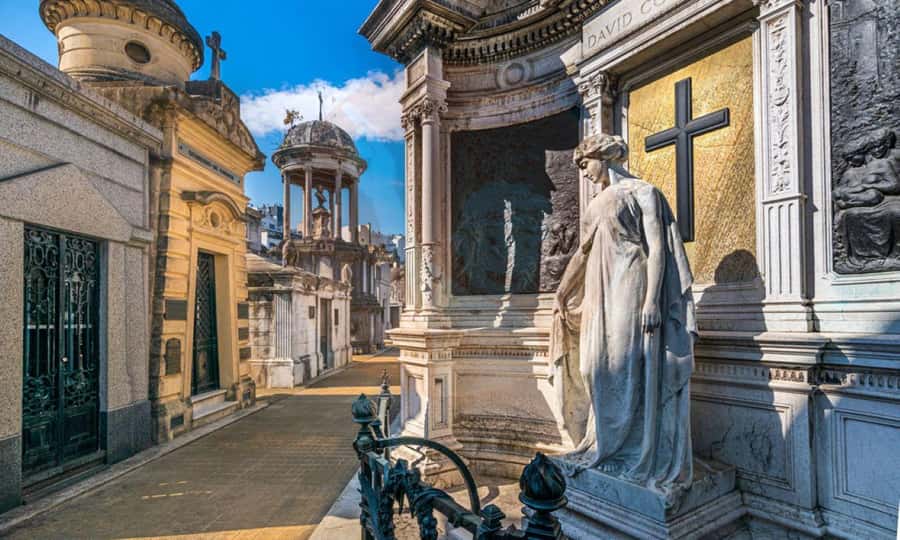
This is a tour about more than Recoleta. It is about understanding Argentina’s capital as a shifting project, shaped by wealth, ambition, and political swings.
You will repeatedly come back to three big themes:
- The Parisian illusion: the ambition and wealth that gave Buenos Aires its European nickname and its self-image.
- The rise and fall: the era of vast landowners and the debate about Argentina as a possible world power, then what happened when that future promise collided with reality.
- City of the dead: how a society decides what to preserve, and who earns a permanent place in public memory.
Even if you already know some Argentine history basics, this structure helps it click into place. It also makes the tour useful even if you do not go deep into every monument. You understand the pattern behind the city.
Logistics that matter day-of: time, language, and group size
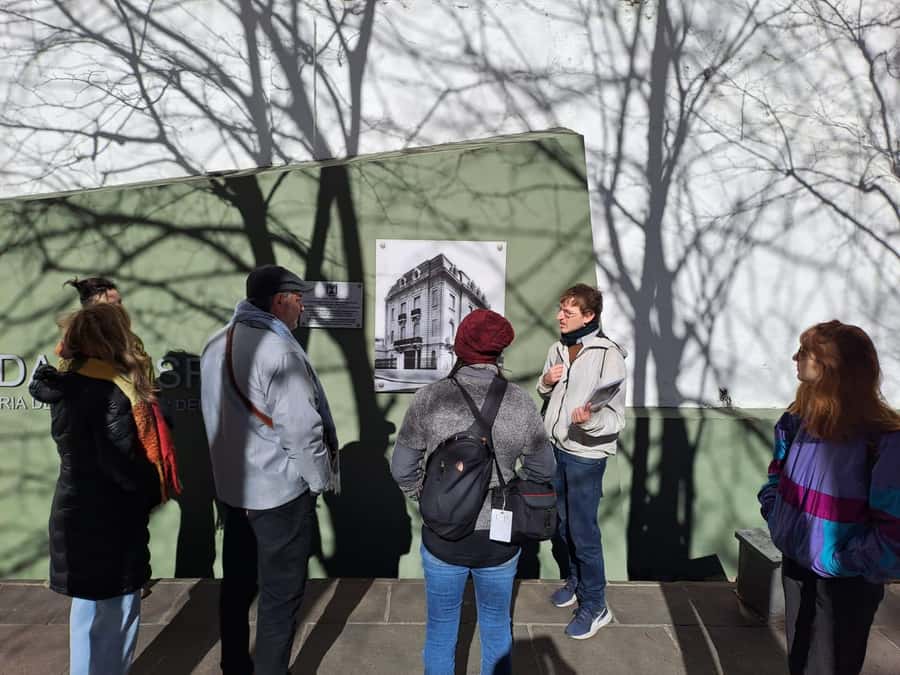
This experience runs 150 minutes. You will do a guided walk through several Recoleta points, then spend focused time at the cemetery area.
Language options are Spanish, English, and French, and guides are described as strong with individual questions. If you care about asking specifics, pick a language you feel fully comfortable with, because the best moments often happen when you can speak naturally.
Group size is described as small in the experience, and that is more important than it sounds. In small groups, your questions actually get answered in the flow of the tour, not after a forced pause.
The tour is also wheelchair accessible, so it is designed with practical mobility in mind.
Who should book Recoleta & Cemetery for curious people
This tour is a great match if you:
- like history that connects to social power and memory
- enjoy walking with a guide who talks and responds, not just recites
- want more than a photo stop at a famous cemetery
- are curious about how Buenos Aires built an image of itself, including the European fantasy side
- like flexible discussion where you can guide the direction a bit
It may be less ideal if you want purely quiet, reflection-only cemetery time. The tour is designed for conversation and analysis, so your experience will be social and talk-based.
Should you book this tour?
If you are spending a limited amount of time in Buenos Aires and want an experience that feels like you are understanding the city instead of just collecting sights, I think you should book it. The best part is the combination of interactive discussion and the way the guide links architecture, elite influence, and the cemetery’s role in memory.
Just make your decision about cemetery entry up front. If you want the full effect of the City of the Dead theme, plan to buy the ticket and go inside. If you prefer to keep things lighter or you are short on time, the walk still gives you plenty to think about, but you will miss the core material the guide is pointing to.
FAQ
Where does the tour start?
The meeting point is Rapa Nui Store.
How long is the experience?
The total duration is 150 minutes.
How much does it cost?
The price is $34 per person.
What languages are available for the live guide?
The live guide offers Spanish, English, and French.
Is entry to Recoleta Cemetery included?
No, cemetery entry is optional and the ticket is not included.
Can I buy a cemetery ticket in advance?
Yes. You can buy tickets at the entrance or in advance online.
What is included in the price?
You get a guided walk through Buenos Aires and discussion and interaction with a university degree guide.
Is the tour wheelchair accessible, and is it private?
The experience is wheelchair accessible, and private or small groups are available.
Recently reviewed around Buenos Aires
- Meet Locals: Language Exchange Café in Buenos Aires★ 5.0 · 10 reviews
- Piazzolla Tango Show Only In Buenos Aires★ 4.5 · 10 reviews
- Madero Tango Show Including Executive Dinner In Buenos Aires★ 3.5 · 10 reviews
- Private City Tour & Transfer to the International Airport★ 5.0 · 10 reviews
- Esquina Homero Manzi Tango Show Ticket Including Optional Dinner in Buenos Aires★ 4.5 · 10 reviews
- VIP Dinner & Tango Show at El Viejo Almacen★ 4.5 · 10 reviews
- Buenos Aires City Tour★ 4.5 · 11 reviews
- Premium service Buenos Aires city tour for small groups★ 4.0 · 11 reviews
Recoleta Cemetery, compared.
Half-Day Recoleta and Palermo Bike Tour in Buenos Aires
Read our review →
Buenos Aires Bike Tour: North Districts, Recoleta and Palermo
Read our review →
Recoleta in Depth (not literally) Private Walking Tour
Read our review →
Recoleta Cemetery – Small Group Tour of History & Secrets
Read our review →
Browse the lists this tour appears in