
Reviewed · CITY TOURS
Best of Salta: Guided City Tour
This is the kind of Salta tour that helps you feel like you know the city fast. You get hotel pickup and drop-off, then a tight route that mixes the grand sights with viewpoints and a nearby village.
I especially like that the guide connects the dots, from Spanish-era founding to why Salta’s trading power faded, and how that shows up in the architecture today. I also like the timing, a 3-hour loop starting at 4:00 pm, when the light can be great for photos on the hill. One thing to consider: the tour is mostly a ride-and-stop format, so if you want lots of free-roaming walking, you may feel less time on foot than you hoped.
Key things to know before you go
- Hotel pickup and drop-off from most Salta hotels means less hassle and more time looking at stuff
- A small group (up to 30) keeps the experience from feeling like a cattle call
- Cerro San Bernardo gets you big views over Salta and the Andean peaks
- Güemes landmarks are a theme, with stops tied to Argentina’s war for independence
- Most stops are listed as admission free, so you can focus on the experience
- Language availability can be inconsistent, so check expectations for English
How this 3-hour Salta tour fits real life
Salta is a great base, but it can be a little tricky to plan your first day. This tour is built for that moment when you want orientation without spending your time staring at maps. You hop into an air-conditioned coach, settle in, and let a guide set the rhythm.
The tour runs about 3 hours and starts at 4:00 pm. That’s smart. In many destinations, late afternoon is when the city cools down a bit and the light gets more flattering. Plus, you’re not burning your whole day on logistics.
For a tour price of $44 per person, you’re paying for three things: transport, guidance, and a route you might not stitch together on your own quickly. It’s not a bargain like a free walking loop, but the value makes sense if you want a guided overview that also includes views and a short ride beyond the center.
More City Tours in Salta
- From Salta: City Tour of the city on a half-day ride
★ 4.0 · 59 reviews - Discover Salta and enjoy the city with a photojournalist
★ 4.8 · 35 reviews - Cafayate: 2-Day-Trip from Salta City
★ 4.5 · 27 reviews
Getting oriented: from hotel pickup to Salta’s old trading days
After pickup, the coach heads toward the city center. This first leg matters more than it sounds, because the guide’s talk sets up what you’re about to see. Salta was founded in the 16th century by Spanish figure Hernando de Lerma and grew into a major trading center. The guide frames why the city later declined, after Argentina’s war for independence and changes in trade routes along the Pacific coast.
This context changes how you look at the buildings. When you understand that wealth came early, you start noticing details like grand church facades and cathedral-scale spaces. You’re seeing the physical evidence of a boom, not just pretty streets.
Cathedral Basilica of Salta: Güemes’ resting place
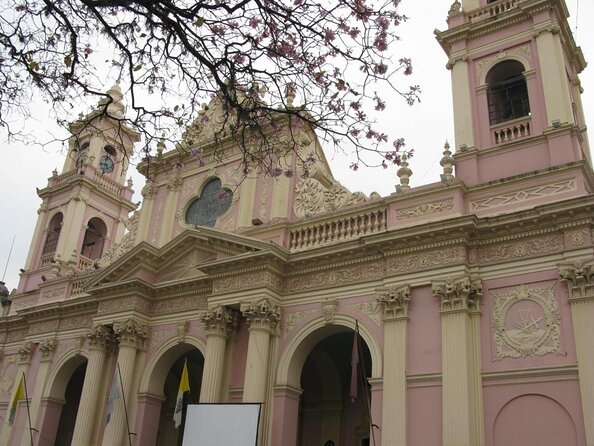
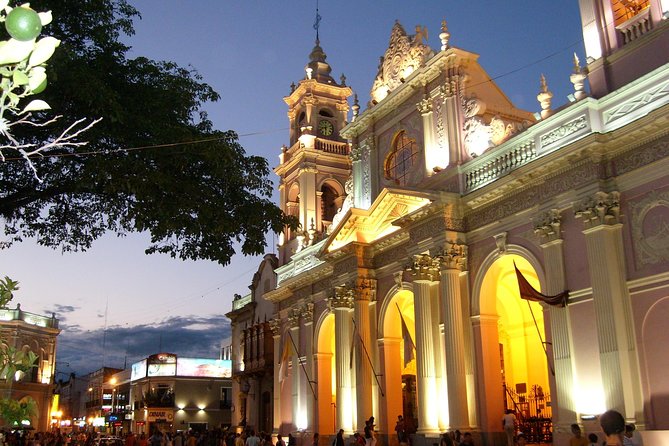
At the central plaza, you reach the Cathedral Basilica of Salta. The cathedral has twin towers and was built in 1885. It’s the kind of landmark that helps you anchor your mental map of downtown.
The big historical point here is General Güemes. His remains rest in this cathedral, and he’s tied to Argentina’s fight against the Spanish during the war for independence. Even if you don’t know the full storyline yet, this stop gives you a name to hang the rest of your visit on.
The stop is listed as about 20 minutes, and admission is free. Think of it as a moment to take in the scale, get a feel for the plaza area, then move on while the tour is still flowing.
Centro Cultural America and the old cabildo concept
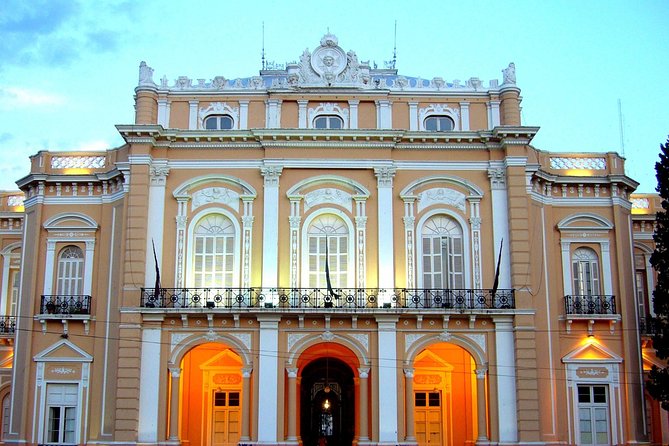
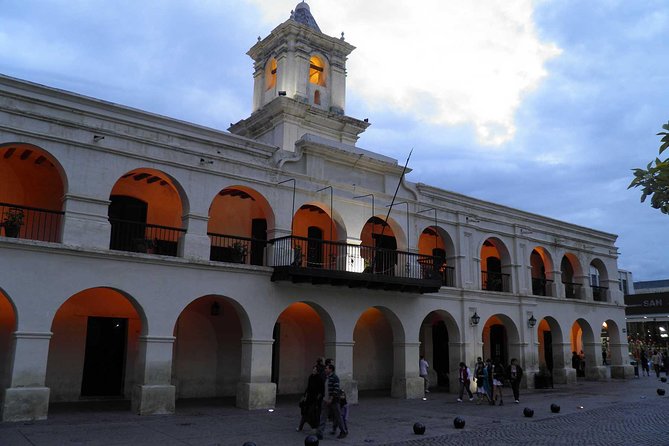
Next you pass by the Centro Cultural America. Even though it’s not a long stop, it’s a useful one because it points you to the area’s colonial layers. The tour notes the Spanish viceroyalty style and calls out the Historical Museum of the North, housed in the old cabildo, or town hall.
Why does this matter? Because cabildos were the civic center of the Spanish colonial city. When you walk around Salta later, you’ll recognize that the city wasn’t built randomly. It has a structure, and this quick pass gives you a mental cue for what to look for.
A few more Salta days worth comparing
- From Salta: Full-Day Trip to Salinas Grandes and Purmamarca
★ 4.6 · 914 reviews - From Salta: Full-Day Tour to Cafayate with Wine Tasting
★ 4.5 · 478 reviews - From Salta: Salinas Grandes, Purmamarca & Los Colorados Hike
★ 4.3 · 356 reviews - Full-Day Tour Cafayate Calchaqui Valleys with Wine
★ 4.5 · 347 reviews
Basilica y Convento de San Francisco: cannons turned into a bell
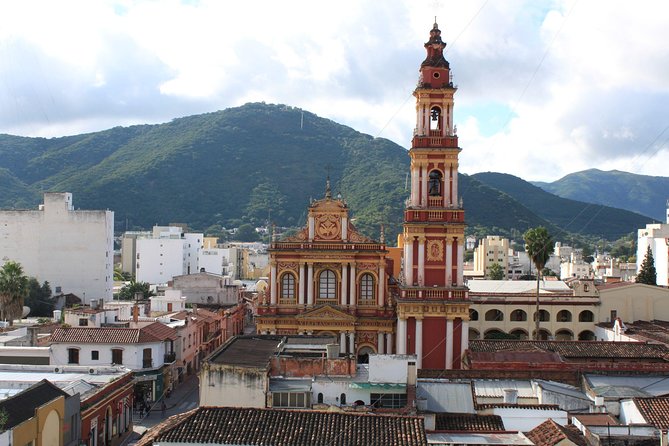
Then comes one of those “photo instantly” church stops: the Basilica y Convento de San Francisco. The description is vivid for a reason. The church has towering white pillars and a crimson-colored façade, plus a purple belfry rising 174 feet (53 meters).
Here’s the standout detail: the bell in the belfry was constructed from cannons used during the Battle of Salta. That’s the kind of specific fact that makes a stop feel real, not generic.
This is a quick stop, about 10 minutes, and listed as admission free. You won’t have time for deep wandering, but you will leave knowing what makes this church unusual. That’s a win for an efficient first overview.
Convento San Bernardo and the Güemes monument
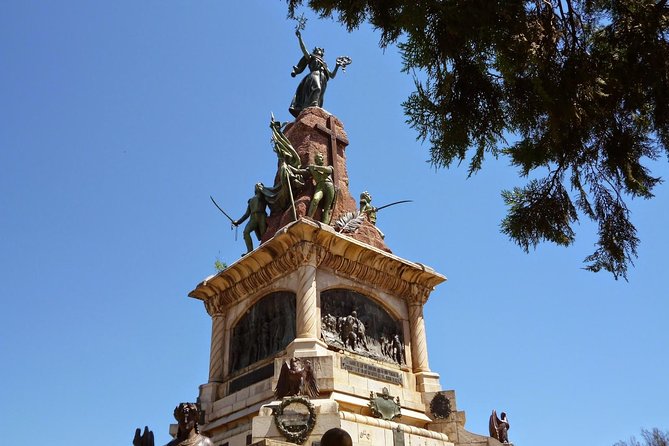
The next stop is the Convento San Bernardo, a 16th-century convent. It’s one of the older buildings in the city, so it helps reinforce the “Salta has layers” theme.
The tour also links this site to General Güemes with a monument there. Even with limited time, having multiple stops tied to the same hero gives your visit coherence. You’re not collecting random points on a map. You’re following a thread.
Expect about 5 minutes here, mostly for passing views and photos. It’s short, but it fits the tour’s pace.
Cerro San Bernardo viewpoint: where the tour earns its keep
Now the tour moves away from the city center toward the foothills and Cerro San Bernardo. This is the part that many people care about because it delivers a payoff you can’t get by reading about architecture.
The time here is about 1 hour, and the admission is listed as free. You’re up on the hill taking in sweeping views of Salta and the Andean peaks. Even if you’ve seen photos of Salta from above, this kind of viewpoint changes your sense of geography. You start to understand where the city sits and how the surrounding terrain frames it.
Practical tip: wear comfortable shoes. Even if it’s not an all-day hike, viewpoints can involve uneven ground and steps.
Monumento 20 de Febrero and February 20th Park
After the view, the coach returns toward another commemorative stop: the Monumento 20 de Febrero and February 20th Park. This is tied to the Battle of Salta, a war-for-independence fight that was won in this area.
This segment is about 10 minutes, admission listed as free. It’s not the most visually dramatic stop in terms of architecture, but it adds another piece to the historical puzzle. If you’re the type of traveler who likes understanding what you’re standing on, you’ll appreciate it.
Quebrada de San Lorenzo village: a break from the center
Then you go to Quebrada de San Lorenzo, visiting the nearby village of San Lorenzo. The tour notes that wealthy Salteños frequented this area during summer due to its unusual subtropical microclimate.
You get about 45 minutes here, admission listed as free. This is one of the tour’s smartest moves because it breaks the “only church façades” feeling. You’re in a different setting than downtown, and that helps your brain reset before the final return.
One practical note: this stop is time-limited. If you love slow wandering in towns, you’ll probably want to come back on your own later. But as part of a 3-hour orientation tour, it’s a good taste.
Mercado Artesanal Tradicional: shopping with local flavor
Back in Salta, you stop at the Mercado Artesanal Tradicional in a traditional white colonial building. This part is about crafts. You can browse offerings from craftsmen from across the province.
This is also where the tour adds a food moment, but with a clear catch: snacks and purchases are at your own expense. The tour mentions alfajores and candied walnuts. It also suggests you may find items like purses, blankets, and jewelry.
You’ll have about 30 minutes here. If you love making a single smart souvenir purchase, this time window works well. If you hate shopping stops, treat it as an optional browse. You are not stuck for hours.
The language factor: plan for Spanish-first possibilities
One big consideration based on real-world experiences is language. The tour is described as guided, and many guides do a solid job. But there have been cases where English availability wasn’t what people expected at the last minute, with some groups offered Spanish instead.
If you rely on English heavily, don’t assume it will always be perfect. Do a quick check before you go, and consider bringing translation help on your phone. Also, keep your expectations realistic for questions. If the group is mostly Spanish speakers, your ability to ask follow-ups might be limited.
On the brighter side, when guides are supportive, they can still make the tour work. One guide name that shows up is Jasmine, praised for doing a good job with English speakers when she had to.
Van time versus walking time: what the format feels like
This tour is a “get on, look, stop, move” style loop. That’s convenient, but it can feel like a lot of time in the vehicle if you love street-level wandering. There’s even been feedback about spending too much time in the sightseeing van instead of walking through areas.
Here’s how to handle it: use the van time well. Take notes on what you want to return to. If you see something you like, remember it. After the tour, you can build your own walking loop around the stops that hit hardest.
Also note that some people have mentioned restrictions about getting off at the main square during certain parts. If you want maximum time outside the bus, ask how the main plaza stop works, and pay attention to what the guide expects during that segment.
Group size, pace, and comfort: the practical stuff
The group size is capped at 30 travelers, which keeps it manageable. You’re not stuck in a crowd of hundreds, and you’ll usually get better attention from the guide.
Pickup and drop-off from most Salta hotels is a big convenience. It saves time and avoids the question of local transport on your first day. Combine that with an air-conditioned vehicle, and you get a format that’s friendly even if the weather is warm.
Bring comfortable shoes. You’ll spend time walking between viewpoints and entering areas around churches and markets. Even when stops are short, comfort matters.
Who should book this, and who might skip it
You should book this tour if:
- You want a guided orientation in a short window, without figuring out logistics
- You like colonial architecture and want to see the key downtown sights in one go
- You enjoy history when it’s tied to real places, especially Güemes and the war for independence
- You care about getting views from Cerro San Bernardo rather than only street photos
You might skip it if:
- You need an English-only experience with zero language uncertainty
- You prefer long walking tours with lots of free time instead of a ride-heavy route
- You want to do deep visits inside major sites, not quick stops and photo time
So, should you book Best of Salta: Guided City Tour?
If you’re planning a first visit to Salta and you want to feel oriented by sunset light, this tour is a solid use of time. The price is fair for a 3-hour, guided, hotel-to-hotel format that hits the major downtown landmarks, adds Güemes-linked sites, and includes a real viewpoint hour on Cerro San Bernardo.
My main caution is language. If English clarity is a must, double-check expectations before you go and be ready with a backup plan. If you’re comfortable with some Spanish or you just want the big-picture story, you’ll likely enjoy the pace and the mix of architecture, monuments, and the short break in San Lorenzo.
Book it when you want a smart first pass through Salta. Then, after you return, you can spend your remaining time exactly where the tour made you want to go back.
Recently reviewed around Salta
- Exclusive day-long private tour of Cafayate vineyards★ 5.0 · 10 reviews
- Cachi and Los Cardones National Park from Salta★ 4.5 · 11 reviews
- Cafayate Wine Trail Excursion: Explore Salta’s Vineyards★ 3.5 · 11 reviews
- Salta: Calchaquí Valley Scenic Drive and Day Trip to Cachi★ 3.5 · 11 reviews
- From Salta: Pack of 4 Excursions in Salta and Jujuy★ 4.0 · 13 reviews
- The Calchaqui Valley Winery and Scenery Tour in Cafayate★ 3.5 · 14 reviews
- Cafayate, Vineyards and Calchaquies Valleys Tour from Salta★ 4.0 · 14 reviews
- Train to the Clouds Experience Admission Ticket★ 4.0 · 22 reviews
City Tours, compared.
Buenos Aires City Private Tour with Local Guide
Read our review →
Bike Tour: Half-Day City Highlights of Buenos Aires
Read our review →
Best of Buenos Aires: Guided Sightseeing City Tour
Read our review →
Private City Tour with a friend in Buenos Aires
Read our review →Browse the lists this tour appears in