
Reviewed · WALKING TOURS
Buenos Aires: 7 Hour Small Group “BA 101” Walk
This semi-private walk is a smart way to get your bearings in Buenos Aires, moving from Barrio Norte bookish grandeur to San Telmo market life in one day. I love the expert English guide who keeps the stories clear and answers real questions, and I love how the route strings together major sights and everyday streets so you understand the city, not just the postcard views.
One thing to consider is that this is a 7-hour day mostly on foot, so comfortable shoes matter. It is also not a good fit if you are dealing with a cold, or if you need wheelchair access.
Key Points at a Glance
Small group of up to 7 people means you get more attention when you ask questions.
Recoleta Cemetery entrance is included, so you skip the extra planning and cost.
A local lunch plus morning coffee keeps your energy steady through the walking.
You ride public transport, including a metro segment, to see how neighborhoods connect.
Stops are built around contrasts, from Teatro Colón and Plaza de Mayo to San Telmo’s cobblestones and iron market halls.
Guides bring the city to life, with friendly, history-focused explanations like Tracy’s personable approach and Chris’s sharp, story-driven answers.
Barrio Norte to El Ateneo, Plaza Rodriguez Peña, and a Bookstore You Might Still Talk About
Your day kicks off in the Recoleta/Barrio Norte zone around Av. Santa Fe and Av. Callao, starting at 10am. The best part of beginning here is that it sets the tone: Buenos Aires is not one big museum, it is also streets, shade, and everyday places that feel lived-in.
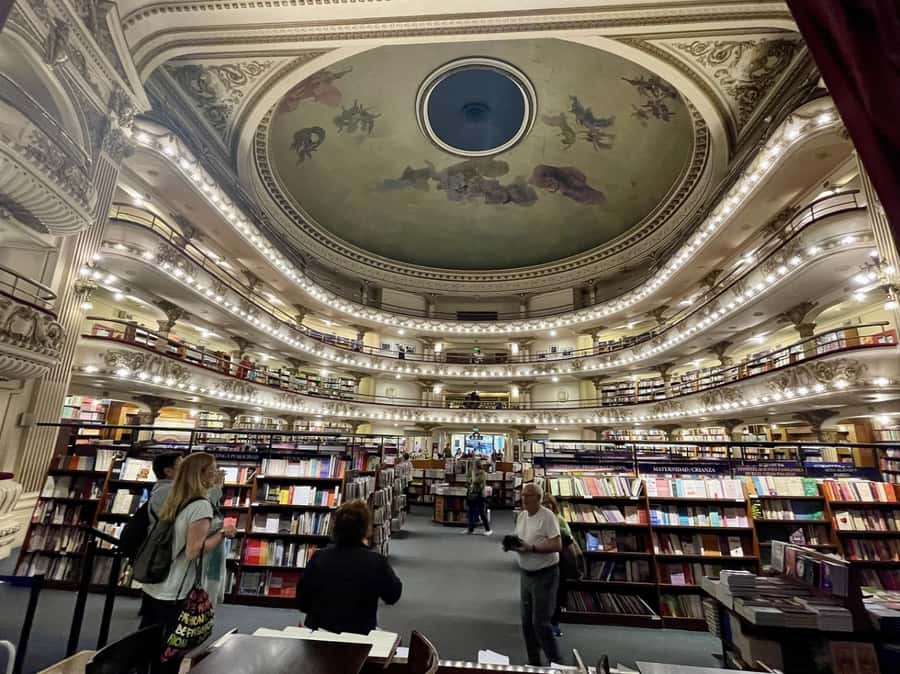
First up is El Ateneo Grand Splendid, a famous bookstore built inside a gorgeous old theater space. It is one of those sights where you stop just to look up and around, then you keep noticing details as you walk by. The guide does a good job turning that into context, not just name-drops.
From there, you stroll through Plaza Rodriguez Peña, a leafy green pocket that also ties into the civic side of the city. You see the Palacio Sarmiento area, which connects to Argentina’s Ministry of Education. I like this stop because it gives you a breath of calm, then snaps you back into the idea that architecture and politics were always intertwined here.
If you like places that mix beauty with function, Barrio Norte is a strong start.
More Walking Tours in Buenos Aires
- Buenos Aires Hop-On Hop-Off Bus, Free Walking Tours & Discounts
★ 4.5 · 2,218 reviews - Buenos Aires: La Boca Guided Walking Tour in English
★ 4.8 · 1,587 reviews - La Boca Walking Tour
★ 5.0 · 1,029 reviews
Palacio de Aguas Corrientes: The Building That Feels Like a Plot Twist
Next comes the Palacio de Aguas Corrientes, a standout because it is not the kind of thing you would guess you need to see until you are standing in front of it. This is the sort of stop where the guide’s explanation matters, since the building’s story is part of the payoff.
You are looking at stunning architecture tied to the city’s water infrastructure, and it gives you a useful mental model for Buenos Aires. The city built more than grand plazas and theaters. It built systems. And the people in charge of those systems had tastes, ambitions, and money.
Practical tip: if you like photos, keep your phone ready, but also take one slow walk around. At this stop, the details you might miss at first can show up from a different angle.
This is also a good moment to remember the tour rhythm. You are not rushing place to place. You are seeing, then getting the why behind it.
Recoleta Cemetery, Evita, and Plaza Francia’s Colonial Calm
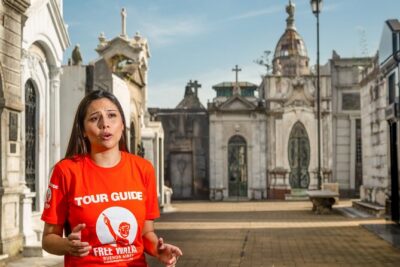
Recoleta Cemetery is the kind of place that does not work as a quick stop. It is a city within a city, filled with elaborate tombs and mausoleums that reflect status, family legacy, and changing eras. The guide helps you read it, so you do not just wander around like you are in a marble maze.
The big emotional anchor here is the last resting place of Eva Perón, known as Evita. Even if you know only a few lines of her story, you will feel the weight of the site. You are also surrounded by countless other tombs, and that contrast is part of the experience. You begin to see how Buenos Aires remembers people, not just in statues, but in stone and symbolism.
After Recoleta Cemetery, you head toward Plaza Francia and the Our Lady of Pilar Church, often recognized for being one of the better-preserved examples of colonial architecture in the city. I like pairing cemetery architecture with colonial church architecture because it shows time layered in a real, physical way.
One drawback to flag: this is a lot of walking inside and around the cemetery grounds, and you will want to keep your pace steady. If you rush, you miss the atmosphere and the guide’s commentary.
Teatro Colón, Plaza Lavalle, and Avenida 9 de Julio’s Obelisk Moment
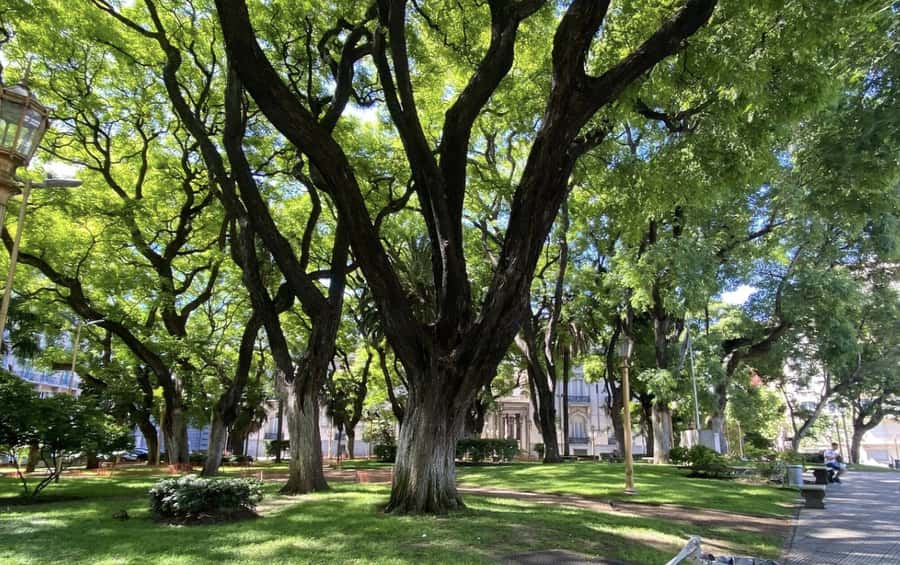
Leaving Recoleta, the tour turns toward classic downtown power symbols: culture, courts, and the city’s most recognizable vertical landmark.
You see Teatro Colón, one of the most famous opera houses in the world. Even if opera is not your thing, the exterior and its place in the city make sense once your guide connects it to Buenos Aires’ history of importing and building elite arts.
Then you stop at Plaza Lavalle, including the Palacio de Justicia de la Nación, home to Argentina’s Supreme Court. It is a great contrast with Teatro Colón, because it changes the mood from art to law without feeling random.
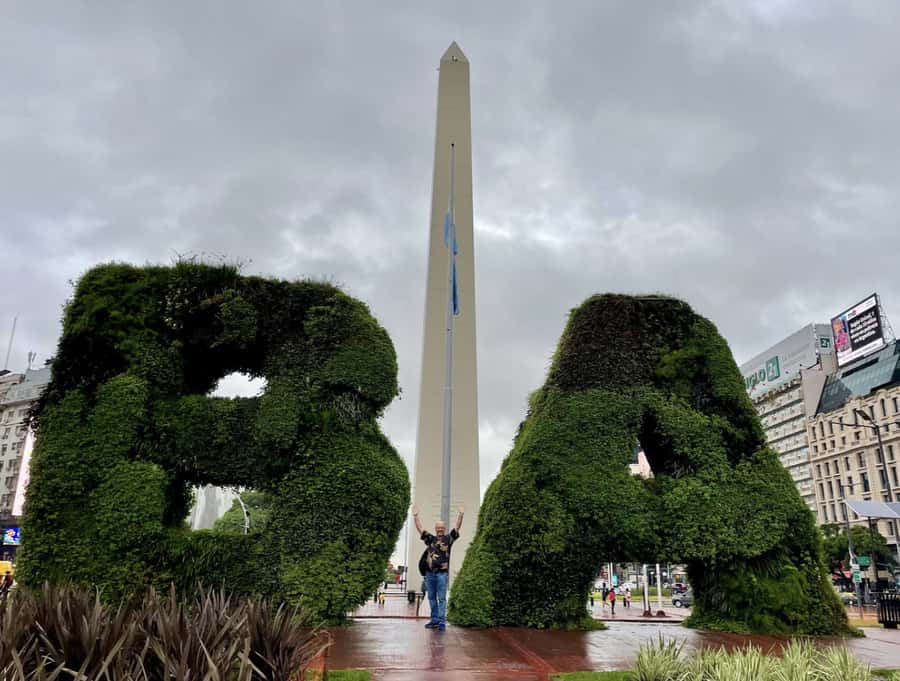
Soon you reach Avenida 9 de Julio, known for being the widest avenue in the world, and the Obelisco monument. You also get a fun photo opportunity with the green BA sign. This is one of those city moments where you get the scale fast. It helps you picture where everything else fits, especially if you are only in Buenos Aires for a short visit.
If you have the energy, take a second to look down the avenue instead of only lining up a shot. The width is the point, and it changes how you think about the city.
A different sort of day out of Buenos Aires:
- Local Foodie Adventure in Buenos Aires with Sherpa Food Tours
★ 5.0 · 6,875 reviews - Buenos Aires City Private Tour with Local Guide
★ 5.0 · 3,475 reviews - Buenos Aires Small-Group City Tour
★ 5.0 · 2,226 reviews - Buenos Aires: Piazzolla Tango Show with Optional Dinner
★ 4.4 · 2,122 reviews
Avenida Corrientes, Confitería La Ideal, and Florida Street’s Shopping-Lane Energy
Next the tour shifts to a more everyday Buenos Aires vibe. You walk Avenida Corrientes, often called the street that never sleeps. It is not just a slogan. You can feel how the street pulls people in at all hours, with theaters, signage, and constant movement.
You also pass Confiteria La Ideal, a restored old café. This stop is a nice break in the walking flow. It gives you a sense of what people would have been doing here for decades, with enough modern restoration that it still feels like a real place today.
Then you head toward Florida Street, the city’s main pedestrian shopping area. It is practical to see because it helps you map the city center in your head. You also see the Galería Güemes, a gorgeous building with arcade-like energy. Even if you do not shop, it is worth it to understand how these spaces work and how locals spend time.
From a value standpoint, I like that this section is not only sights. It is also orientation. You see where you would walk if you had a full afternoon to wander.
Plaza de Mayo, Casa Rosada, and the Cathedral Connection to Independence
Plaza de Mayo is a centerpiece, and your tour treats it like one. You learn that Buenos Aires was founded in 1580 and that this square is where the city began to grow. That fact changes the way you experience the space. You stop seeing it as a big open area and start seeing it as a location that kept shaping decisions for centuries.
You also visit the Casa Rosada, the Pink House, which houses the executive government branch. You get the specific detail about the balcony where President Perón and first lady Evita used to address crowds. That matters because it turns the building into a living stage, not just a paint color.
You then see the Buenos Aires Cathedral, described as the last resting place of Argentina’s independence hero. The guide also notes that Pope Francis used to give mass there, which adds another layer of significance beyond local politics.
One extra detail that makes this stop especially useful for visitors is the reference to the oldest sites in Buenos Aires, including the first church, street, and business in the city, plus the oldest subway line in the southern hemisphere. Even if you do not geek out on transit history, it gives you a sense that Buenos Aires has been building and rebuilding in place for a long time.
San Telmo Finale: Plaza Dorrego, the Indoor Market, and Defensa’s Cobblestones
The tour ends in San Telmo, which is where the city slows down and shows its character through texture. You spend time at Plaza Dorrego, one of the city’s oldest and most popular squares, with atmospheric bars and restaurants plus handicraft sellers.
Then you go to the San Telmo Indoor Market, a striking iron structure built in 1897. Inside you find antiques, souvenirs, and restaurants, plus market vendors of fresh food and produce. This combination is what makes it feel authentic. It is not only a tourist browse. It is also a market with everyday life happening right alongside the browsing.
Finally, you walk down Defensa Street, a cobblestone road through the heart of San Telmo, known for antique dealers and original Spanish and Italian architecture. I love cobblestones in cities, but here they do a job. They make you slow your steps, which makes the architecture easier to actually notice.
And since the tour ends near plenty of places to eat, drink, and shop, you are not stuck thinking about your next move right away.
Coffee, Lunch, Metro Ride, and Water: The Small Breaks That Make It Work
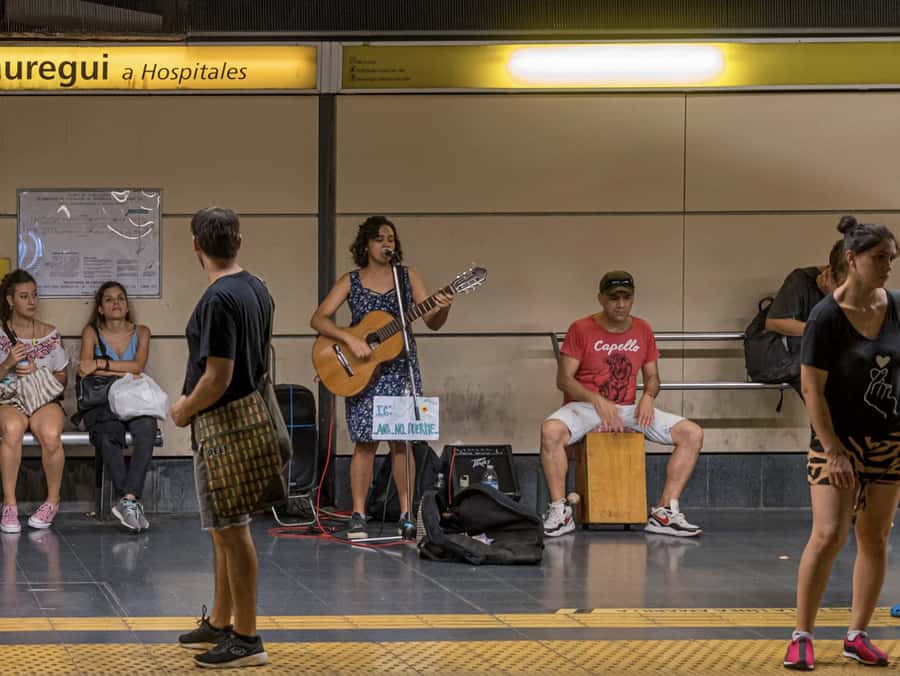
A walking tour lives or dies by pacing, and this one builds in breaks and fuel.
You start with morning coffee (or an equivalent-priced drink), so you are not powering through the morning on empty. You also include a local lunch, with a main and beverage, which is a big deal in a city where meal prices can add up quickly if you are not careful. You get a bottle of water too, which sounds basic, but it helps you stay on track when temperatures rise.
You also ride public transport during the tour, including a metro segment. This is practical because it reduces the amount of backtracking and it teaches you how the city connects. You finish with a better sense of where you are and how to move on your own.
All entrance fees are included for historical stops, including Recoleta Cemetery (listed as US$15+ per person value). When you total up lunch, coffee, transit, and entry costs, the price starts to look less like a gamble and more like a packaged day.
Why the Small Group Size Matters When the City Starts Asking Questions Back
This tour runs as a small group capped at 7 participants. That changes the vibe. Instead of shouting over a crowd, you can actually ask questions and get answers in a way that sticks.
The best part is how the guide shapes the walking. One reviewer praised Tracy for a personal experience, local history, and language, calling out that the friendliness helped them see far more than they would have solo. Another highlighted Chris for a strong overview, including sassy stories, and for answering questions with details they would never have known without the tour.
I think that is the real value of this kind of format. You are not just receiving facts. You are learning the city’s logic, the why behind what you are seeing, and the little cues that help you navigate later.
If you like to do homework, bring curiosity. If you prefer to follow someone, this also works, because the tour flows stop to stop with clear sequencing across neighborhoods.
Price and Value: When US$160 Feels Like a Deal Instead of a Splurge
At $160 per person for a 7-hour small group, the tour is not cheap. But you are not paying only for a guide and a stroll.
You are also paying for included access to major sights, including Recoleta Cemetery. You get coffee and a local lunch with beverage, plus a bottle of water. You also cover public transport taken during the tour, including the metro ride segment. And you are getting an English live guide plus time spent moving between Barrio Norte, Recoleta, City Center, and San Telmo in a single arc.
For me, value hits when a tour saves time and reduces decision fatigue. If you are in Buenos Aires for only a day, this is a strong way to get oriented fast and learn which neighborhoods you actually want to return to. If you have a few days, it still helps because it gives you context you can use later when you wander on your own.
The main cost downside is your own energy. Because it is a long walking day, you need to pace yourself. But if you can do the walking, the bundled structure feels efficient.
Who This Tour Suits Best, and Who Might Want Another Plan
This is a good fit if you want a guided overview of Buenos Aires highlights without juggling tickets and route planning. It also suits you if you enjoy architecture and you like understanding the stories behind sites like Recoleta Cemetery, Teatro Colón, Casa Rosada, and San Telmo Market.
It is less ideal if you are traveling with small kids under 10, need wheelchair access, or are not feeling well. The tour also states it is not suitable for people over 95 years and for people with a cold.
If you are the type who gets bored on long marches, bring a strategy. Focus on the guide’s explanations, take photo breaks when they stop naturally, and do not try to “beat” the walk speed.
Should You Book the BA 101 Walk with BuenosTours?
Book it if you want an organized, small-group way to see a lot of Buenos Aires in one day, and you care about more than surface impressions. The included lunch, coffee, entrance fees, and metro segment make it feel like a true day plan, not just a slideshow with walking legs.
Skip it or consider another option if you do not handle long days on foot well, or if your schedule is too tight. Also think twice if you are not feeling well, since the tour is clearly designed for active participants.
If you want a fast path to understanding this city, this is one of the more practical ways to do it. You end the day in San Telmo with ideas for where to go next, which is exactly what I want from a one-day overview.
Recently reviewed around Buenos Aires
- Meet Locals: Language Exchange Café in Buenos Aires★ 5.0 · 10 reviews
- Madero Tango Show Including Executive Dinner In Buenos Aires★ 3.5 · 10 reviews
- Piazzolla Tango Show Only In Buenos Aires★ 4.5 · 10 reviews
- Esquina Homero Manzi Tango Show Ticket Including Optional Dinner in Buenos Aires★ 4.5 · 10 reviews
- Private City Tour & Transfer to the International Airport★ 5.0 · 10 reviews
- VIP Dinner & Tango Show at El Viejo Almacen★ 4.5 · 10 reviews
- Buenos Aires City Tour★ 4.5 · 11 reviews
- Premium service Buenos Aires city tour for small groups★ 4.0 · 11 reviews
Walking Tours, compared.
Buenos Aires Hop-On Hop-Off Bus, Free Walking Tours & Discounts
Read our review →
German Footprint & Nazi presence – Walking Tour in Bariloche
Read our review →
Full Day Buenos Aires Private Walking Tour – Your Own Personal BA 101
Read our review →
Discover Buenos Aires: Walking Tour Through San Telmo & Center!
Read our review →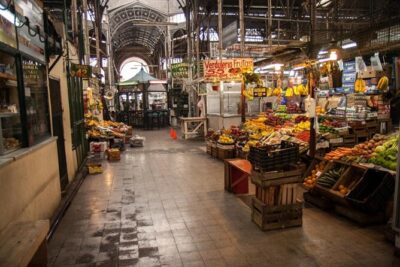
Browse the lists this tour appears in