Reviewed · BUENOS AIRES TOURS
Buenos Aires for curious people
This tour is interesting because it connects Buenos Aires landmarks to the stories behind them, from colonial church fronts to 20th-century political trauma. I like that the route stays walkable and compact, so you get context without spending half your day in transit. You’ll also get the payoff of ending near Casa Rosada with a clearer sense of what you’re looking at.
Two things I especially like: the small group size (max 8) keeps the conversation real, and the guide style is story-first, with names, dates, and political context you can actually use. In reviews, guides like Nico and Ignacio are praised for clear explanations and for going beyond standard photo stops.
One drawback to consider: the tone is not all light and funny. One stop, the Memory Walk, deals directly with detention, torture, and extermination during the dictatorship years, so bring the emotional bandwidth for that.
Key things you’ll notice on this route
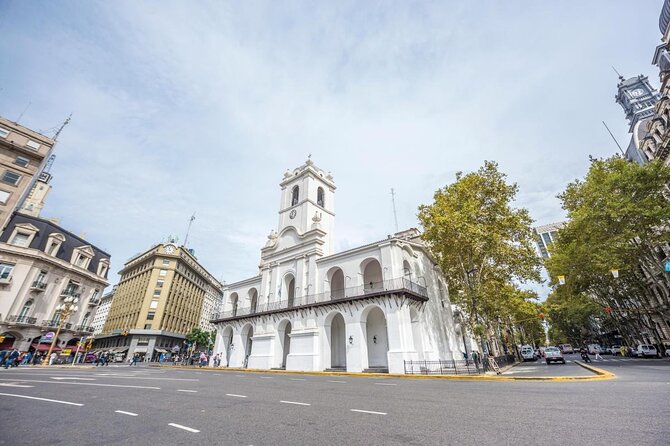
- A micro-history route through old Buenos Aires, built around short walks between meaningful places.
- San Telmo textures at street level, including the market atmosphere and the feel of Plaza Dorrego.
- The Memory Walk stop, which shifts the day from architecture to human rights history.
- Calatrava’s Puente de la Mujer, a modern landmark dropped into an older neighborhood.
- Casa Rosada at the finish, so your final “big sight” comes with political context.
Price and value for a 2 to 3 hour Buenos Aires street course
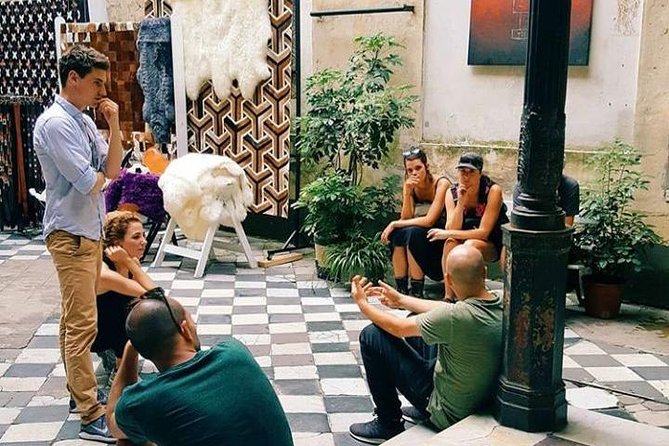
At $33 per person for about 2 to 3 hours, this is good value if you want a guided thread through the city rather than a checklist of monuments. The structure is tight: you’re not paying for long rides or big museum tickets inside a single building.
Most stops have free entry, which matters in Buenos Aires, where a “sightseeing day” can rack up costs fast. The one exception you should plan for is Casa Rosada, where the ticket is not included, so budget for that if you want to go inside.
The average booking window is around 35 days in advance, which tells me this is a popular way to start making sense of the city. If you’re flexible, booking earlier also helps you avoid sold-out time slots.
A few more Buenos Aires days worth comparing
- Local Foodie Adventure in Buenos Aires with Sherpa Food Tours
★ 5.0 · 6,875 reviews - Buenos Aires City Private Tour with Local Guide
★ 5.0 · 3,475 reviews - Buenos Aires Small-Group City Tour
★ 5.0 · 2,226 reviews
Small-group pacing that keeps questions alive
This is an intimate small-group tour with a maximum of 8 people, and that changes the vibe. You’re less likely to feel like you’re being rushed, and you can ask follow-up questions when something clicks or confuses you.
The guide also builds in time for breaks. Reviews mention snack and bathroom breaks twice, and that’s not a trivial detail. In 2 to 3 hours, those pauses keep the day from turning into a sprint.
If you prefer a very rigid schedule with minimal walking, this might not be your style. The pace is conversational, and the route gives room for questions.
From Bar Britanico to Parque Lezama, where the city’s origin shows up
You start at Bar Britanico (Brasil 399) and your first “wow” is simply getting oriented in old Buenos Aires. The meeting point matters because you begin the walk in a lived-in part of the city rather than right next to a polished tourist gate.
Next up is Parque Lezama, your early anchor point. This is the spot where the first fort was established in 1536, and the park setting helps you picture the city before it became the Buenos Aires of today. It’s a quick stop, around 30 minutes, but the framing sets your brain on the right channel: this is a city built in layers.
You get a sense of time passing fast, but not randomly. The day keeps showing you how each era left physical clues, even when the details have faded.
The 1944 Swedish church stop you’ll be glad you didn’t skip
One of the most interesting surprises on the walk is Club Sueco Restaurante, which includes a Swedish church built in 1944. It’s the kind of stop that makes sense only when a guide connects the dots, because your eyes will register it as “a building” unless someone explains why it’s here.
This is one of those details that improves your ability to read a city. Buenos Aires isn’t only Spanish colonial and Italian immigrant; it also has European communities that left their marks in unexpected places.
The stop is short, about 10 minutes, but it’s exactly the kind of “wait, what?” moment that makes an old-city walk feel fresh.
A different sort of day out of Buenos Aires:
- Buenos Aires Hop-On Hop-Off Bus, Free Walking Tours & Discounts
★ 4.5 · 2,218 reviews - Buenos Aires: Piazzolla Tango Show with Optional Dinner
★ 4.4 · 2,122 reviews - Buenos Aires: City Highlights Guided Tour with Transfer
★ 4.7 · 1,946 reviews - Buenos Aires: Hop-On Hop-Off City Bus Tour
★ 4.2 · 1,855 reviews
Memory Walk: the heavy stop that changes how you see everything else
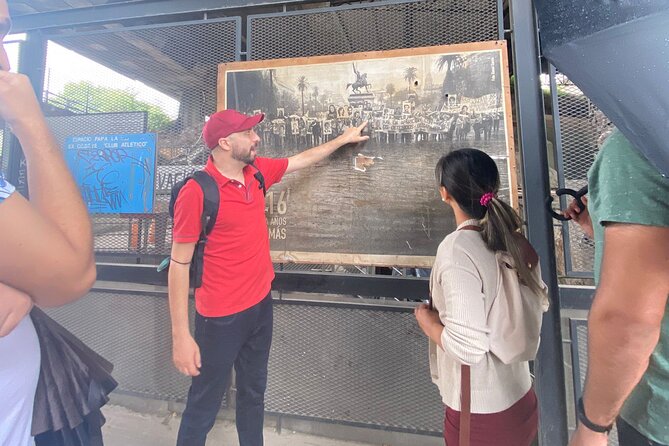
Then you hit Memory Walk, tied to the former clandestine center for detention, torture, and extermination from 1976 to 1979. This stop lasts about 20 minutes, and it’s the emotional center of the tour.
If you’re the type who needs a light day, plan for a tonal shift. You don’t just look at a site, you learn what it meant, and that reframes nearby architecture and politics. In a city where power and identity are always in the background, understanding this period makes later landmarks feel less abstract.
I’d treat this as a “prepare your mood” moment. Give yourself a minute before you arrive, and if you need a pause, the group’s small size helps.
San Telmo’s colonial flavor at Parroquia de San Pedro Gonzalez Telmo
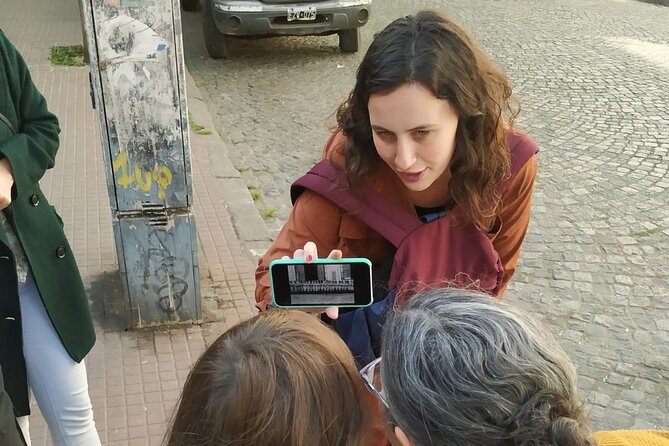
After the heavy stop, the tour brings you back to streets and buildings with Parroquia de San Pedro Gonzalez Telmo. This is a colonial Catholic church stop of about 15 minutes, and it’s a classic Buenos Aires way of thinking: faith, community, and neighborhood identity in one place.
This kind of stop works best when you look at the church as a social structure, not just a facade. The details and proportions can feel “old-world,” but the real value is how the guide explains what kind of community the church served and why that matters in Telmo.
If you’re photographing, keep it simple. Capture the exterior, and use your notes to remember the context instead of trying to freeze the whole building into your camera.
Plaza Dorrego and the rhythm of old town life
Next comes Plaza Dorrego, the old town’s main square. It’s about 15 minutes, and it’s one of the best places to slow down because squares are where Buenos Aires shows you how it gathers.
This stop pairs well with the rest of the day. You’ve moved from fort origins, to immigrant marks, to dictatorship history, and now you get a public space that helps you picture how people lived side by side.
You’ll likely notice how the guide’s narrative makes the square feel less like a postcard and more like a living room for the neighborhood.
Mercado San Telmo: Italian-immigrant roots meet everyday browsing
Then you move to Mercado San Telmo, where you’re there for about 30 minutes. The market was built up by Italian immigrants, and that detail is useful, because it helps you interpret the food and the flow of people as part of the city’s migration story.
This is not just a “buy a snack” stop, even if you might. It’s a chance to see Buenos Aires the way locals do: casual, noisy, layered with everyday commerce.
If you want a quick strategy, pick one item to taste or one thing to watch, then keep walking. Markets can swallow time, and your best souvenir here might be a memory you can explain later.
Puente de la Mujer: Calatrava’s modern icon in an older neighborhood
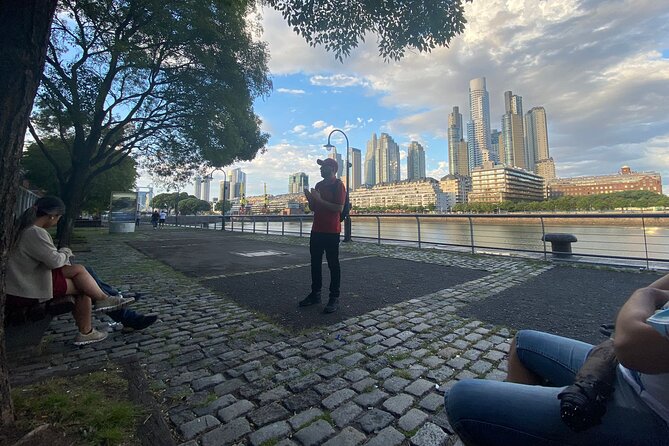
With the walk continuing through Telmo’s feel, you reach Puente de la Mujer. It’s about 15 minutes, and it’s tied to the Spanish architect and structural engineer Santiago Calatrava.
This is a smart stop because it breaks the day into “then and now.” When you see Calatrava’s design in this context, you start recognizing the tension in Buenos Aires between reinvention and preservation.
Use this moment to reset your eyes. Earlier stops are about what people endured and built. This bridge is about how the city markets itself and dreams in steel and geometry.
Casa Rosada finish: President’s office with political context in your head
The tour ends at Casa Rosada at Balcarce 78, and the big practical note is that the ticket is not included. The stop is about 25 minutes, so you’re not getting an endless museum day, but you do get a structured introduction to the site’s meaning.
Casa Rosada is the president’s office, and that title is exactly why this walk makes sense. You’ve spent hours learning about how power works in Buenos Aires, including the dictatorship era, the community institutions, and the city’s evolution.
If you want to go inside, plan a little extra time and be ready for the line situation. If you skip the ticket, you can still take in the architecture and understand why people care so much about this building.
What the guide really does, and how you can get more out of it
The most praised aspect of this experience is the guide’s ability to connect history, architecture, and politics into something you can follow. Reviews highlight Nico as a multi-generation local with sharp explanations, and Ignacio as a history professor type who communicates clearly and keeps everyone comfortable.
Here’s how to turn that into your advantage. Before the tour starts, think of one question you actually want answered, like why certain neighborhoods feel the way they do, or how the city’s political events shaped everyday life. Then ask it early, because guides can adjust their pacing if they know what you care about.
Also, don’t be shy about asking for clarification when dates or names stack up. The tone is conversational, and the group size makes it easier to keep the conversation at your level.
Finally, bring curiosity, not just camera intent. This tour is best when you treat Buenos Aires like a story you’re reading in real time.
Practical tips: shoes, weather, and your “snack plan”
This is a walking tour, so wear comfortable shoes you trust for uneven sidewalks. You’re looking at short segments between stops, but the day adds up quickly when you’re paying attention.
Good weather matters. The experience requires it, and if conditions are poor, you’ll be offered a different date or a full refund. So if you’re visiting in a season with lots of surprises, build in flexibility.
Bring water. Even with snack and bathroom breaks built in, thirst and hunger can kill your ability to absorb history. If you get a chance during the breaks, grab something simple and keep the day moving.
If you’re sensitive to distressing topics, remember the Memory Walk stop is part of the route. I’m not saying skip it, I’m saying know what you’re walking into so you can handle it on your terms.
Who this tour suits best
This tour is ideal if you want to understand Buenos Aires beyond surface sights. If you’re the kind of traveler who loves architecture, street markets, and political context, you’ll get more out of the explanations than from just taking photos.
It also suits people who prefer small group experiences and real Q and A. If you like asking questions and getting straight answers, the max 8 format helps.
If you need a super light, purely scenic walk, this may feel too serious in the middle. On the other hand, if you want to see how the city’s identity formed, this is the right mix.
Should you book Buenos Aires for Curious People?
Yes, if you want a street-level understanding of Buenos Aires that connects landmarks like Plaza de Mayo and Casa Rosada to the human stories behind them. The $33 price works because most stops are free and the guide time is focused on turning history into something you can see.
I’d hesitate if you want only upbeat sightseeing or if you’re not comfortable with sites that address political violence. Otherwise, this is a strong choice for a first-time visit, or for a return trip when you want to start thinking like a local.
Book it, wear good shoes, and go in curious. You’ll walk away with a city that makes more sense.
FAQ
How long is the Buenos Aires for Curious People tour?
It runs about 2 to 3 hours.
What is the group size?
The tour is limited to a maximum of 8 travelers.
Where does the tour start and end?
It starts at Bar Britanico, Brasil 399, C1154AAC, Buenos Aires, and ends at Casa Rosada, Balcarce 78, C1064AAC, Buenos Aires.
What major sights are included?
You’ll see iconic landmarks such as Plaza de Mayo and the Casa Rosada area, plus neighborhood stops in San Telmo like Plaza Dorrego and Mercado San Telmo.
Is admission to Casa Rosada included?
No. Casa Rosada admission is not included, while the other listed stops have free admission.
Is the tour suitable for most people?
Most travelers can participate.
Are service animals allowed?
Yes, service animals are allowed.
Does the tour depend on weather?
Yes. It requires good weather. If it’s canceled due to poor weather, you’ll be offered a different date or a full refund.
What is the cancellation window for a full refund?
You can cancel up to 24 hours in advance for a full refund, based on the local start time.
Recently reviewed around Buenos Aires
- Meet Locals: Language Exchange Café in Buenos Aires★ 5.0 · 10 reviews
- Madero Tango Show Including Executive Dinner In Buenos Aires★ 3.5 · 10 reviews
- Piazzolla Tango Show Only In Buenos Aires★ 4.5 · 10 reviews
- Private City Tour & Transfer to the International Airport★ 5.0 · 10 reviews
- Esquina Homero Manzi Tango Show Ticket Including Optional Dinner in Buenos Aires★ 4.5 · 10 reviews
- VIP Dinner & Tango Show at El Viejo Almacen★ 4.5 · 10 reviews
- Premium service Buenos Aires city tour for small groups★ 4.0 · 11 reviews
- Buenos Aires City Tour★ 4.5 · 11 reviews
Buenos Aires Tours, compared.
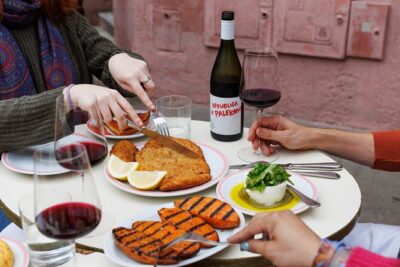
Local Foodie Adventure in Buenos Aires with Sherpa Food Tours
Read our review →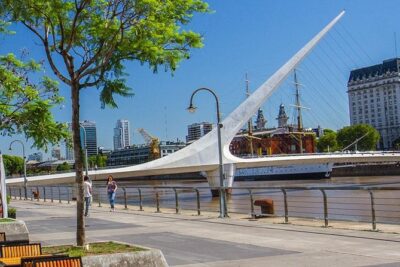
Buenos Aires City Private Tour with Local Guide
Read our review →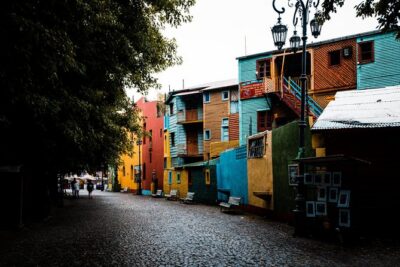
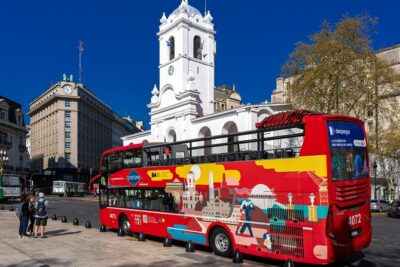
Buenos Aires Hop-On Hop-Off Bus, Free Walking Tours & Discounts
Read our review →