
Reviewed · WALKING TOURS
Buenos Aires in One Day Private Walking Tour
A great way to understand Buenos Aires is to walk it in big chunks, not hop between highlights. This private day pairs Plaza de Mayo politics and monuments with the quieter, more personal stories you only notice when you’re on the sidewalk.
I really like two things about it. First, the guide turns streets into lessons, with architecture and everyday life side by side. Second, you get neighborhood variety in a single day, from the older colonial feel of San Telmo to the grand, formal avenues of Recoleta and Palermo.
One consideration: it’s a long, active day. You’ll walk a lot, there’s a cemetery visit that takes real time, and the day includes at least one short taxi hop between sights, so plan your shoes and your schedule accordingly.
Key highlights at a glance
- A true, street-level walking tour that helps you read Buenos Aires block by block.
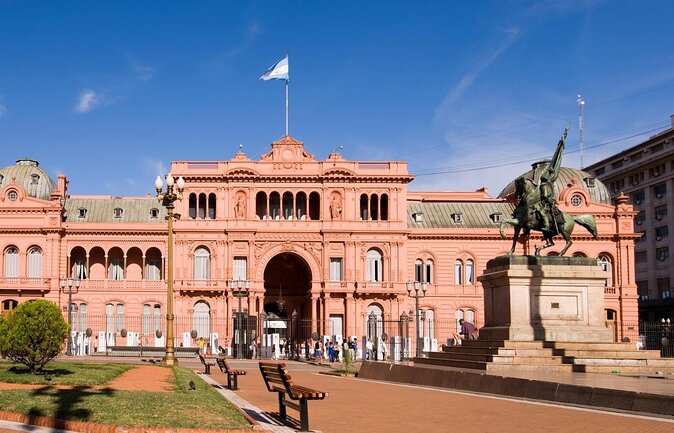
- Plaza de Mayo power stops like Casa Rosada, the Cabildo, the Cathedral area, and the Piramide de Mayo.
- Recoleta Cemetery time with Evita Peron and other major monuments, not a quick photo stop.
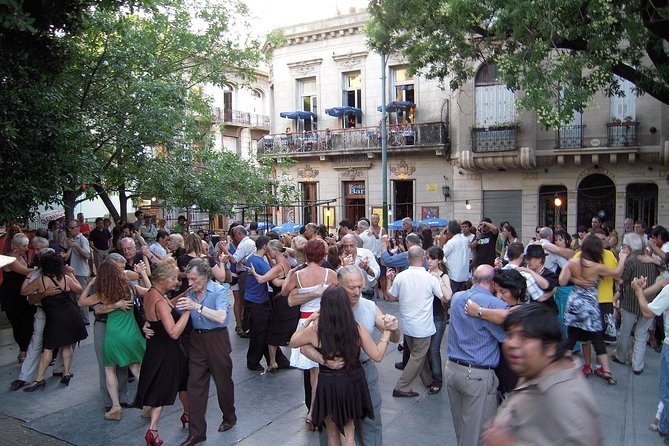
- San Telmo plus Dorrego Square and its antiques fair with history context, including the open-air slave market story.
- Old meets new in the same loop, from downtown landmarks to Puerto Madero by the water.
- Coffee and lunch break on your own, so you control what you eat and how fast you move.
A one-day route that teaches Buenos Aires by walking it
Buenos Aires can feel like a postcard city until you start noticing the details: which buildings wear different styles, which streets hint at past empires, and where ordinary life keeps rolling on. This tour is built for that kind of noticing. You move through several of the city’s key zones in one day, with stops that explain what you’re looking at and why it matters.
What makes it work is the pacing of themes. You start where the power and institutions are, then you shift into neighborhoods with different immigrant waves and social layers. By the time you reach places like Recoleta and San Telmo, you’re not just seeing sights. You’re getting the story that explains how Buenos Aires became Buenos Aires.
It’s also a private setup, meaning your group is the only group on the day. That matters if you like asking questions, pausing for photos, or wanting a bit more time at one corner because the view, the street scene, or the architecture pulls you in.
More Day Trips in Buenos Aires
- Gaucho Day Trip from Buenos Aires: Santa Susana Ranch
★ 4.0 · 272 reviews - Colonia del Sacramento Small-Group Day Trip
★ 4.5 · 155 reviews - Gaucho Experience: A Day Trip to Don Silvano Ranch
★ 4.0 · 148 reviews
Starting at 10:00, meeting outside the cafe corner
The day starts at 10:00 am. You meet at Buenos Aires Walking Tours outside the cafe corner door, on the corner with Paraguay St. The sign to look for is a small BA Walking Tours sign held in hand or worn by the guide.
A heads-up that matters: the tour is rain or shine. Buenos Aires weather can change fast, so bring a light rain layer even if the morning looks perfect.
The experience is designed for people with moderate physical fitness. Expect plenty of walking time, plus you may take a short taxi ride for one connection between attractions. The taxi cost is not included and is approximately USD $5 to $7, so keep some cash or card handy just in case.
Retiro to Palermo via Avenida Alvear and the grand architecture beat
Early in the day you hit the formal, monumental side of the city. Retiro is a great starting point because it gives you a sense of the city’s scale and its architectural ambition. You spend time around Plaza San Martin, and you’ll learn how this area connects to older Buenos Aires industries and power structures.
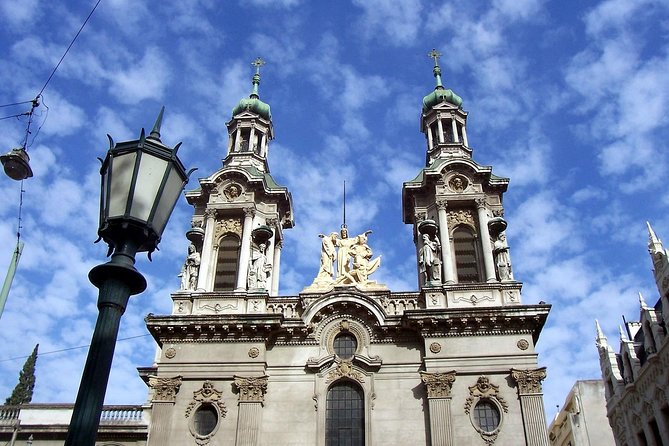
From there, the tour walks through sights that explain Buenos Aires architecture as a living timeline. Expect stops like the Paz Palace, the Kavanagh Building, and the Santísimo Sacramento Church. One fun angle here is how the guide connects building design with national identity, not just style.
You’ll also see the British imprint in unexpected places, including the British Clock Tower and the railroad terminal stations. You get the broader story of why English presence shows up in Argentina’s history in ways that still show on the street.
Then the route shifts through Barrio Norte and Avenida Alvear, where the city goes more elegant and formal. This is where the day starts to feel like a “walk through influences” because you’ll hear about French and Italian influence, Catholicism and Judaism showing up in the urban fabric, and multiple embassies and mansions along the way.
If you like architecture, this stretch is one of the best values of the whole tour. It turns what could be a simple sightseeing loop into a set of clues you can recognize even after you’re done with the guide.
Recoleta: cemetery monuments, tango references, and the look of status
Recoleta is where Buenos Aires shows off the marble and the manners, and the tour uses that to tell human stories. You pass through the Recoleta area and stop at key points that connect the neighborhood’s identity to the city’s wider cultural life.
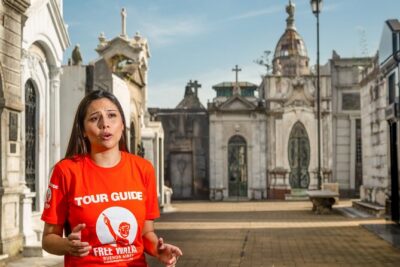
The centerpiece is La Recoleta Cemetery, where the admission ticket is included. This is the kind of place where time slows down because there are so many monuments and stories packed into a relatively walkable area. You’ll learn about Eva Peron’s tomb and other fascinating stories tied to notable Argentinians.
A practical note: it can feel long if you’re not into cemetery history. One important review theme was that this part can run longer than some people expect. If you know you prefer street scenes over structured tomb stops, just go in with realistic expectations. Give it your patience, or bring your energy for photos and details.
Also in Recoleta you’ll visit or see places like Nuestra Senora del Pilar Church and you’ll hear about tango’s coming-of-age connection through stops such as Palais de Glace. The idea is not to teach you dance steps. It’s to show how culture traveled from salons and theaters into everyday identity.
More Walking Tours in Buenos Aires
- Buenos Aires Hop-On Hop-Off Bus, Free Walking Tours & Discounts
★ 4.5 · 2,218 reviews - Buenos Aires: La Boca Guided Walking Tour in English
★ 4.8 · 1,587 reviews - La Boca Walking Tour
★ 5.0 · 1,029 reviews - Recoleta Cemetery Walking Tour
★ 5.0 · 668 reviews
Downtown Buenos Aires on foot: Florida Street, El Centro, and the big monuments
After the grand avenues, the tour returns you to the historic engine room of the city. You walk through El Centro with stops that make downtown make sense fast.
Calle Florida is a key street here. It’s lively, central, and built around retail and foot traffic, but the guide doesn’t treat it like a modern shopping corridor. The commentary connects it to the city’s evolution and the role it played as Buenos Aires grew.
The route also includes landmarks tied to British-era wealth and Argentina’s later shifts in finance and power. You’ll see the Harrods-style presence of Galerías Pacífico and the Teatro Colón area, plus you get context for the Obelisco and Mariquita Sánchez house, linked to Argentina’s National Anthem story.
This section is a strong choice if you want to understand how Buenos Aires operates. You’ll see a city that still debates its past, and you’ll notice how the skyline is a mix of old prestige buildings and newer institutional functions.
Plaza de Mayo and the Casa Rosada moment, with layers you can read
If you want one area that makes Buenos Aires feel serious, it’s Plaza de Mayo. The tour spends time here and focuses on the most important political and symbolic buildings.
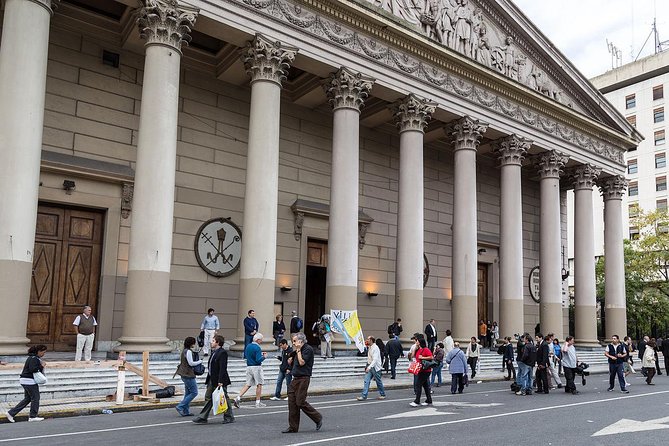
You’ll see Casa Rosada, the Cabildo, and the Metropolitan Cathedral area. You also learn what the Piramide de Mayo represents and why the square is central to national memory.
One especially powerful stop is the Mothers of the Disappeared memorial area. Even if you already know the headline history, seeing it in context and getting clear explanations on the spot helps the meaning land. This is where the tour does more than point. It connects public spaces to human consequence.
From a travel perspective, I think this is one of the best segments for first-timers. Plaza de Mayo can feel overwhelming on your own. Here, it becomes a set of understandable locations, like a timeline you can walk through.
San Telmo and Dorrego Square: antiques, colonial leftovers, and the hard history
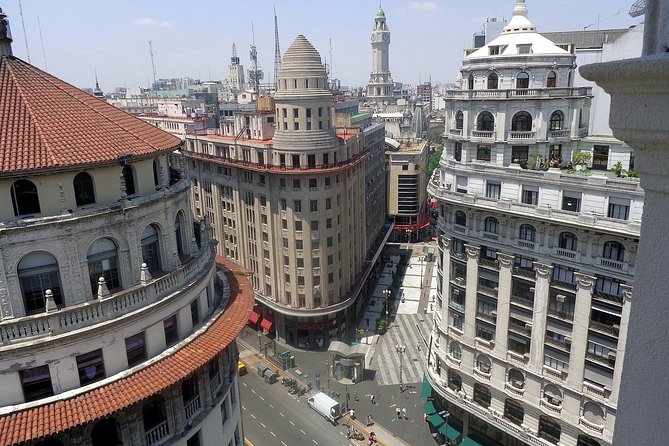
San Telmo is Buenos Aires in a more textured mode. You get the oldest neighborhood vibe with colonial-style houses and churches, and the streets feel like they remember older rhythms.
The tour focuses on Monserrat and the early city core too, including stops that connect government buildings and architecture to the city’s formation. You’ll see the Cabildo area, the Cathedral connection, and you’ll learn about General San Martin and how Argentina became a nation.
Then you hit Plaza Dorrego and the famous antiques market area. This is the part many people come for, because it’s visual and easy to wander: stalls, old objects, and street energy.
The guide also adds the darker layer of the neighborhood’s story, including the history of the open-air Slave Market. It’s not the kind of detail you want to skip in Buenos Aires, even if it makes the walk heavier. I like that the tour includes it because it keeps San Telmo from becoming only a theme park of antiques.
You also pass areas tied to early British presence in 1806 and 1807, and you’ll hear about Defense-themed streets and what that meant for the young city. There’s even a stop tied to a very specific slavery-related story, including the idea of a freed slave being given a home in a place described as the smallest in width in the city. If you’re interested in how social history shows up in urban space, this is one of the more memorable, “wait, I had no idea” moments of the day.
Palermo and Puerto Madero: from everyday culture to new waterfront Buenos Aires
After the historic core, the tour keeps moving toward areas that feel more modern and more open. Palermo is where you get a taste of everyday Buenos Aires life in a big, diverse neighborhood.
You’ll see or hear about the National Library building, the National Gallery of Art, and public art landmarks like the Floralis Monument, the Giant Flower. You’ll also see the Peynot’s Grand Monument, and the tour includes the Evita Peron monument location tied to her story.
This segment can be a breather if you’re tired of dense downtown stops. The sidewalks are still busy, but the scale feels different, and the sights are more spread out.
Then comes Puerto Madero, built by expanding across the older dockyards and out toward the water. It’s a good contrast to San Telmo because it shows how Buenos Aires reinvents waterfront areas rather than only preserving the past. The guide explains it as the city’s newer neighborhood built over older British dockyard foundations.
If you want a clean ending that leaves you with places to return to later, Puerto Madero is a solid choice.
The built-in coffee and lunch break, plus how to plan your day
There’s a coffee and lunch break during the day, but meals are not included. That gives you freedom, and it also means you need to plan simple choices.
Bring a snack option if you tend to get hungry on long walks. The tour includes a lot of stop time, and if you’re waiting for lunch you might want something small to bridge the gap.
Also, because you’re moving across multiple neighborhoods, you’ll want to travel light. Comfortable shoes matter more than fancy clothes. You’ll be standing, walking, and stopping often enough that your feet will tell you the truth before your brain does.
Price and value: what USD 199 buys you on a private day
At USD $199 per person, this is not a budget group tour. The value comes from private guiding plus the structure of a focused route.
You’re paying for:
- A local English-speaking guide
- Cemetery admission tickets (included for La Recoleta Cemetery)
- Enough time to learn why each building or square matters, not just what it looks like
I’d consider it a good value if you’re the type who wants real context and you like walking. If you prefer quick photos and minimal talking, you might feel you paid for commentary you did not need.
Because it’s private, it can also make sense for pairs or small groups if you compare it to booking separate guides for downtown, Recoleta, and San Telmo. You’re essentially buying one guide who can tie the day into one coherent story.
Where you end in Plaza Dorrego, and why it changes your next step
Your tour ends at Plaza Dorrego, in the San Telmo area. That’s convenient if you want to keep wandering into the antiques zone and nearby cafes. It can be inconvenient if your hotel is far away, because the end point is not the same as the start point.
So plan your evening transit early. If you end up needing help finding your way back, a map and a willingness to take public transport or a taxi is the right approach.
If you’re tired after a long walk, San Telmo has plenty of places to slow down. If you’re energetic, Puerto Madero and Palermo are often still within reach depending on where you are and how you feel.
Should you book this private Buenos Aires walking day?
Book it if you:
- Want a structured one-day overview that still respects walking and street-level details
- Like architecture and neighborhood history, from British influence to Catholic, Jewish, and immigrant layers
- Are excited about Recoleta Cemetery and Plaza de Mayo with meaningful context
Skip it or choose a shorter route if you:
- Prefer minimal walking and a lot of indoor time
- Don’t want cemetery history to take a bigger chunk of the day
- Know you want an easy route with no taxi hop between sights
For most first-timers, this hits a sweet spot: it’s intense, it’s well focused, and it gives you enough understanding to explore the rest of Buenos Aires with your eyes open.
FAQ
What time does the tour start?
The tour starts at 10:00 am. You should meet no later than 10:00 am at the Buenos Aires Walking Tours meeting spot.
Where do I meet the guide?
You meet outside the Buenos Aires Walking Tours cafe corner door, on the corner with Paraguay St. The listed start address is Florida Garden, Florida 899, C1005 AAQ.
How long is the tour?
The duration is about 6 hours. Some days run closer to 7 hours depending on timing and conditions.
Is it a walking tour the whole time?
Yes, it is a private walking tour with multiple street stops. You may also take a short taxi ride between one attraction and another, and taxi cost is not included.
What is included in the price?
Included items are a local English-speaking guide and cemetery admission tickets.
What is not included?
Meals are not included, and transportation during the tour is not included (including the taxi ride mentioned). Hotel pickup and drop-off are also not included.
Does the tour run in bad weather?
Yes. The tour operates rain or shine.
What fitness level do I need?
Moderate physical fitness is recommended since it is a long walking day with many stops.
Where does the tour end?
The tour ends at Plaza Dorrego, Humberto 1º 400, C1065 in the San Telmo area. It is also the site of the antiques fair.
Recently reviewed around Buenos Aires
- Meet Locals: Language Exchange Café in Buenos Aires★ 5.0 · 10 reviews
- Piazzolla Tango Show Only In Buenos Aires★ 4.5 · 10 reviews
- Madero Tango Show Including Executive Dinner In Buenos Aires★ 3.5 · 10 reviews
- Private City Tour & Transfer to the International Airport★ 5.0 · 10 reviews
- Esquina Homero Manzi Tango Show Ticket Including Optional Dinner in Buenos Aires★ 4.5 · 10 reviews
- VIP Dinner & Tango Show at El Viejo Almacen★ 4.5 · 10 reviews
- Premium service Buenos Aires city tour for small groups★ 4.0 · 11 reviews
- Buenos Aires City Tour★ 4.5 · 11 reviews
Walking Tours, compared.
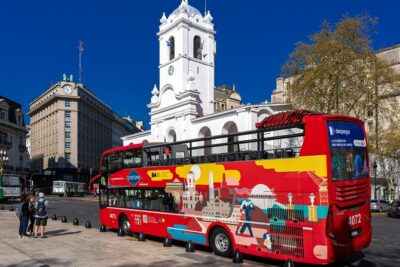
Buenos Aires Hop-On Hop-Off Bus, Free Walking Tours & Discounts
Read our review →
German Footprint & Nazi presence – Walking Tour in Bariloche
Read our review →
Full Day Buenos Aires Private Walking Tour – Your Own Personal BA 101
Read our review →
Discover Buenos Aires: Walking Tour Through San Telmo & Center!
Read our review →
Browse the lists this tour appears in