
Reviewed · JEWISH BUENOS AIRES
Private Jewish Heritage Tour in Buenos Aires
Buenos Aires has a way of turning history into street-level reality, and this private Jewish heritage tour does that fast. In about three hours you visit places tied to community life, memory of the Holocaust, and the resilience of Buenos Aires Jewish institutions, all with real context from your guide.
I particularly like the small group feel inside a private format, which makes questions easy and the pace comfortable. I also love the free hotel pickup and drop-off, because the city’s distances and traffic can turn a simple outing into a logistics project.
One thing to plan for: the stops require an obligatory donation per person at each institution, and that adds to the base price. Also, the schedule is tightly timed, so if you want to linger, you may have that itch to return later on your own.
Key highlights worth planning around
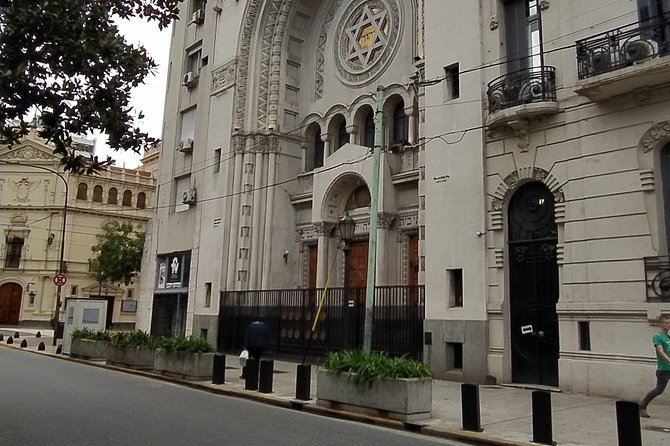
- Templo Libertad: Buenos Aires first synagogue, and the country’s oldest, declared a National Historic Monument
- Museo Judio de Buenos Aires: an immigrant-focused museum next to Templo Libertad, with an interactive approach to culture and tradition
- Museo del Holocausto Buenos Aires: told through objects, images, and words, including a photo collection connected to the Warsaw ghetto
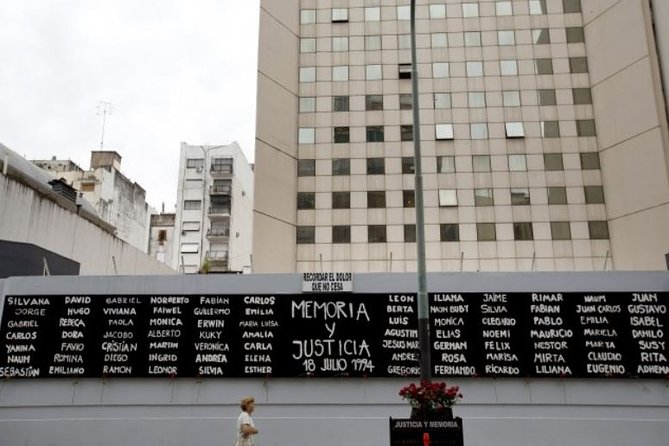
- AMIA center: community purpose plus the story of the 1994 car bomb attack and the rebuilding that followed
- Private, small-group attention: your guide can steer the conversation based on what you care about most
Buenos Aires Jewish heritage, in a tightly timed morning
This tour works because it is built like a guided walk through key Jewish memory points in Buenos Aires, not a lecture in a classroom. You start in the morning, typically at 9:00 am, and you’re out and back in about three hours. That makes it a great fit on a day when you want something meaningful, without burning half your vacation.
The most important thing I like is how the stops connect. You don’t just hop from one museum to another. The early focus is on immigrants, traditions, and community beginnings. Then the tone shifts toward the Holocaust and the idea of teaching memory forward. Finally, you end in spaces tied to today’s community, including AMIA’s story of trauma and recovery.
More Historical Tours in Buenos Aires
- Historical Sherpa Food Tour of San Telmo with Street Food, Drinks
★ 5.0 · 920 reviews - Nazis in Buenos Aires: a historical walking tour
★ 4.9 · 193 reviews - San Telmo: Historical Guided Tour with Street Food & Drinks
★ 5.0 · 87 reviews
Value and comfort: private guide plus free pickup and drop-off
For $166 per person, you are not just paying for someone to drive you around. You are getting a private local guide and hotel pickup and drop-off included. That matters in Buenos Aires. Even when destinations are near each other on a map, traffic and crossing times can eat your energy.
The tour also has a track record people feel strongly about: a 4.8 rating and 94% recommendation. In the guide names people have credited, I see a pattern that you can count on: Matias, Ariel, Eli, and Axel come up again and again. The common thread is a friendly, professional delivery that keeps the story clear and the pace humane.
In other words, you are paying for convenience and context. If you only wanted photos and street views, you could self-guide. But if you want the “what am I looking at, and why does it matter” part, this format earns its keep.
Stop 1: Museo Judio de Buenos Aires, and the immigrant story in plain view
Your first stop is the Museo Judio de Buenos Aires. It opened in 1967, initiated by Dr. Salvador Kibrick, connected to the Israeli Congregation of the Argentine Republic. It also sits next to the impressive Templo Libertad Synagogue, which is a handy detail, because the two places echo each other right away.
What I like here is the museum’s focus. It doesn’t treat Jewish life in Buenos Aires as a static display. It tells the immigrant story, traditions, and the Jewish colonies, then uses a kind of interactive, present-day dialogue. That approach helps you connect past and present instead of just memorizing dates.
Expect about 20 minutes at this stop. That’s long enough to get the main thread, but short enough that you will probably feel the urge to explore more later. One practical tip: if you care a lot about culture and daily life, ask your guide to point out the parts that connect most directly to what Jewish immigrants carried into Buenos Aires.
Note on cost at this first stop: admission is not included, and there is an obligatory donation per person at each institution. The tour also notes a donation amount defined at the start, with guidance that you should bring at least USD 25 per person for donations.
Stop 2: Museo del Holocausto Buenos Aires, memory told through objects and photos
The second stop is the Museo del Holocausto Buenos Aires. This one has a careful, educational tone. It tells the life of Jews in Argentina and in Europe before and during World War II through objects, images, and words.
One detail that makes this stop hit harder is the mention of photographs of Heinz Jöst from 1941, connected to the Warsaw ghetto. That kind of specific documentation is what turns “the Holocaust” from a phrase into a human timeline. Your guide can help you frame what you’re seeing without making it feel like a cold catalog.
There’s also a broader mission stated for the museum and its partners: transmitting the teachings of the Shoah and raising awareness about the serious consequences of racism and xenophobia. That matters because it connects the museum to present-day attitudes, not just historical events.
You’ll be there about 20 minutes. Again, it’s enough to grasp the arc, but not enough to read everything slowly. If you tend to linger in museums, you might leave feeling a little rushed. The upside is that your guide’s interpretation can still make the visit feel complete.
As with other stops, admission is not included here, and donations are obligatory per institution.
More Jewish heritage walks in Buenos Aires:
- Jewish Buenos Aires Private Tour
★ 5.0 · 53 reviews - Shared Jewish Walking Tour – Visit Libertad Synagogue + Jewish Museum
★ 5.0 · 28 reviews - Private Tour Jewish Buenos Aires
★ 5.0 · 23 reviews - Jewish Heritage Walking Tour – Visit Libertad Synagogue + Jewish Museum + more
★ 5.0 · 19 reviews
Stop 3: Temple Libertad, the oldest synagogue in Argentina
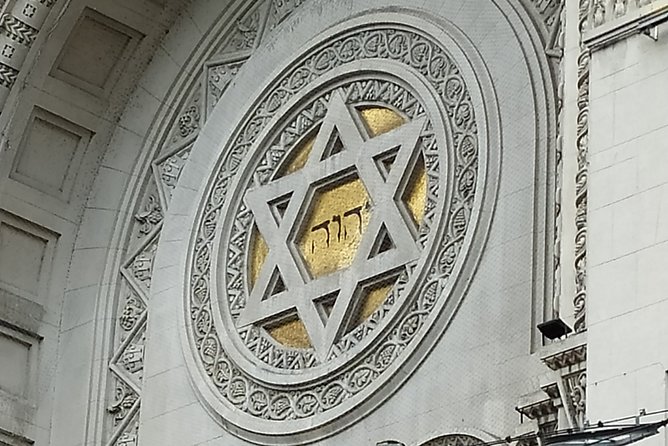
Next up is Templo Libertad, also known as the Synagogue of the Israelite Congregation of the Argentine Republic. This is the kind of stop where you immediately notice why it matters. It was the first synagogue built in Buenos Aires and is also described as the oldest in the country.
The building was declared a National Historic Monument in December 2000, which is an important clue. It means you’re not just visiting a place of worship. You’re visiting an architectural and cultural landmark recognized at the national level.
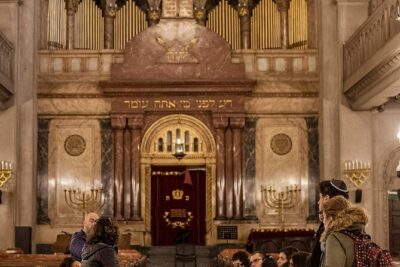
Expect about 20 minutes here. This is typically a calmer, more reverent moment in the tour. If you are the type who likes to understand religious artifacts and space, ask your guide to explain any symbolic elements you see, and how different communities historically used synagogues as anchors for identity.
Also, because this stop connects with your first stop geographically and thematically, you’ll likely appreciate the order. Immigrants and traditions on one side, and an enduring institutional home on the other.
Stop 4: AMIA, community purpose and the story of rebuilding
The final stop is Asociación Mutual Israelita Argentina (AMIA), a central institution for the Jewish community. The stated objectives are to promote welfare and community development, while also keeping traditions and values alive.
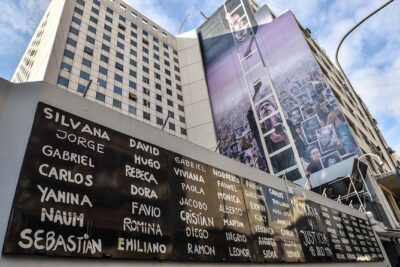
But AMIA is also a place marked by history. On July 18, 1994, the headquarters were attacked by car bomb. It is described as the largest terrorist attack in Argentina’s history, with 85 people dead and 300 wounded. Then comes the part that changes the mood: rebuilding began in August 1995, with a cost noted as just over 8 million dollars.
A practical, moving detail is that the rebuilt headquarters was designed so scars from the old building could still remain visible. AMIA’s new building was inaugurated May 26, 1999.
In one of the guide-centered comments I’ve seen reflected in guide quality, AMIA tends to be a stop where your guide’s pacing matters a lot. The tour format includes time to understand both the community center role and the tragedy and aftermath. If you prefer a more streamlined visit, you can tell your guide you’re aiming to focus on key facts and the meaning behind the installations and the site layout.
Either way, this stop often becomes the emotional core of the tour. It’s the clearest reminder that community memory is not only about the past. It’s about continuing to function, heal, and educate.
Price and logistics: what to budget beyond the $166
The headline cost is $166 per person for about three hours, with private local guide and hotel pickup and drop-off included. That’s a fair structure when you factor in time saved and interpretation included.
Still, you should budget for what is required on the day. The tour states that donations are obligatory and defined at the start, and it advises bringing at least USD 25 per person for donations at the different institutions. The amount given is USD 20 per person for each institution. With four major stops in the program, that can add up fast. If all four require it, you’ll want to plan for a meaningful additional total.
One more logistics detail that is non-negotiable: a current valid passport is required, and you should carry it with you at all times on the tour day.
Also keep the calendar in mind. The main institutions are described as closed on weekends and holidays, so you’ll want to match the tour to your Buenos Aires days carefully.
What group size and family-friendliness actually mean here
This is described as private, meaning only your group participates, and it is also called family friendly. In practice, I like that combination for a subject like this. When a guide can tailor pacing to questions, it helps families avoid feeling like they’re sitting through something too heavy or too abstract.
The time slots of about 20 minutes at each stop also suggest a tour that keeps moving. That can be a plus with kids or anyone who has a limited attention span in museums. If you know your group enjoys slow museum reading, plan to spend a bit more time nearby on your own afterward.
How to make the most of it once you’re there
Here are a few tactics that make this tour feel richer, without adding extra stops.
First, ask your guide what the single takeaway is for each stop. For example, for Museo del Holocausto Buenos Aires, ask what message the museum wants you to remember most. For AMIA, ask what the rebuilding story represents today.
Second, if you feel like you want more time, don’t fight the schedule. Instead, identify one stop you’d return to on your own. The structure is designed to give you the big picture quickly, and then you can “go deeper” elsewhere if you want.
Third, bring your donation cash or method that works for you. The tour notes donations are obligatory, and you’re advised to have at least USD 25 per person for donations. It’s one less stress point when you are already carrying your passport.
Who should book this tour, and who might not need it
I think this is ideal if you want Jewish heritage and memory in Buenos Aires, with context from a guide and without spending your day piecing together museum rules and entry logistics.
It’s also a good fit if you care about seeing more than one kind of site. You get community and tradition through Templo Libertad and Museo Judio, then the Holocaust through Museo del Holocausto, and you finish with AMIA’s present-day community role and its historic scars.
If you are traveling with very limited time and are comfortable doing a lot on your own, you could piece together the stops by cab or transit. But if you want someone to connect the dots, answer questions in real time, and keep the visit moving in a respectful way, the private guided format is the reason to book.
Should you book the Private Jewish Heritage Tour in Buenos Aires?
My take: yes, if you want a guided, respectful overview of key Jewish institutions and memory sites in Buenos Aires in about three hours, with pickup and drop-off saving you time. The strong ratings, the fact that it is private, and the repeated praise for guides like Matias, Ariel, Eli, and Axel all point to a guided experience that most people feel they actually learned from.
I would think twice if budget is tight, because donations per institution are obligatory and can noticeably increase the out-of-pocket total. I would also watch your expectations if you know you want long, unhurried museum reading. This tour is paced, and you may want a follow-up self-guided return to whichever stop pulled you in most.
If you want a structured morning that leaves you with a clearer understanding of Jewish Buenos Aires, this tour is a smart way to spend it.
FAQ
How long is the Private Jewish Heritage Tour in Buenos Aires?
The tour runs for about 3 hours.
What time does the tour start?
The start time is 9:00 am.
Is hotel pickup and drop-off included?
Yes. Hotel pick-up and drop-off are included.
Are museum tickets included in the price?
Admission tickets are not included for the museum stops noted in the program.
Do I need to pay donations?
Yes. Donations are obligatory at each institution, and the amount is defined at the start of the tour. The guidance provided says USD 20 per person per institution, and to bring at least USD 25 per person for donations.
Do I need to bring a passport?
Yes. A current valid passport is required on the day of travel, and you should carry it with you during the tour.
Are the main institutions open every day?
No. The main institutions are closed on weekends and holidays.
Recently reviewed around Buenos Aires
- Meet Locals: Language Exchange Café in Buenos Aires★ 5.0 · 10 reviews
- Piazzolla Tango Show Only In Buenos Aires★ 4.5 · 10 reviews
- Madero Tango Show Including Executive Dinner In Buenos Aires★ 3.5 · 10 reviews
- Private City Tour & Transfer to the International Airport★ 5.0 · 10 reviews
- Esquina Homero Manzi Tango Show Ticket Including Optional Dinner in Buenos Aires★ 4.5 · 10 reviews
- VIP Dinner & Tango Show at El Viejo Almacen★ 4.5 · 10 reviews
- Premium service Buenos Aires city tour for small groups★ 4.0 · 11 reviews
- Buenos Aires City Tour★ 4.5 · 11 reviews
Jewish Buenos Aires, compared.
Shared Jewish Walking Tour – Visit Libertad Synagogue + Jewish Museum
Read our review →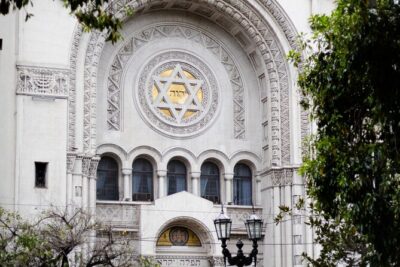
Jewish Heritage Walking Tour – Visit Libertad Synagogue + Jewish Museum + more
Read our review →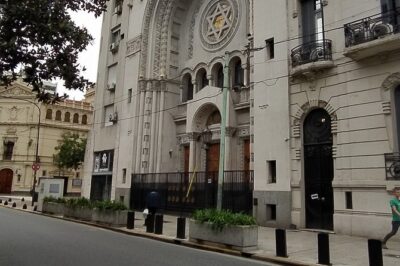
Jewish Sites Buenos Aires Private Walking and Car Tour
Read our review →
Jewish Heritage Tour by car – Visit Libertad Synagogue + Jewish Museum and more
Read our review →Browse the lists this tour appears in