
Reviewed · FOOTBALL STADIUM TOURS
Soccer Match in Buenos Aires with Transfers and Local Guide
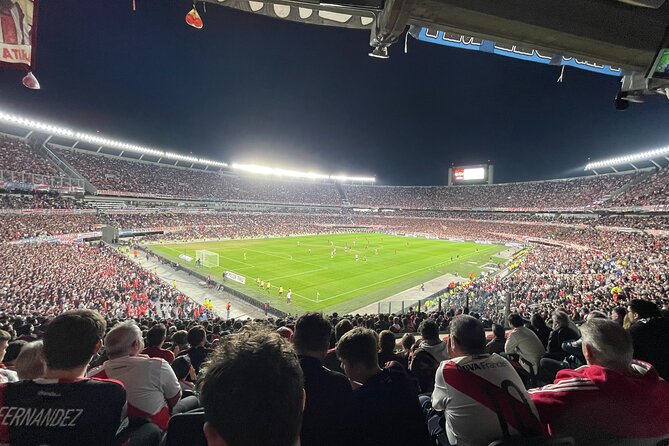
A Buenos Aires soccer match feels like a street festival with real stakes, and this tour packages that energy in a simple 4-hour format. You also get a taste of several storied club venues, from River Plate and Boca Juniors era icons to other First Division giants, with a guide who helps you read what you’re seeing.
I especially like the built-in transfers and the “you are handled” flow on matchday. It’s the kind of setup that lets you focus on the crowd, the chants, and the game, not on figuring out buses and entrances. I also like that the bilingual local guide is a real soccer fan, with names like Manuela, Gabi, Matteo, and Andres showing up in the guide lineup you’re likely to meet.
One consideration: match plans can shift because kick-off times and fixtures may change, and the ID rules are strict (River Plate can require a specific passport, plus extra steps). Also, the included food is small, so if you want a full meal you’ll likely pay extra at the stadium.
Key things that make this tour work
- Transfers plus ticket handling so you spend less time on logistics and more time in your seat.
- Bilingual guide who explains club culture, not just where to walk.
- A match-focused stadium experience, with a real entrance ticket included.
- Quick looks at multiple major club grounds, even if your match is only at one venue.
- Included snack and bottled water for a more complete matchday feel.
- Small group size (max 15), which usually means easier pacing and less chaos.
Matchday in Buenos Aires: why the guide matters as much as the match
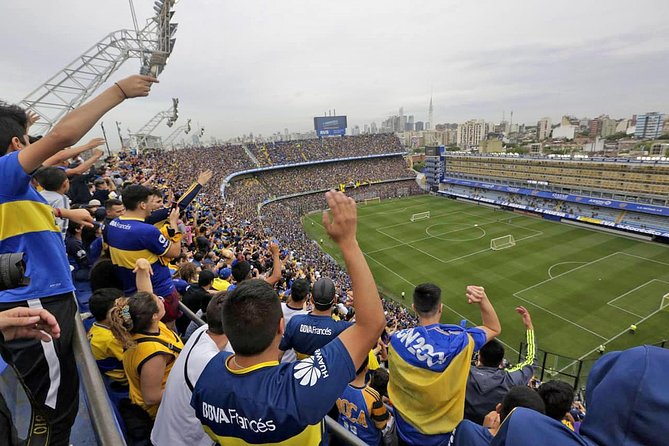
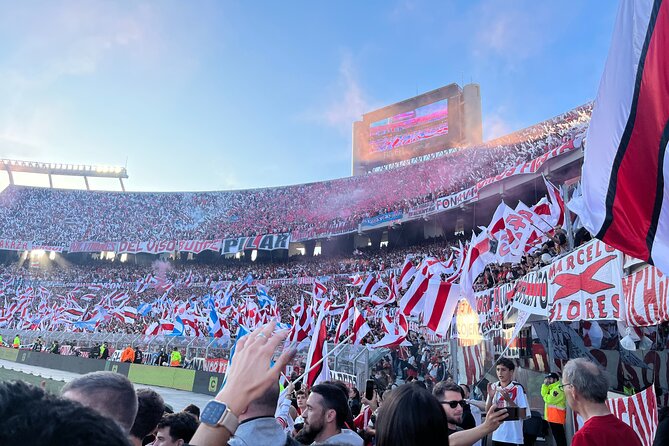
Buenos Aires is one of the best cities in the world to watch soccer for the simplest reason: fans treat it like identity. The songs, the drums, the movement through the stands, and the constant noise are part of the game, not background.
That is exactly where the guide earns their fee. On matchday you’re not just buying a ticket and wandering in. You’re walking through the crowd with someone who knows how the day usually runs and can explain the club histories and fan traditions as you go. A guide like Manuela or Matteo, described as organized and attentive, can help you stay calm and present when everything is loud and fast.
Also, you get the “first time in a stadium” advantage. You’ll still do your own discovering, but you’re not left guessing what matters most. You’ll know what to watch for, why certain sections sing, and how long it typically takes before the stadium atmosphere really locks in.
More football stadium tours:
- Buenos Aires: Tickets to Boca Juniors Museum & Stadium
★ 4.5 · 581 reviews - Boca Juniors Tickets for a Match at La Bombonera
★ 4.5 · 140 reviews - Buenos Aires: Boca Juniors and River Plate Football Tour
★ 4.3 · 82 reviews
Getting to the stadium without wrestling the city: Tangol to your seat
This is built around convenience. You meet at the Tangol Tours office at Defensa 831 (C1065) and you also connect with your bilingual guide for the trip to the stadium. Once everyone is ready, you head out together and come back together at the end.
In a city where public transport can be great but matchday schedules can be messy, transfers matter. They keep your timing tight and reduce that annoying stress of last-minute directions, wrong entrances, or missing the start. And because this operates with a small group of up to 15, the pace feels more controlled than big bus tours.
You’ll also get bottled water, which is a small inclusion but a smart one. Stadium time gets hot, loud, and fast, and having something simple ready helps you settle in.
Which stadiums you might visit, and how to think about the selection
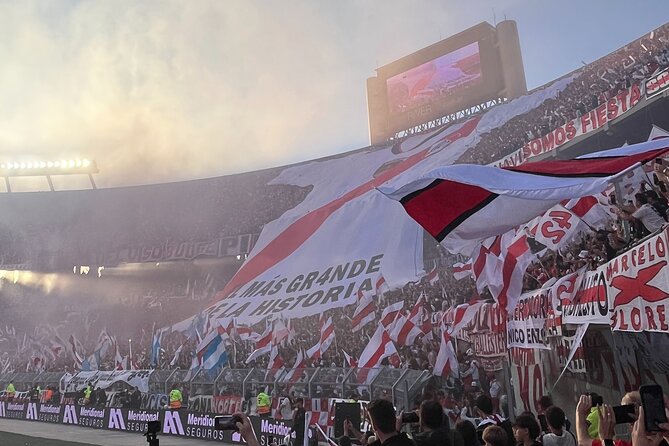
The tour is designed so that your match experience lands at one of Buenos Aires best-known grounds, with additional stops at other major clubs’ stadiums during the same outing.
The main match venue can be in the orbit of these classic stadiums and clubs:
- La Bombonera for Boca Juniors
- El Monumental (River Plate) for River Plate
- Huracán, Racing Club, San Lorenzo, Independiente, Vélez, and Argentinos Juniors in other options
The key idea to understand: you’re seeing several famous venues as part of the day, but your true “ticket moment” is the match itself. The day is structured so you can experience more of Buenos Aires club football culture than you would with a single stadium-only plan.
If you’re a first-time visitor, that’s valuable. If you already know your club rivalries, it still helps because the guide ties each stadium to the kind of support and tradition it is known for.
The club venue tour part: what each stop is really for
Even when the day includes multiple stadium stops, the intent is straightforward. You get a quick, meaningful look at several First Division icons, then you focus on the actual match where the noise and drama are.
Here’s what each of the listed grounds adds, and what you should notice while you’re there.
A few more Buenos Aires days worth comparing
- Local Foodie Adventure in Buenos Aires with Sherpa Food Tours
★ 5.0 · 6,875 reviews - Buenos Aires City Private Tour with Local Guide
★ 5.0 · 3,475 reviews - Buenos Aires Small-Group City Tour
★ 5.0 · 2,226 reviews - Buenos Aires Hop-On Hop-Off Bus, Free Walking Tours & Discounts
★ 4.5 · 2,218 reviews
El Monumental de River Plate: scale, history, and the national-team aura
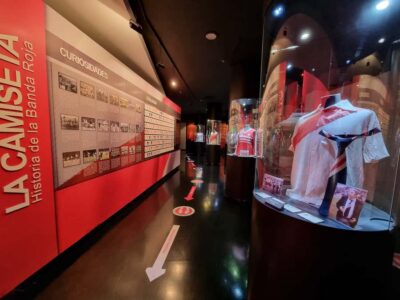
Stop at El Monumental de River Plate is about the big-stage feeling. River Plate’s ground is closely tied to national football moments, including the fact that Argentina played there and the 1978 World Cup connection is part of the stadium’s reputation.
What to notice: how the venue represents a major club identity. Even if you’ve seen photos online, being there changes how you understand the atmosphere. River tends to feel more controlled compared to some other Buenos Aires giants, and the guide can help you connect that vibe to the club culture.
Libertadores de América (Independiente): the “Rey de Copas” clue
At Independiente’s Libertadores de América, the highlight is the club nickname: they’re called Rey de Copas (King of Cups) because they’ve been champion of America seven times. That is not trivia for trivia’s sake. It explains why Independiente fans carry a certain pride and confidence.
What to notice: how a club history theme can shape fan mentality. When you hear that nickname explained, you’ll likely start noticing how the crowd energy reflects past glory.
Pedro Bidegain (San Lorenzo): creativity in the stands and a famous connection
San Lorenzo at Estadio Pedro Bidegain brings two distinct talking points. First, the fans are known for being among the most “creative,” with songs that define the match mood. Second, the club is also known as the club of Pope Francis.
What to notice: the way the guide turns club identity into something you can picture. When you understand why songs matter here, you listen differently once the match begins.
Presidente Perón (Racing Club): the crowd that cheers for 90 minutes
At Racing Club’s Presidente Perón, the emphasis is on relentless support. Racing fans are described as cheering for 90 minutes no matter the result.
What to notice: this is where matchday patience becomes visible. If you’re the kind of person who gets nervous when the score shifts, Racing’s fan culture can be a good reminder that commitment lasts longer than the scoreboard.
Tomas Adolfo Duco (Huracán): football mixed with tango and bohemian Buenos Aires
Huracán’s stadium, Tomas Adolfo Duco, is tied to its neighborhood feel, including mention of the tango and bohemian culture nearby.
What to notice: the mood around football grounds. Even during quick pauses, you’ll likely feel how the city’s artistic side and the sporting side overlap in Buenos Aires.
José Amalfitani (Vélez): a club with world-stage credibility
At Vélez’s José Amalfitani, the tour highlights that Vélez has been called a world champion and an export club, plus it hosted the 1978 World Cup.
What to notice: how international-level credibility can shape a club’s infrastructure and tone. It makes the stadium feel like more than just a local hangout.
Diego Armando Maradona (Argentinos Juniors): the Maradona connection
Argentinos Juniors at the Diego Armando Maradona stadium brings the most famous football name on the planet into the story. Maradona played there, and that link is part of why the ground has an emotional pull for soccer fans.
What to notice: how quickly a stadium name becomes a time machine. Even a short stop can sharpen your sense of why people care so much.
The match itself: how to enter, what to expect inside, and how to stay comfortable
Once you reach the match stadium, your focus becomes simple: find your seat, take in the pregame energy, then watch one or more Buenos Aires teams compete in a high-level First Division match.
The experience is designed around three moments:
- Getting in smoothly with your guide’s help
- Watching the match with context on club history and fans
- Getting back to central Buenos Aires without turning matchday into a second job
Security and ID rules are not optional
Plan for documentation. You must present ID or passport or driver’s license to enter the stadium. But for River Plate, it is specifically noted that a passport is required, and foreign ID cards are not accepted as valid documentation.
There is also an extra step for River Plate attendance: Face ID registration is required to confirm your attendance. The recommendation is to contact the representatives to complete required steps so you receive tickets on time.
Practical advice: bring the exact document your match option requires, keep it secure, and do not wait until the last minute to complete any Face ID or confirmation step if River Plate is your match.
What you should bring
Keep your carry simple. The tour recommends only essential items such as phone and wallet.
Also, the tour states it is not allowed to enter with food, drinks, or professional cameras. You can still enjoy stadium snacks, but assume you’ll buy them on site.
Food and drink: included snack, then concessions at your expense
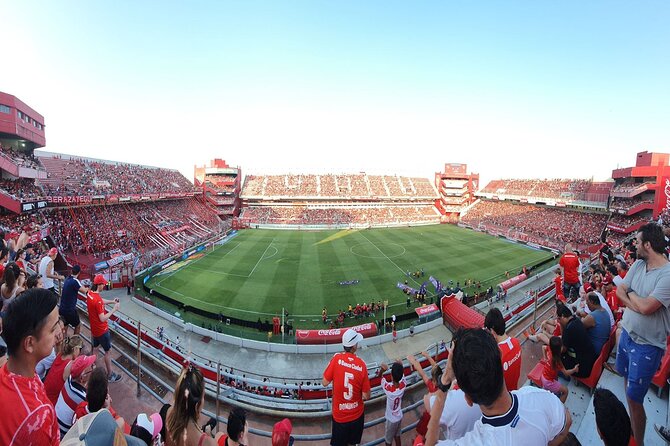
This outing includes a snack plus bottled water. It also clearly states that additional food and or drinks are not included, so stadium concessions will be extra.
That’s the main reason to plan your expectations. If you want a proper meal, build it into your day before you head in, then treat the stadium snack as a bonus rather than the main event. A couple of guides have been described as helping with snack coverage in practice, but I would not rely on extra food beyond what is guaranteed.
The upside is that you get a small matchday boost right away, without needing to spend your first minutes figuring out what you can buy.
Price and value: why $172 can be a fair deal
At $172 per person for about 4 hours, the real question is what you avoid paying for and managing yourself.
You’re getting:
- Bilingual local guide
- Entrance ticket included
- Transfers to and from the stadium
- Snack and bottled water
If you were to buy tickets on your own and also arrange reliable matchday transport plus a guide to help with security, timing, and club context, the total usually creeps up fast. This price makes sense particularly if you value a smooth plan more than hunting for the cheapest ticket.
It can feel expensive if you compare it to just a bare ticket price. But this is not a bare ticket tour. This is matchday logistics plus context, and that matters in Buenos Aires on a night game.
Small group day, big atmosphere: the comfort factor that shows up in safety
The tour caps at 15 travelers, which helps on matchday. You’re not standing around with a crowd of strangers while you search for your place.
Several guide experiences mentioned in the details emphasize being on time, keeping everyone together, and making guests feel safe. That tracks with the overall structure: transfers plus a guide means you’re not self-navigating through a highly crowded venue.
If you’re traveling with kids or you simply prefer not to manage the chaos, this format is a good match. The guide’s role includes security guidance so you can keep your belongings close and stay aware without getting paranoid.
What if the match date changes: how to stay flexible
This tour explicitly warns that match dates and kick-off times can shift, and you will be notified in advance if your selected match is rescheduled. It also notes that kick-off times are subject to change and are confirmed the week before the game.
Practical approach: keep your booking email handy, double-check the confirmed schedule when it arrives, and be ready for the possibility that the team on the fixture might shift within the tour options. The guides handle changes, but your job is to stay responsive and show up with the correct ID for the final confirmed venue.
Who this tour is best for, and who should choose differently
This is a great fit if:
- You want to see a top-level First Division match without building a logistics plan yourself
- You want club context and fan culture explained while you’re actually in the stadium area
- You like the idea of visiting multiple famous Buenos Aires grounds in a single afternoon or evening
- You prefer a small group and a guide who keeps you organized
You might want a different option if:
- You want a long, guided stadium tour with museum-style depth
- You expect the included food to be a full meal
- You are not comfortable with strict ID requirements and any extra steps for River Plate attendance
Should you book this Buenos Aires matchday with transfers and a local guide?
I think this is a smart booking for most first-time soccer visitors to Buenos Aires, especially if you want the emotional payoff of a real match plus the practical relief of transfers and ticket handling. The guide is the difference between watching a game as a tourist and understanding it as a local ritual, even if you only catch part of the culture in one night.
Book it if you’re ready to follow the stadium rules (bring the right ID, skip professional cameras, keep essentials only) and if you’re flexible about fixture timing. It is also a solid choice if you’d rather spend your energy singing along and watching the play than solving matchday transportation.
If you’re the kind of traveler who only wants the cheapest possible ticket and plans to handle everything solo, you may find a cheaper path. But if your priority is a smooth, guided, match-focused evening, this one checks the boxes.
FAQ
How long is the soccer match tour in Buenos Aires?
It runs for approximately 4 hours.
How much does the tour cost per person?
The price is listed at $172.00 per person.
What is included in the tour?
You get a bilingual guide, the entrance ticket, transfers to the stadium, and bottled water.
Is food included?
A snack is included, but additional food and or drinks are not included.
Which stadiums could be involved?
Depending on the match option, you could be visiting stadiums such as River Plate’s El Monumental, Boca Juniors at La Bombonera, and other major clubs’ grounds including Huracán, Racing Club, San Lorenzo, Independiente, Vélez, and Argentinos Juniors.
What documents do I need to enter the stadium?
You must present your ID or passport or driver’s license. For River Plate specifically, a passport is required, and foreign ID cards are not accepted.
Are cameras and outside food allowed?
You cannot enter with food or drinks, and professional cameras are not allowed.
What is the cancellation policy?
Free cancellation is available if you cancel up to 24 hours in advance of the experience start time for a full refund. If you cancel less than 24 hours before the start time, the amount paid is not refunded.
Recently reviewed around Buenos Aires
- Meet Locals: Language Exchange Café in Buenos Aires★ 5.0 · 10 reviews
- Piazzolla Tango Show Only In Buenos Aires★ 4.5 · 10 reviews
- Madero Tango Show Including Executive Dinner In Buenos Aires★ 3.5 · 10 reviews
- Private City Tour & Transfer to the International Airport★ 5.0 · 10 reviews
- Esquina Homero Manzi Tango Show Ticket Including Optional Dinner in Buenos Aires★ 4.5 · 10 reviews
- VIP Dinner & Tango Show at El Viejo Almacen★ 4.5 · 10 reviews
- Premium service Buenos Aires city tour for small groups★ 4.0 · 11 reviews
- Buenos Aires City Tour★ 4.5 · 11 reviews
Football Stadium Tours, compared.
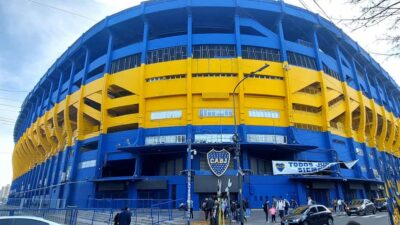
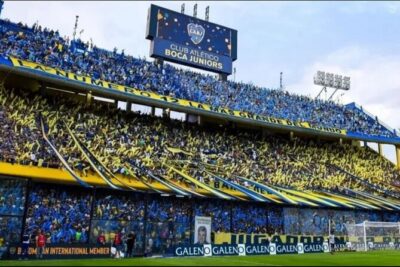
Boca Juniors Tickets for a Match at La Bombonera
Read our review →
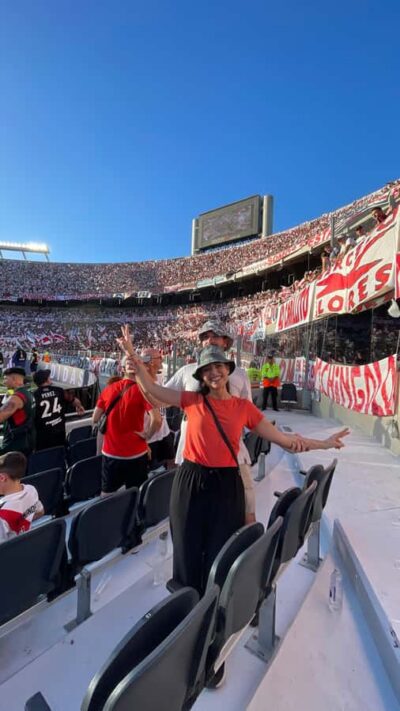
Buenos Aires Football Experience: Boca & River Stadium Tour
Read our review →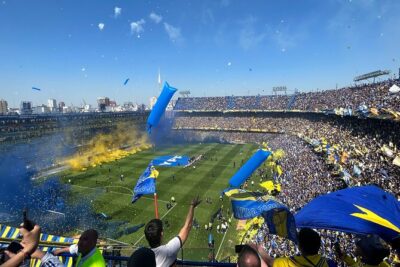
Boca Juniors Game at La Bombonera with Local & Transport
Read our review →
Boca Juniors and River Plate Stadium Tour + TOP Museum.
Read our review →Browse the lists this tour appears in