
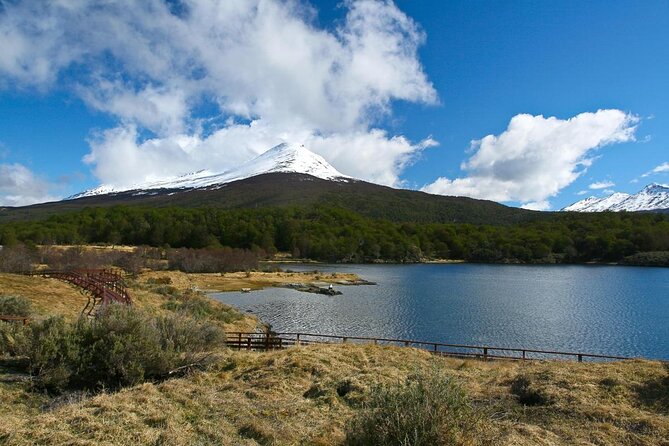
Reviewed · TIERRA DEL FUEGO NATIONAL PARK
Tierra del Fuego National Park
Tierra del Fuego National Park is interesting because it combines mountains and the sea in one of Argentina’s most protected southern areas. You start near Ushuaia, then spend a few hours moving through forests, lakes, and viewpoints over the Beagle Channel. It is the kind of place where each stop feels like a different corner of Patagonia.
I especially like the variety packed into one run: Pipo River, Monte Susana, Acigami Lake, Laguna Verde, and finally Lapataia Bay. I also like the wildlife odds here, from the Fueguino Colorado fox to subantarctic forest birds like the rayadito and the Patagonian thrush. A bonus I noticed from past participants is that the guide can speak Portuguese, which makes the nature talk easier to follow.
One consideration before you go: the National Park entrance fee is not included. You will need to pay it separately on site, and one recent report put it at 30,000 Argentine pesos (around US$25), payable by card or cash.
Key things to know before you go
- Maritime coast plus mountain terrain in one protected park, reached from Ushuaia via Route 3
- A stop circuit built for photos, with descents and viewpoint time at multiple sites
- Subantarctic forest you can enjoy year-round
- Wildlife spotting focus, including the Fueguino Colorado fox and several notable bird species
- A short walk of about 30 minutes that depends on weather conditions
- Includes air-conditioned transport, but park admission is extra
Tierra del Fuego National Park: why this half-day feels like real Patagonia
This is not a long trek. It is a focused sampler of a wild region, done in a way that still gets you to the good places. From Ushuaia, you head along Route 3, about 11 km to the southwest, and then you work your way through a park that mixes steep mountains, rivers, valleys, lakes, and finally the coast of the Beagle Channel.
What makes the park special is the combination. Many Patagonia experiences lean hard into one look, like wind-swept steppe or deep glacier country. Tierra del Fuego gives you multiple ecosystems in one outing. You move from river settings into lake country, then into forest, then out to the dramatic edge of the sea where the “end of the road” feeling kicks in.
The timing also helps. With about four hours total, you are not stuck for half the day driving and hoping you catch a view. You get multiple stops, enough time to take photos, and a short walk when conditions allow. Most travelers can participate, so you can treat it as a relaxed nature day rather than a demanding hike.
More National Parks in Ushuaia
- Ushuaia: National Park & Train of the End of the World Tour
★ 4.5 · 811 reviews - National Park and Train Trip End of the World Guided Tour
★ 4.0 · 414 reviews - Tierra del Fuego National Park with the End of the World Train
★ 4.0 · 184 reviews
Route 3 to the park: the drive that sets expectations
You start in Ushuaia and reach the park via national Route 3, heading about 11 km to the southwest. That matters because it keeps the day trip feeling practical. You are not planning for complicated transfers. You are using the main road that connects Ushuaia to the protected area.
The tour includes an air-conditioned vehicle, which you will appreciate when the weather shifts. This part is not glamorous, but it is useful. A comfortable ride means you can focus on noticing what changes outside the window as the terrain turns more rugged and the forest thickens.
Also, the park is extremely varied topographically. That is the secret sauce behind why this circuit works. Even if you only spend a short time at each stop, the “environment swap” is obvious. Rivers look different from lakes. Forest looks different from coast. And the coast feels different again because it is tied to the Beagle Channel and that Pan-American “end” marker at Lapataia.
Stop by stop: what you will see and why each place matters
Pipo River and Monte Susana for first contact with the park
Early on, you head into the park area with the Pipo River as a key first impression. Rivers in Tierra del Fuego tend to tell you about the land quickly. Water flow, valley shape, and the surrounding vegetation all show up fast, and they give your eyes something to lock onto while you wait for photo angles.
From there, you move toward Monte Susana. This is where the park’s mountain character starts to feel real. You are not hiking to a summit, but you will likely notice how quickly the terrain rises and how the view lines open up depending on where the route bends.
Why I like these opening stops: they help you “read” the park before you reach the lakes and the coast. If you arrive with zero context, you can still follow the story. The day goes from moving water and valley terrain, to higher ground and viewpoint opportunities.
A small reality check: the tour includes descents for photos, but the exact level of walking depends on conditions. Plan to move at a comfortable pace, not at a sprint.
More Tierra del Fuego park trips:
- From Ushuaia: Tierra del Fuego Emerald Lagoon Trekking Tour
★ 4.9 · 271 reviews - Crab Route through Tierra del Fuego from Ushuaia
★ 4.5 · 234 reviews - Shore Excursion – National Park Tierra del Fuego
★ 4.5 · 169 reviews - Tierra Del Fuego National Park and Fin del Mundo Train (INCLUDED)
★ 5.0 · 160 reviews
Acigami Lake and Alacush Visitor Center: calm water and local context
Next is Acigami Lake, followed by time around Alacush Visitor Center. Lakes here are more than pretty reflections. They show the park’s interior and how the subantarctic forest works as a backdrop.
The visitor center stop is valuable because it can help you connect names to what you are seeing. Even if you do not go deep into displays, it gives your brain a handle on the region. That matters later when you are at places like Laguna Verde and Lapataia Bay, where the views make more sense when you understand what is happening geologically and ecologically.
From a practical standpoint, this is also a good point in the day for pacing. You are still in the middle of the circuit, so you can slow down for photos, regroup, and check how your body feels before the final coast segment.
Laguna Verde for that classic Tierra del Fuego color and texture
Then you reach Laguna Verde. The name is the hook, but the appeal is the mix of water color, surrounding vegetation, and how the terrain frames the scene. Even when the weather is changeable, lake edges help you understand depth and distance. That is great for both casual cameras and phone zoomers.
This is also a stop where you might get a stronger sense of why the park is protected. The combination of forest, water, and mountain folds looks like a system that needs careful stewardship. The views are not just for Instagram, they are for noticing the way the land forms.
If you love nature photography, you will appreciate that the tour is structured around multiple photo descents and viewpoint time, rather than rushing straight from one endpoint to another.
Lapataia Bay: the “end of the Pan-American” moment
Finally, you get to Lapataia Bay, where the Pan American route system ends. This is the kind of place that gives you a real sense of travel scale. You are literally at a terminus point, so the experience feels grounded and memorable, not just scenic.
The location also ties you to the park’s coastal side. Earlier, you were surrounded by rivers, valleys, and lakes. Here, the coast of the Beagle Channel is the final layer in the day’s story.
It is also a stop where you can take in the bigger picture. The topography you saw earlier starts making sense as part of the route to the sea. You came for a half-day. You end with a location that feels like a finish line.
The short walk: how to plan for the 30 minutes
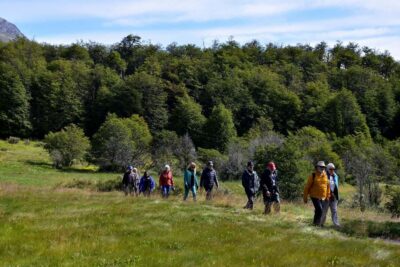
At some point during the circuit, there is a walk of about 30 minutes, subject to meteorological conditions. That phrasing is important. It means the tour is flexible, and the walk is meant to enhance the experience when conditions are right.
If you want a simple rule: treat it as an optional bonus within a guided day. You should be able to handle a short walk, but you are not signing up for a long trek. If weather turns, the day still works without it because the value is in the multiple viewpoints and photo stops.
This is also where you benefit from going with a group. Even if you are not a hardcore hiker, you still get access to the right spots within the park, guided by local knowledge and route pacing.
Wildlife and birdwatching you can actually look for
Tierra del Fuego is known for subantarctic forest, and you can see it throughout the year. That matters because it is the habitat that supports the park’s animal life.
The most frequent mammal mentioned for the region is the Fueguino Colorado fox. In wildlife terms, that translates to good odds of seeing movement or evidence, but not guaranteed sightings. Foxes are active, and being alert around quieter forest edges can improve your chances.
Bird-wise, the park supports multiple species. You can look out for the cachaña, the giant carpenter, the rayadito, the Patagonian thrush, and the cauquén caranca. A good guide can help you connect what you spot to what you are hearing, which makes birdwatching feel less like guessing.
What I like about this “wildlife focus” is that it is realistic. You are not trying to force a rare sighting. You are visiting a habitat-rich area where animals and birds belong, and you are moving slowly enough to notice them.
Price and park tickets: what your $60 really buys
The tour costs $60 per person and runs about four hours. It includes air-conditioned vehicle transport and guided time through the park area.
What it does not include is the National Park entrance. That is the biggest cost add-on to budget. One recent report put the entrance at 30,000 Argentine pesos, about US$25, and noted that it can be paid by card or cash.
So how do you judge value? For me, it comes down to this: you are paying for access, transportation, and an efficient route through a park that would be harder to piece together on your own in limited time. You also get a structured photo circuit plus a short walk when weather allows. If you are staying in Ushuaia for a short window and want a first taste of the park, this price can make sense.
But if you already have easy independent transport and you love self-guided days, the extra park ticket fee might make you rethink how much of the $60 you truly need. Still, the built-in route and time at multiple named sites is a strong practical advantage.
Group size, comfort, and pacing in a day trip from Ushuaia
The experience is set up for a tour group experience, with a maximum of 100 travelers. That number alone does not tell you your exact seat position or how loud the group will be, but it does signal that this is not a private one-on-one outing. Think bus-day style: organized, efficient, and meant for moving through multiple stops.
The included air-conditioned vehicle helps keep the day comfortable, especially if temperatures swing. And because the tour time is short, you get a structured flow without spending hours repeating the same photo spots.
Most travelers can participate, which points to a moderate day. Your main physical demands are the photo descents and the optional 30-minute walk depending on weather. If you want a nature day with low risk of overdoing it, this is a good fit.
Who should book this Tierra del Fuego outing
This is a smart choice if:
- You want your first taste of Tierra del Fuego National Park without committing to a full day or a long hike
- You care about variety, rivers to lakes to coastal views, all in one circuit
- You want an organized way to see multiple named places near Ushuaia
- You enjoy spotting wildlife and birds in subantarctic forest habitat, even if sightings are never guaranteed
It may not be your best match if:
- You want a deep, slow hike-focused experience with long walking time
- You dislike paying an add-on entrance fee after booking
Should you book this tour?
If you are in Ushuaia and want an efficient, scenic introduction to Tierra del Fuego, I would book it. The mix of Pipo River, Acigami Lake, Laguna Verde, and Lapataia Bay gives you real variety in a short window, and the park’s subantarctic forest plus the fox and bird species focus makes it more than just driving to views.
Just go in with clear expectations. Plan for the park entrance fee separately, and treat the walk as weather-dependent. Do those two things, and you will walk away with a well-rounded slice of southern Argentina that feels like it has a beginning, a middle, and a dramatic coastal finish.
FAQ
How long is the Tierra del Fuego National Park tour?
It is approximately 4 hours.
What does the tour cost?
The price is $60.00 per person.
Is lunch included?
No, lunch is not included.
Is the National Park entrance ticket included?
No. Entrance to the National Park is not included.
How much is the National Park entrance fee?
One recent report stated the entrance cost was 30,000 Argentine pesos (about US$25).
Can I pay the park entrance fee by credit card?
One recent report said the park ticket can be paid with credit card or cash.
Is transportation provided?
Yes. The tour includes an air-conditioned vehicle.
Are service animals allowed?
Yes, service animals are allowed.
Can I cancel for a full refund?
Yes. You can cancel up to 24 hours in advance for a full refund.
Recently reviewed around Ushuaia
- Private Tour: Tierra del Fuego National Park Trekking & Canoeing in Lapataia Bay★ 5.0 · 10 reviews
- Canoeing Adventure on the Beagle Channel and Penguin Colony★ 5.0 · 10 reviews
- Ushuaia: Escondido & Fagnano Lakes Tour AM★ 4.4 · 10 reviews
- Tempanos Lagoon hiking★ 5.0 · 11 reviews
- Overflight Laguna Esmeralda – A15★ 5.0 · 11 reviews
- Private Hiking tour to Esmeralda Lagoon and the lakes region★ 5.0 · 11 reviews
- 5.5-Hour Nat Park w/ Hiking *Shore Excursion* USHUAIA (Shared tour for cruises)★ 4.5 · 11 reviews
- USHUAIA | Tierra del Fuego National Park & Optional Train★ 4.6 · 11 reviews
Tierra del Fuego National Park, compared.
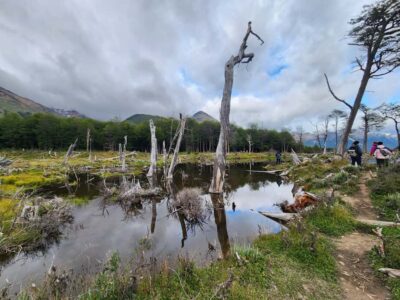

Crab Route through Tierra del Fuego from Ushuaia
Read our review →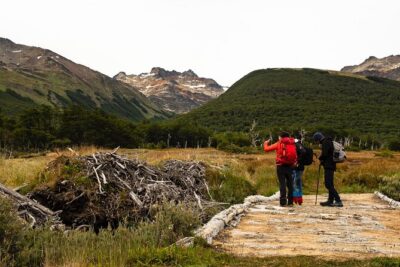
Tierra del Fuego National Park with the End of the World Train
Read our review →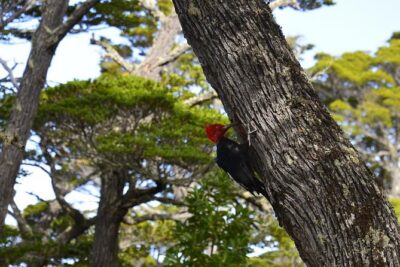
Shore Excursion – National Park Tierra del Fuego
Read our review →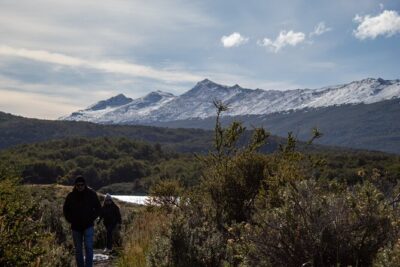
Tierra Del Fuego National Park and Fin del Mundo Train (INCLUDED)
Read our review →
Tierra del Fuego National Park, Ushuaia City Tour Shore Excursion
Read our review →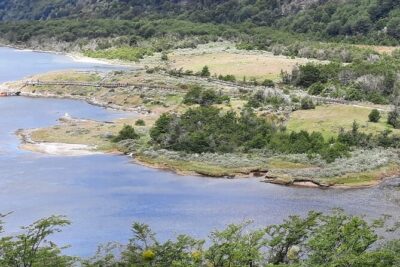
Browse the lists this tour appears in