
Reviewed · ARGENTINA
3hrs de Escala y Caminata en Via Ferrata del Cañadón
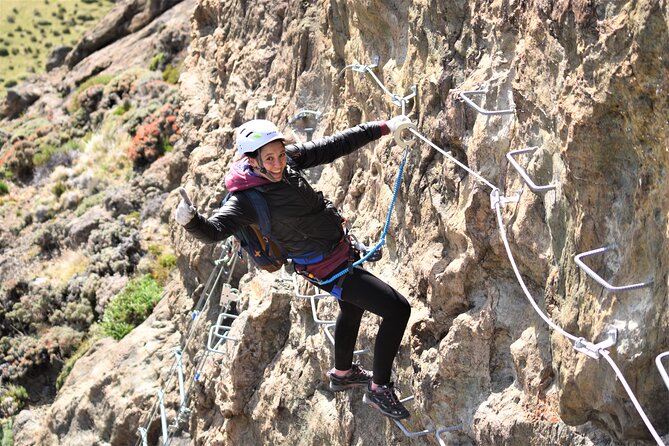
Via Ferrata del Cañadón in El Chaltén is interesting because it lets you experience real mountain exposure without needing prior climbing skills. You stay connected to a steel cable the whole way, then end with an epic zip line over the Cañadón terrain.
I especially like the built-in safety design. The route is equipped with a continuous cable and strategically placed ladder rungs, steel steps, and even suspension bridges, so the challenge feels structured instead of random.
One thing to consider: the route can still feel demanding. You do not need technical climbing experience, but you should have the stamina for continuous hiking and scrambling, plus a calm, steady mindset.
Key highlights you’ll feel on the day
- Steel cable the whole route keeps you attached and moving confidently
- No climbing experience required, thanks to ladder rungs, steps, and bridges
- Zip line finish delivers big valley and glacier views right near Cerro Fitz Roy
- Guide pacing matters, and Laura’s calm, patient approach stands out in what people describe
- Gear is included, so you start the route properly fitted and equipped
Your 3-hour plan in El Chaltén (and how it really feels)
This is a 3-hour via ferrata experience in El Chaltén, designed around one clear idea: make climbing and scrambling feel safe enough for first-timers, while still being a true Patagonia mountain day. It’s offered in English, and it’s private, meaning only your group participates. That private format matters here because via ferrata is hands-on, and you benefit when your guide can adjust pace to the group.
You’ll begin with a meeting at Bonanza Adventure, San Martín 780, Z9301 El Chaltén, Santa Cruz, Argentina. From there, the day follows a simple rhythm: meeting and briefing, a relatively gentle approach on flat ground to the base, then the via ferrata itself, and finally a descent back to an estancia entrance. The total time is about 3 hours, but your actual “working on the route” time depends on how your group moves and how often you stop for positioning and photos.
If you’re planning around weather, keep in mind the activity requires good conditions. Via ferrata routes are safer when rock and cables are dry and traction is predictable.
Other El Chalten trips people book alongside this one:
- Rio de las Vueltas Rafting Experience – El Chalten
★ 5.0 · 92 reviews - Rafting experience on the Rio de las Vueltas in Patagonia
★ 5.0 · 49 reviews - El Chalten: Full Day Trekking to Laguna de los Tres and Mount Fitz Roy
★ 4.5 · 45 reviews
The approach: 1 mile flat first, then it’s showtime
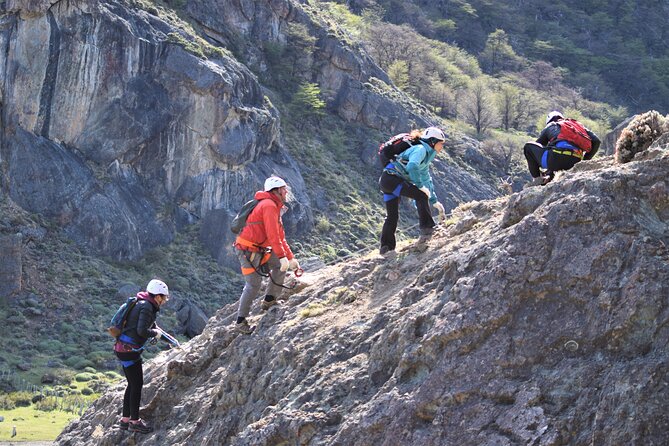
The start includes an approach to the base described as 1 mile of mostly flat walking. That may sound like a warm-up you’d do anywhere, but here it’s practical. You use this time to settle into the harness setup, get your footing habit going, and listen closely to the guide’s briefing before you reach the first anchors.
That brief pre-route instruction is more important than it sounds. With via ferrata, the main skill is not “climbing hard.” It’s moving smoothly while staying connected to the system. The group’s comfort increases when everyone understands how the lanyards and anchors work before they’re asked to step onto ladder rungs or over a suspension bridge.
Entering the steel-cable system on Via Ferrata del Cañadón
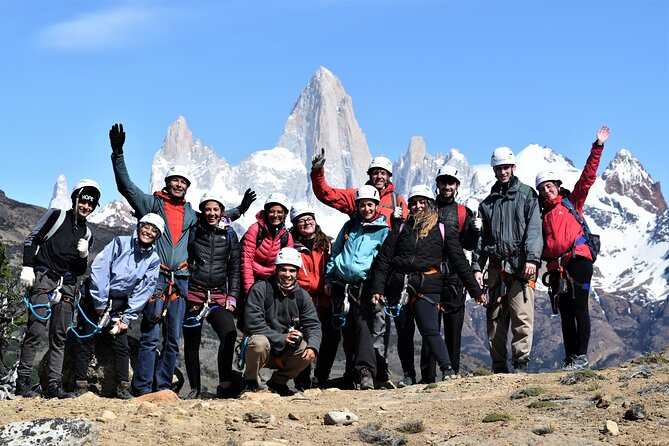
This is where the experience earns its confidence. The rock route is equipped with a steel cable running up the entire line of travel. Instead of free-climbing where a mistake is catastrophic, you clip in and progress along a designed path.
Here’s the part I think you’ll appreciate most: the system is built so you don’t need to detach from the cable while you move between anchor points. You slide a locked carabiner on your harness over each permanent anchor point without ever having to unclip completely. That design choice reduces stress for first-timers. You’re still doing something physical and exposed, but your brain is focused on movement, not on constant unhooking.
Along the route, expect engineering that helps you cross the hardest sections:
- Ladder rungs and steel steps for upward or technical-looking moves
- Suspension bridges placed strategically for crossing gaps
- A consistent iron path that guides you through the most “via ferrata” moments
The total via ferrata route is described as 1800 ft, with an elevation gain of 600 ft. Those numbers matter because they tell you this is not a short novelty. You should treat it as an active half-day moment, not a quick walk.
What Cerro Fitz Roy feels like during the climb
Your main “destination feeling” is the Cerro Fitz Roy area. Even if your legs are working, the route is designed so you get payoff while you’re still moving. That’s the sweet spot for Patagonia experiences: views that arrive before you’re exhausted.
The route is described as having an epic ending zip line that leads the group to a higher part of the mountain. From there, you get fantastic vistas of the valley, mountains, glaciers, and the Fitz Roy range. In practical terms, it means your best panorama is not just at the end of the trek. It’s part of the via ferrata sequence, when you’re already emotionally committed to the day.
One more practical detail: because the cable system keeps you attached, the views can distract you in a good way. You can look up at the rock, then look out at the horizon, while still progressing safely. It’s a different kind of thrill than a hike where you’re constantly managing balance.
A different sort of day out of El Chalten:
- El Chalten: Rio de las Vueltas and Patagonia Rafting
★ 5.0 · 29 reviews - Laguna de los Tres Hiking Day Trip from El Chaltén
★ 4.5 · 22 reviews - 2-Day Self-guided Adventure El Chalten: Laguna de los Tres, Fitz Roy & Torre Mt
★ 3.5 · 10 reviews - Private Transfers in El Chaltén and PN Los Glaciares
★ 5.0 · 8 reviews
The zip line finish: why it’s more than a gimmick
An ending zip line is rarely just entertainment, and this one is integrated into the route. You go into it after completing the core via ferrata, then you zip to the higher part of the mountain. That timing changes the mood.
You’re usually tired by the end of active climbing routes. But here the zip line acts like a gear shift. It’s a controlled, guided way to move you out of the most technical sections and into the payoff viewpoint. If you’re traveling with someone who’s nervous about height, this can still work well because you’re not improvising. You’re doing a guided element at the right moment, with the day already framed as a safe, connected experience.
Descent and return: back to the estancia entrance
After the zip line and viewpoint time, you’ll descend back to the estancia entrance. That descent phase is often where people underestimate the physical side. Even with a safe setup, you’re still moving in a mountain environment, which means knees and balance matter.
The good news is the overall format is balanced. The day starts with a short, flat approach, then you spend time in the cable-guided climbing zone, and you finish with a controlled return. If you plan your day around it, you should feel tired but not wrecked.
Equipment and guide support that make first-timers comfortable
You’ll be provided with helmet, harness, and a specialized lanyard. That equipment inclusion is part of the value. You don’t need to source gear in El Chaltén before your activity, and you don’t need to guess whether your fit is correct. Proper harness fit changes comfort fast, and it also affects how confident you feel when moving across steel steps and ladder rungs.
The lanyard system matters for another reason. Since the cable and anchor points are permanent, the route expects you to use the correct connection points as you progress. Having a guide who can check your setup quickly before you begin lowers the “what if I do this wrong?” fear, especially for those doing their first mountain climb.
The review detail about guide Laura is a useful clue about how this experience works at human level. People describe her taking her time and keeping the pace comfortable, including for a group where some had never climbed a mountain before. That tells me the operation is not rushing you through the route. You should feel guided, not herded.
Physical fitness, mindset, and who this is best for
You do not need specialized climbing skills. That’s a major selling point. But you do need general physical fitness, because you will be hiking continuously and scrambling through sections of the route.
So who is this best for?
- You want an authentic mountain challenge in Patagonia, without prior climbing training
- You’re comfortable with heights and exposure when safety is engineered for you
- You like structured adventure, where the hard parts are built with ladder rungs, steps, and cable guidance
Who should think twice?
- If you struggle with moderate hiking stamina, you may find the full 1800 ft cable route tiring
- If you dislike being connected to equipment and moving through an exposed system, it may feel more stressful than fun
A helpful mindset: treat it like a guided effort, not a test of athletic dominance. Most enjoyment comes from staying calm, moving steadily, and trusting the system.
Price and value: what $135 gets you in real terms
At $135 per person for about 3 hours, you’re paying for a guided, safety-engineered climbing experience in one of Patagonia’s most famous areas. This is not just a hike with a guide. You’re getting:
- Safety hardware provided for you (helmet, harness, specialized lanyard)
- Access to a prepared route with steel cable anchors and technical features like bridges
- A guide who coordinates the briefing, connection method, and pacing for your group
- A payoff sequence that includes panoramic viewpoints and an ending zip line
When you compare that to many guided outdoors activities where you only get an expert presence, this has extra value because the “equipment and safety system” is part of what makes it possible for beginners to do it. If you’re traveling with limited time and want one action-based highlight in El Chaltén, this is one of the more efficient ways to get both challenge and scenery.
Practical tips to make the route easier on you
You’ll enjoy this more if you come prepared for an active climb and a windy, mountain-leaning environment.
- Wear shoes with good grip. Via ferrata steel steps reward traction.
- Use layers. Weather can change fast in Patagonia, even when it’s sunny.
- Don’t go in tired. The cable route includes continuous movement, and fatigue can slow your confidence.
- Bring a small mindset tool: think steady, one movement at a time. The design helps you progress, but you still control your pace.
If you’re with family or mixed-experience groups, this type of private tour can be a smart call. Private means your guide can work at the tempo your group needs, which helps when you have first-timers and experienced hikers in the same party.
Booking timing and what to watch for on the day
This activity is commonly booked about 33 days in advance on average. That tells me it’s a popular choice for people building El Chaltén itineraries, likely because it adds variety beyond hikes.
Because the experience requires good weather, plan for the reality that conditions can change. If it’s canceled due to poor weather, you’ll be offered a different date or a full refund. That flexibility is important when you’re traveling during shoulder seasons or have variable forecast conditions.
Should you book Via Ferrata del Cañadón?
Book it if you want a memorable El Chaltén highlight that feels adventurous but is built for beginners. The continuous steel cable system, the anchor method that avoids fully detaching, and the included gear make it a practical way to try “real mountain climbing” without needing technical skills. Add the Fitz Roy area views and the zip line ending, and you get a complete story for your half-day.
Skip it if your group dislikes heights or you know you’ll struggle with moderate fitness. Even with safety engineering, the route still asks you to keep moving and scrambling for the length of the iron path.
If you’re unsure, consider this your best first step into the vertical world of Patagonia, especially if you want it guided, structured, and safe.
FAQ
How long is the Via Ferrata del Cañadón experience?
It lasts about 3 hours.
Where does the tour start and end?
It starts at Bonanza Adventure, San Martín 780, Z9301 El Chaltén, Santa Cruz, Argentina, and ends back at the meeting point.
Do I need climbing experience?
No. It is designed so you can do it without any climbing experience.
What equipment is provided?
You receive a helmet, harness, and a specialized lanyard.
How much elevation and route length is involved?
The via ferrata route is described as 1800 ft with an elevation gain of 600 ft.
Is this only for advanced athletes?
No, but you should have moderate physical fitness level because you will hike continuously.
What language is the tour offered in?
The tour is offered in English.
What happens if the weather is bad or I need to cancel?
You can cancel for a full refund up to 24 hours before the experience start time. The experience requires good weather, and if it is canceled due to poor weather, you will be offered a different date or a full refund.
Recently reviewed around El Chalten
- Alpine Adventure in Pollone Lagoon and Lake Electric Valley★ 5.0 · 3 reviews
- 3 Hours Grilled Lamb Experience in Estancia Bonanza★ 3.5 · 5 reviews
- Chalten Kayak at the Rio de las Vueltas★ 5.0 · 6 reviews
- 2-Day Hiking Tour of Fitz Roy and Cerro Torre from El Chalten★ 5.0 · 7 reviews
- Private Transfers in El Chaltén and PN Los Glaciares★ 5.0 · 8 reviews
- El Chalten: Full Day Trekking to Loma del Pliegue Tumbado★ 5.0 · 8 reviews
- 2-Day Self-guided Adventure El Chalten: Laguna de los Tres, Fitz Roy & Torre Mt★ 3.5 · 10 reviews
- Laguna de los Tres Hiking Day Trip from El Chaltén★ 4.5 · 22 reviews