
Reviewed · RAFTING TRIPS
Rafting experience on the Rio de las Vueltas in Patagonia
The Río de las Vueltas rafting run in El Chaltén is interesting because it mixes glacial-fed river action with front-row Patagonian scenery from inside the water. You start with calm stretches to learn how the raft moves, then you hit a canyon section that turns the trip into proper adventure, not just a scenic ride. I also like that the whole setup is built around safety and warmth, so you can focus on enjoying the river instead of fussing with gear.
Two things I especially like: the full neoprene kit (suit, thermal layer, boots, mittens, helmet) means you are not scrambling to stay comfortable in Patagonia’s chill. And the guides keep the run both fun and informative, pointing out landmarks and native wildlife as you go. One possible drawback is the trip expects a strong fitness level, plus there are health and mobility limits, so it is not a match for everyone.
Quick highlights
- Calm 6 km warm-up to practice rowing and get comfortable in the raft before the adrenaline
- Portage then class III to III+ rapids over about 10 km in the canyon area
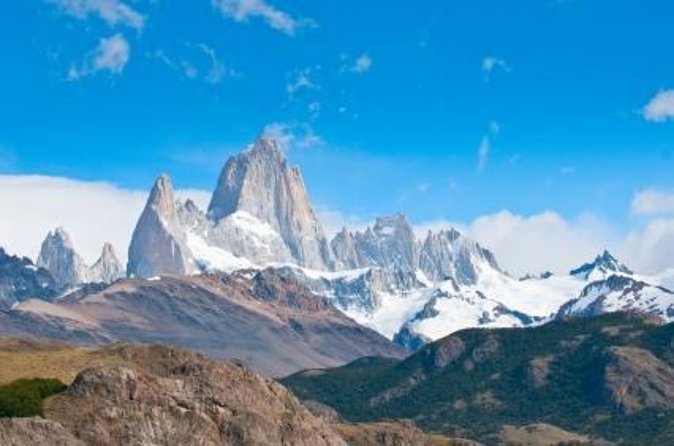
- Fitz Roy and Cerro Torre views from the river with stops along the descent
- Neoprene suit, boots, mittens, helmet, and life jacket included, so you travel lighter
- Small group feel up to 16 travelers, led by professional guides
- Snack and drinks after the run, plus photos and videos to keep the memories
Río de las Vueltas rafting in El Chaltén: what makes it special
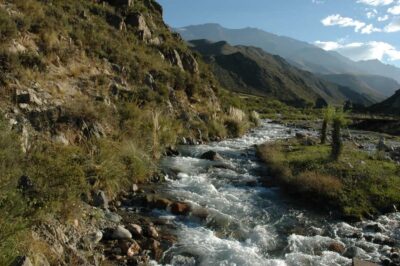
This is a glacial-origin river experience, born in Lago del Desierto and flowing into Lake Viedma. That matters because glacial rivers tend to feel crisp, fast to react, and full of that raw Patagonian energy you can’t fake. Here, you get both sides of the river: easygoing meanders where you learn the basics, and a canyon section where the raft starts doing what rafts are supposed to do.
The setting is the big headline. From the water you get Cerro Fitz Roy framed by the surrounding Andean forest and steppe, plus that classic Patagonian look of big sky and sharp rock. The best part is timing. You do the calm section first, which gives you a chance to slow down, look around, and get your body into the groove before you commit to the rapids.
More Rafting Trips in El Chalten:
- Rio de las Vueltas Rafting Experience – El Chalten
★ 5.0 · 92 reviews - El Chalten: Rio de las Vueltas and Patagonia Rafting
★ 5.0 · 29 reviews - Mendoza: 12-KM River Rafting Tour in the Andes
★ 3.9 · 94 reviews
Entering the river: dome pickup, gear fit, and safety talk
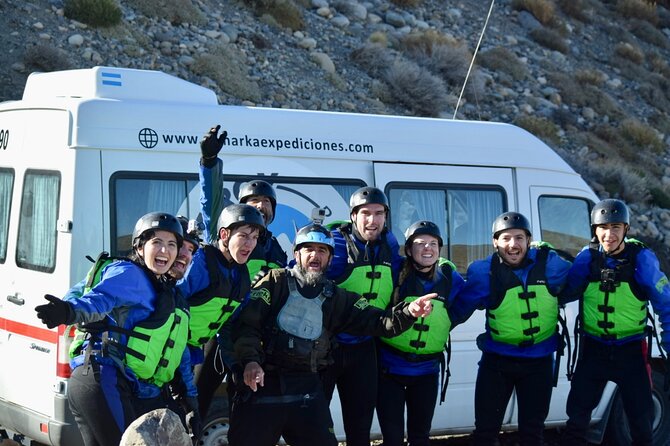
You meet at the Comarka Rafting dome in El Chaltén, then the guides take over right away. The first step is putting you into the technical equipment. This is Patagonia, so the warmth factor is real, and it is not left to chance. You get a neoprene suit and thermal shirt, plus a jacket, life jacket, helmet, neoprene boots, and mittens. You also get a simple paddle, enough to participate in rowing without turning it into a technical gym class.
Once everyone is dressed, you hop into a van for a short transfer to the river entrance. The ride is quick, about 5 minutes, which keeps the day from feeling like endless logistics. At the river, you get a technical rundown and a safety talk, and you do not just hear it. The first stretch is calm enough that you can put what you learn into practice.
If this is your first time rafting, that practical sequence is gold. You are not thrown straight into turbulence. You get to feel how the raft responds while your guide is still right there correcting technique.
The first act of the ride: 6 km of calm practice and Fitz Roy moments
The beginning of the run is 6 km of calm, meandering water. It is the part of the trip that I think makes the experience work for more people. It gives you time to get comfortable with the raft, learn the basics of rowing, and understand what commands mean before the river turns serious.
This is also when the scenery is easiest to enjoy. You can actually look up. Guides help connect what you see to what you are passing, with talk about landmarks and the local environment. Expect views of Cerro Fitz Roy and its satellite needles, plus a mix of Andean forest, steppe, and river wildlife. You are not just along for the ride, you are a participant, because you practice the rowing and safety techniques during this stretch.
From a practical standpoint, this is the moment when you settle your nerves. Calm water lets you breathe, adjust your stance, and figure out how you like holding the paddle. That sets you up for the canyon section, where being tense makes everything feel louder.
Portage and the canyon: where the rapids turn class III to III+
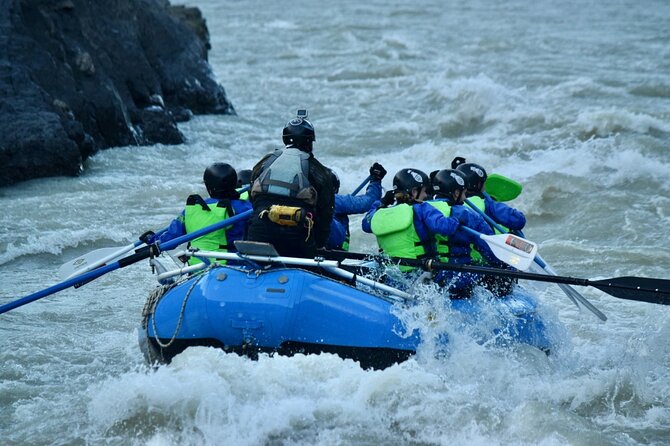
After the calm section, the trip advances into the canyon area. The first big transition is a rapid called Portage. It is the kind of name that sticks because it signals the shift from cruising to working.
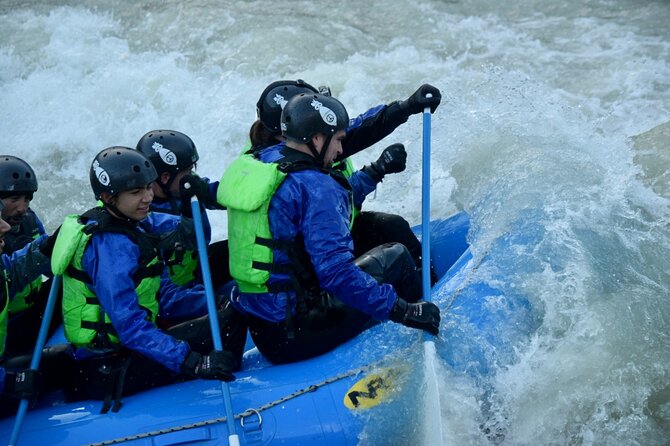
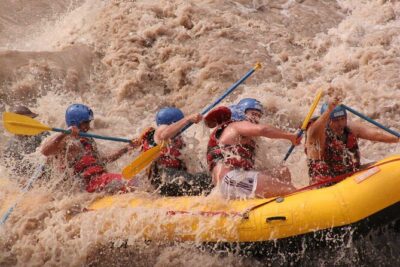
Then comes a succession of rapids rated class III to III+ over about 10 km. This is the adrenaline part of the day. You will feel the raft lift and drop, and you will need to pay attention to your guide’s cues. Class III to III+ usually means you are in moving water with real turbulence, not just splashing. The goal here is controlled fun, and the guides are set up for that.
One detail I like a lot is the way the team handles safety during the rapids. You have a skilled recovery team following the raft downstream. That is exactly what you want when you are doing something physical in dynamic water.
The best way to think about the canyon part is this: it is not a stroll and it is not a white-knuckle free-for-all. It is adventure with structure. Your job is to listen, row when asked, and stay ready for the river’s rhythm.
A different sort of day out of El Chalten:
- El Chalten: Full Day Trekking to Laguna de los Tres and Mount Fitz Roy
★ 4.5 · 45 reviews
Stop by stop: how Fitz Roy, Torre, and Patagonia fit into the run
The trip is timed around three big stops that match the spirit of the area. Rather than being a bus tour with scripted photo stops, these points feel like landmarks woven into the river descent.
Stop 1: Cerro Fitz Roy
This is your early anchor. From the water you can view Fitz Roy in a way that makes it feel close and sharp. You are also still in the calm stretch, so it is easier to look, point, and take in the lines of rock while the raft glides around you.
Stop 2: Cerro Torre
Torre adds a different silhouette and vibe. If Fitz Roy gives you jagged intensity, Torre tends to feel more iconic and far-reaching. You get it from the river setting, which means you are not only looking at a mountain, you are watching the landscape layers shift around it, the forest edging out and the open steppe coming into view.
Stop 3: Patagonia
This last stop is more about the broader feel of the region than a single peak. You notice the Patagonian mix of water, wind, and big sky. It is the kind of moment that makes you stop thinking of it as a rafting trip and start thinking of it as being inside the place.
A small caution: like any outdoor adventure, what you see depends on weather and river conditions. You might get crystal-clear views, or you might get more muted visibility. Either way, the river action still delivers, and guides will keep you oriented so you are not just guessing where you are.
What you get for $120: gear, warmth, snacks, and real value
At $120 per person for about 3 hours, this is not a budget snack. But it is priced like a proper guided adventure, and the value is in what is included.
You get:
- Full rafting clothing system: neoprene suit, thermal shirt, jacket
- Protection and essentials: life jacket, helmet, neoprene boots, mittens, paddle
- Transport back to El Chaltén after the run
- Snacks and drinks: tea, coffee, mate, and “bills” (small snack items)
The gear alone is a big chunk of the cost for many visitors. Patagonia cold is not a suggestion. Warmth makes a difference, and here the warmth system is included so you can avoid renting or buying your own setup.
Also, the group size is capped at 16 travelers, which helps the experience feel less crowded than larger tours. And the guides’ setup includes not just the ride, but recovery and post-trip memory sharing, since they provide photos and videos after the trip.
If you are comparing options, I suggest you look at what is actually included. If a tour charges less but you have to rent thick gear or arrange cold-weather clothing separately, the lower price can vanish fast.
Wildlife and views: what you can realistically expect to spot
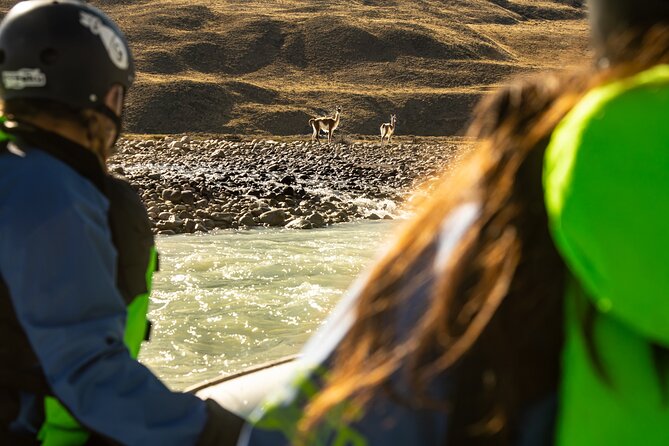
One of the recurring joys of this run is wildlife. I like that the experience is not only about the rapids. Guides talk about native flora and fauna, and they point out birds and animals as you move through the valley.
From what you can see along the route, expect a realistic chance at:
- Guanacos grazing in the distance, especially when visibility and light are good
- Avifauna activity around the river and open areas
- Big-sky moments where birds like condors can appear overhead
You should also know this: you are in motion. You will not have a long wildlife-watching safari. But the combination of calm water at the start, plus guide attention, gives you opportunities to spot things without feeling rushed.
Who this rafting trip is for, and who should skip it
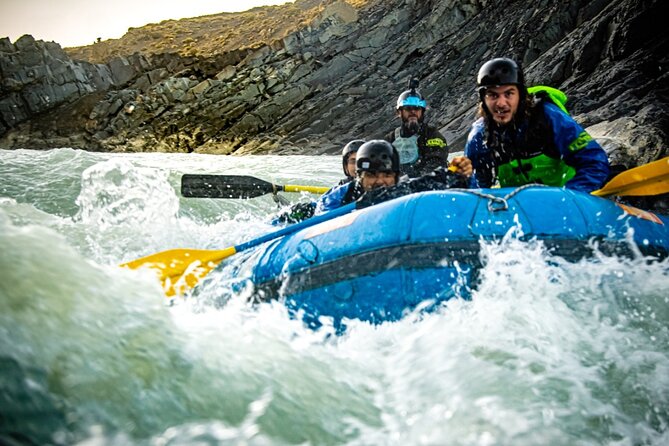
This is the part to take seriously, because the river and the conditions demand a good fit.
The experience calls for strong physical fitness. It is not suitable for people who have respiratory disabilities such as COPD, asthma, or emphysema. It is also not suitable for people with central or peripheral cardiovascular disease, or anyone with heart or vascular capacity impairment, including people with stents, pacemakers, or other prostheses.
It is also not for people with epilepsy. And there is a clear mobility and body-size limitation: people with obesity cannot participate. The tour is not suitable for anyone with any physical or mental disability that affects attention, walking, or coordination.
Age limits matter too: not suitable for children under 16, and not suitable for travelers over 65.
If you meet the fitness requirements, this can be a great way to try rafting. You get instruction, warm gear, and a step-by-step build from calm water to class III to III+ rapids.
Timing, duration, and how the day feels in real life
The total duration is about 3 hours. That usually means a real half-day block. It is long enough for a meaningful workout and the full river arc, but short enough that you can still plan other El Chaltén activities the same day.
The day has a nice rhythm:
- Get geared up at the dome
- Quick van ride to the river entrance
- Safety talk and practice on the calm 6 km
- Portage and the canyon rapids sequence
- Return by van, then change plus a snack and drink
This structure is part of why the experience works. You are not stuck waiting around for hours in the cold. You also get time to recover after the ride instead of rushing off to the next thing.
Weather and river conditions: what can change
This is weather-dependent. The experience requires good weather, and if it gets canceled due to poor weather, you are offered a different date or a full refund. The practical takeaway is simple: bring patience. Patagonia weather can shift quickly, and good operators plan around that reality.
The good news is that the tour is designed for a short, high-impact window of time. If it runs, you get the full experience. If it does not, you are not left holding the bag.
Should you book this Río de las Vueltas rafting?
Book it if you want a guided rafting day that balances real rapids with real instruction, in a setting where Fitz Roy and the wider Patagonian valley feel close and dramatic. This is especially worth it if you are new to rafting and you like the idea of learning on calm water first, then upgrading to class III to III+ rapids once you understand how to respond.
Skip it if you do not meet the health and fitness limits, or if the idea of cold-water riding and physical coordination is not a good match. Also think twice if you dislike activities that demand your attention, because the river section is active and guided safety depends on listening and reacting.
If you do fit the requirements, this is one of those El Chaltén activities that turns the day into a story you will keep telling, warm gear included, with photos and videos to back up the memory.
FAQ
Where does the rafting experience start in El Chaltén?
You start at San Martín 872, Z9301 El Chaltén, Santa Cruz, Argentina. The activity also ends back at this meeting point.
How long is the rafting trip on the Río de las Vueltas?
The rafting experience lasts about 3 hours.
What is included in the price?
The price includes the neoprene suit, thermal shirt, jacket, life jacket, helmet, neoprene boots, mittens, and a simple paddle, plus transportation back to El Chaltén and snacks and drinks (tea, coffee, mate, and bills).
What kind of rapids will you face?
After an initial 6 km calm section, the trip includes a first rapid called Portage, followed by about 10 km of class III to III+ rapids.
Do I need to bring my own rafting equipment?
No. The tour provides the rafting equipment listed above, including the neoprene suit and cold-weather gear items.
Who should not join the rafting?
The tour is not suitable for people with respiratory disabilities (such as COPD, asthma, or emphysema), certain cardiovascular conditions or heart/vascular capacity impairment, epilepsy, people with obesity, or anyone with physical or mental disabilities that affect attention, walking, or coordination. It also is not suitable for children under 16 or travelers over 65.
What is the group size?
The activity has a maximum of 16 travelers.
Is there transportation included?
Yes. You get transportation to and from the river, and a van brings you back to El Chaltén after the descent.
What happens if weather is poor?
The experience requires good weather. If it is canceled due to poor weather, you will be offered a different date or a full refund.
Recently reviewed around El Chalten
- Laguna de los Tres Hiking Day Trip from El Chaltén★ 4.5 · 22 reviews
- El Chalten: Full Day Trekking to Laguna de los Tres and Mount Fitz Roy★ 4.5 · 45 reviews
- Rio de las Vueltas Rafting Experience – El Chalten★ 5.0 · 92 reviews
- El Chalten: Rio de las Vueltas and Patagonia Rafting★ 5.0 · 29 reviews
Rafting Trips, compared.
Rio de las Vueltas Rafting Experience – El Chalten
Read our review →
River Rafting & Canopy in the Andes Mountain Range
Read our review →
Cacheuta Hot Springs Park + Intermediate Rafting
Read our review →
Half-Day Rafting Adventure on the Mendoza River
Read our review →
Half Day Rafting or Canopy Adventure Excursion in Mendoza
Read our review →Browse the lists this tour appears in