
Reviewed · WORKSHOPS
Spanish Intensive Group Classes 20 Hours p/Week | Vamos Academy Buenos Aires
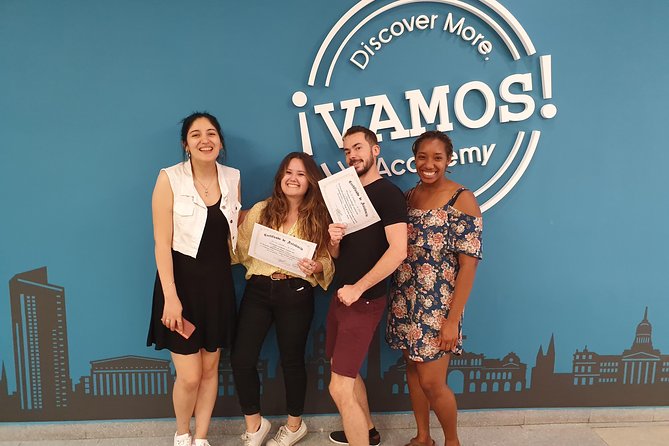
This intensive Spanish class week in Buenos Aires is interesting because you get a 20-hour group program starting at 9:00 am, then you have afternoons to test your Spanish on the streets. I love the fact that it’s built for both beginners and intermediate speakers, and that teachers like Matilda are known for pushing people to actually talk.
I also like the small-group feel reported in reviews, which helps you practise without feeling self-conscious, plus the front desk support described as smooth and friendly by staff such as Lu. The main drawback to consider is that a school is still a real building, so you may run into occasional hiccups like WiFi or bathroom issues in day-to-day operations.
Key Points to Know Before You Go
- 20 hours of instruction in just 5 days, so you’re not waiting weeks to feel progress
- Group classes for all levels, with enough structure to support beginners and still challenge intermediate students
- Afternoons free for practise, which is where Spanish actually sticks
- Support from experienced teachers and front-desk staff, including mentions of Matilda, Daira, Paula, and Lu
- Small-group dynamics, where you can speak more often and get more feedback
- A few practical building issues can happen, like WiFi or bathroom problems, even in an otherwise solid school
20 Hours of Spanish in Buenos Aires, With Afternoons to Use It
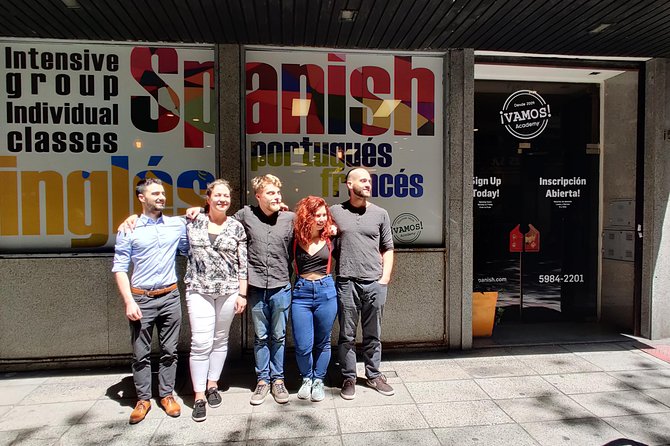
If your Spanish feels like it exists only in textbooks, this kind of course is the antidote. You’ll study for 20 hours of group instruction during a 5-day week, and then you’ll be left with daytime breathing room to use what you learned. That matters because Spanish is not just something you know. It’s something you practise, repeatedly, in small real-world moments.
What’s smart here is the combination. The classes teach you how to read, write, speak, and understand. But the afternoons are built for you to turn that knowledge into something you can use. You can pop into a café, ask a simple question, or just listen and repeat what you hear. In a language course, that’s often the difference between progress and the dreaded I understood it in class but froze outside.
This is also a group format, which can be a plus or a minus. In Buenos Aires, it’s a big plus because speaking in a supportive classroom can make the city feel less intimidating. The tradeoff is that your experience still depends on the group energy and how comfortable you are asking questions.
A few more Buenos Aires days worth comparing
- Cooking Class Designed by Michelin Chef @ Argentine Experience
★ 5.0 · 1,123 reviews - Polo Lessons from Buenos Aires by Polo Elite
★ 5.0 · 501 reviews - Buenos Aires: Empanadas and Alfajores Guided Cooking Class
★ 4.8 · 486 reviews
Price and Value: What $175 Buys You
At $175 per person for about 20 hours of instruction, you’re paying roughly $9 per class hour. That’s good value if what you want is focused practice and feedback, not endless worksheet time.
You should also factor in the hidden value of time. You’re choosing a short, intensive schedule, which is great if you have limited vacation time in Buenos Aires. Instead of spreading study across months, you concentrate effort into a single week. That tends to help you feel functional sooner, especially if you’re starting from zero or close to it.
One review mentioned the tuition felt more affordable than other options, citing 145 per week, so pricing and offers may vary depending on the specific booking. Either way, the consistent theme in feedback is that the school tries to keep teaching quality high while keeping the overall cost reasonable.
Where It Starts at Maipú 464, and Why Location Matters
Your start point is Vamos Academy Spanish School and English Classes, Maipú 464, C1006 Cdad. Autónoma de Buenos Aires. Classes begin at 9:00 am, and the activity ends back at the meeting point.
In Buenos Aires, your neighborhood matters because it affects how often you can practise during the day. A central-ish address like this helps you get out quickly. You can also plan afternoons around walking, transit, and grabbing small food stops without losing an hour to commute fatigue.
The school is also near public transportation, which is useful because Buenos Aires traffic can be unpredictable. If you rely on transit, arriving early is easier, and leaving after class is less of a hassle.
Practical note: you’ll want to be on time for the 9:00 am start. In an intensive week, missing the opening part of the day can make the next lessons feel harder to follow.
How the Classes Work: Reading, Writing, Speaking, and Listening
This course is positioned for all Spanish levels, and that’s not just marketing. Reviews describe teachers who start people at the right place and then push forward with patience.
You can expect a blend of skills:
- Speaking practice in a group setting
- Listening components so you learn how Spanish sounds in real flow
- Reading and writing, usually to reinforce what you say and understand
The key thing I like about this structure is that it reduces the chance you only learn one skill. Many learners can translate in their head but can’t speak naturally. A program that includes both comprehension and production gives you a more balanced base for daily life.
Also, group classes can work well when the group is small enough that you keep speaking. One review specifically described a class size of five students, which is the sweet spot where you can hear classmates, take turns, and still get attention from the teacher. If your class is larger, the experience can still be good, but you’ll want to actively participate to make sure you’re not stuck listening all week.
A different sort of day out of Buenos Aires:
- Local Foodie Adventure in Buenos Aires with Sherpa Food Tours
★ 5.0 · 6,875 reviews - Buenos Aires City Private Tour with Local Guide
★ 5.0 · 3,475 reviews - Buenos Aires Small-Group City Tour
★ 5.0 · 2,226 reviews - Buenos Aires Hop-On Hop-Off Bus, Free Walking Tours & Discounts
★ 4.5 · 2,218 reviews
The 5-Day Rhythm: Morning Classes, Afternoon Practise
You’re in class every day for about 5 days, starting at 9:00 am. The course is marketed as 20 hours per week, so you’re looking at intensive instruction spread across the days rather than one long single stretch.
Here’s a realistic way to think about your week:
- Mornings focus on learning and structured practise. You’ll likely work through language tasks that make you speak sooner rather than later.
- Afternoons are for applying it. You’ll have free time to explore and practise your new skills.
- By the end of the week, you should notice more confidence. Several reviews talked about feeling a real jump in ability, especially for beginners.
In my view, the afternoon portion is where you can dramatically improve your results with almost no extra cost. Aim for small missions. Order something with a rehearsed phrase. Ask for the check. Describe what you see around you. Even short attempts build the habit your teacher is trying to form.
A bonus detail from reviews: one teacher, Daira, was described as giving not only clear lessons but also practical information and advice for your stay in Argentina. That can help you practise Spanish in situations you actually care about, like getting around, understanding customs, or talking about what you see.
City Time Extras: Teatro Colón, Recoleta, Tango, and More
While the core of your week is classroom learning, some course editions include social activities that are great for both fun and practise. One review described five days of social activities, including visits and experiences such as:
- Exploring Teatro Colón
- Eating out at a place referenced as ti guerrin
- Visiting Recoleta Cemetery
- A free tango class
This kind of outing is useful because it forces Spanish into context. Instead of only using Spanish with a teacher, you’re using it while moving through Buenos Aires, seeing landmarks, and chatting around shared experiences.
You should also treat these as helpful additions, not guaranteed certainty. The only promise in the provided details is that you get free time in the afternoons. If social outings are part of your specific schedule, that’s icing. If not, you can still create the practise yourself by planning similar low-pressure activities.
Teachers and Front Desk: The Human Part That Makes It Work
The biggest praise in the reviews is not about classrooms or marketing. It’s about people.
Several teachers were singled out:
- Matilda was praised by a beginner who felt they made a long way after starting from scratch.
- Daira received standout comments for clarity, patience, and an engaging teaching style that also covered history, culture, and politics.
- Paula was described as amazing, with comfortable classrooms and a professional, supportive approach.
That matters because language learners need two things at the same time: structure and reassurance. Good teachers keep lessons organized. Great teachers keep you talking even when you feel awkward.
The front desk also showed up in feedback. Lu was mentioned by name as making organization easy. Another review emphasized the friendly classroom environment and supportive check-ins, which suggests the school isn’t just dropping you in a room and hoping for the best.
There’s also mention of academic support. One learner talked about checking their level with the academic director, Marisa, and being walked through how the school placed them. That’s a big deal because leveling can make or break a course. If you’re too low, you get bored. If you’re too high, you shut down. A school that monitors this tends to help you keep improving instead of stalling.
Comfort, WiFi, and Other Small Logistics to Expect
No matter how good the teaching is, you’ll spend time in the building. Reviews point to a mixed picture on the physical side, which is normal for most real-world schools.
Here’s what you should consider:
- Classroom comfort: One review said the building felt comfortable and noted strong AC, while another comment raised concerns about windows in some rooms.
- Building hiccups: A review mentioned occasional issues like WiFi and a bathroom problem on a day.
In practice, WiFi issues are usually a minor annoyance unless you rely on your phone for translations or homework. Still, for an intensive Spanish week, you’ll probably be better off downloading offline translation or notes beforehand.
If you’re sensitive to comfort details, it could be smart to ask about the specific classroom on arrival. But even if there are quirks, the overall message across reviews is that the teaching quality and support make the week worth it for most students.
Best Fit: Beginners, Refreshers, and People Who Want Fast Feedback
This course is suitable for beginners and intermediate speakers. If you’re a beginner, you’ll likely benefit from the structure and the fact that you’re not stuck doing this alone. In a group, you hear how others make mistakes and how the teacher corrects them, which accelerates your learning.
If you’re intermediate, you may enjoy it as a refresher because intensive group sessions can reset your speaking rhythm. One student described it as exactly what they wanted to refresh Spanish skills, and the small group helped them avoid feeling self-conscious.
This is also a good fit if you want fast feedback. Reviews repeatedly describe teachers who push students to improve and who keep things moving. If you prefer self-study with low accountability, you might do fine elsewhere, but this course clearly works best when you participate actively.
Should You Book Vamos Academy’s Spanish Intensive Group Classes?
Book this course if you want:
- Fast progress in a short window
- A structured 20-hour week with real speaking practise
- A school where teachers like Matilda, Daira, and Paula are repeatedly praised for clarity and patience
- A chance to practise in the city right after class, not weeks later
I’d hesitate if:
- You expect a perfectly smooth experience every single day. Based on reviews, small building issues can happen.
- You need a guarantee about classroom comfort details like window access. Comments suggest there can be variation.
If you’re the kind of traveler who learns best when you talk, ask, and practise in real situations, this is a solid choice. For the money, you’re buying time, guidance, and momentum, and that is exactly what a short Buenos Aires stay needs.
FAQ
What is the duration of the Spanish intensive group classes?
The course runs for 5 days (approx.), and it is described as 20 hours per week of classes.
What time do classes start?
Classes start at 9:00 am.
Where is the meeting point?
The meeting point is Vamos Academy Spanish School and English Classes, Maipú 464, C1006 Cdad. Autónoma de Buenos Aires, Argentina. The activity ends back at this same meeting point.
Is this course only for beginners?
No. The program offers group classes for all Spanish skill levels, including beginners and intermediate speakers.
How much does it cost?
The price is $175.00 per person.
Is it a private group experience?
Yes. This is listed as a private tour/activity, meaning only your group will participate.
Can I bring a service animal?
Yes. Service animals are allowed.
FAQ
What is the cancellation policy?
This experience is non-refundable and cannot be changed for any reason. If you cancel or request an amendment, the amount paid is not refunded.
Is there confirmation after booking?
Yes. Confirmation will be received at the time of booking.
Recently reviewed around Buenos Aires
- Meet Locals: Language Exchange Café in Buenos Aires★ 5.0 · 10 reviews
- Piazzolla Tango Show Only In Buenos Aires★ 4.5 · 10 reviews
- Madero Tango Show Including Executive Dinner In Buenos Aires★ 3.5 · 10 reviews
- Private City Tour & Transfer to the International Airport★ 5.0 · 10 reviews
- Esquina Homero Manzi Tango Show Ticket Including Optional Dinner in Buenos Aires★ 4.5 · 10 reviews
- VIP Dinner & Tango Show at El Viejo Almacen★ 4.5 · 10 reviews
- Buenos Aires City Tour★ 4.5 · 11 reviews
- Premium service Buenos Aires city tour for small groups★ 4.0 · 11 reviews
Workshops, compared.

Cooking Class Designed by Michelin Chef @ Argentine Experience
Read our review →

Polo Match, BBQ and Lesson Day-Trip from Buenos Aires
Read our review →

Private Cooking Lessons and Food Tasting in Buenos Aires
Read our review →
3-Hour Buenos Aires Empanadas and Alfajores Cooking Class
Read our review →Browse the lists this tour appears in