
Reviewed · FOOTBALL STADIUM TOURS
Buenos Aires: Visit to the Diego Armando Maradona Stadium
This visit works because it pairs real stadium access with a museum story that feels like it was made by people who care. I love the fan-built museum, where Argentinos Juniors memorabilia is tied to everyday passion, not just glass cases. I also love that you do not just look around, you walk through key spaces like the field, locker rooms, and press areas. One thing to consider: it is a focused, 150-minute stop, and there is no food included, so plan snacks and water.
In La Paternal, you get the vibe of a working football neighborhood, not a theme park. If your goal is Maradona and Argentinos Juniors as a living part of Argentine football culture, this tour fits well. If you want a long sit-down experience or a full day of attractions, you might feel the time is tight.
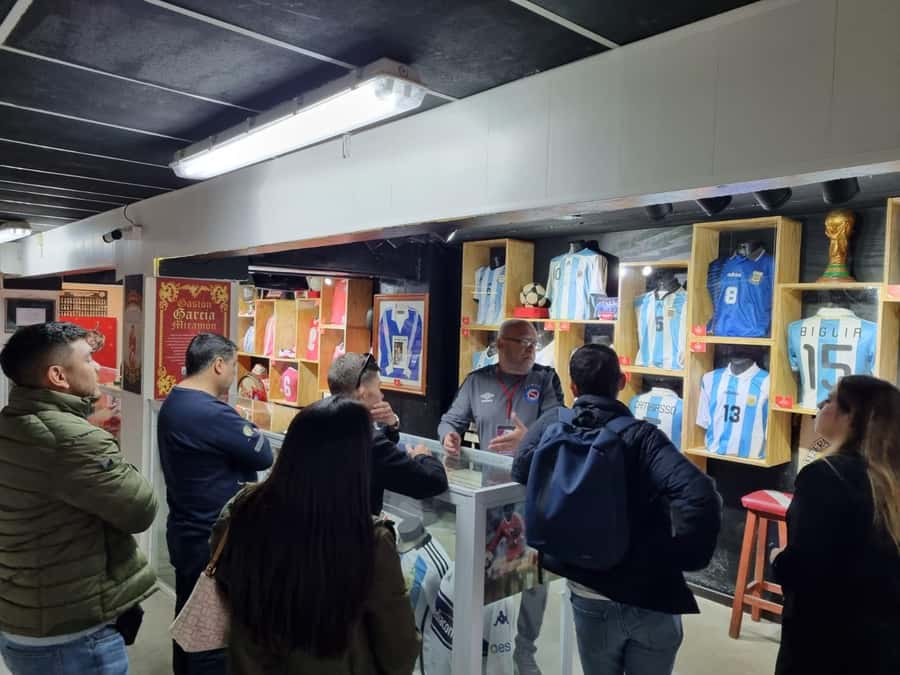
From start to finish, the strongest part is how your bilingual guide weaves the story of Argentinos Juniors and Maradona into the spaces you’re standing in. Guides seen with Malambo Tours BA, like Agustin, Fernando, and Carmela, are consistently praised for bringing energy and clarity, even when you’re showing up with mixed football knowledge.
Key points before you go
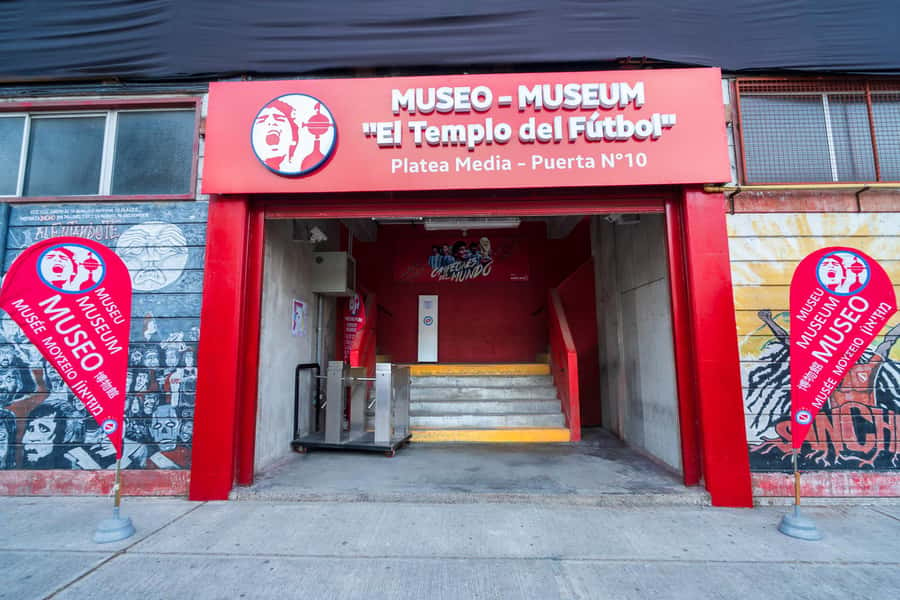
- Fan-made museum: El Templo del Fútbol was built entirely by supporters and club members through voluntary work
- More than photos: you get donated items like shirts, trophies, and campaign memorabilia, plus the club’s development story
- Stadium access on a guided route: you visit the playing field, changing rooms, central hall, press room, and stands
- Maradona storytelling with context: the tour links his early debut at 15 to the club’s bigger talent legacy, and the Albiceleste connection
- Small group feel: limited to 10 people, with pickup and drop-off from your hotel in Buenos Aires City
La Paternal football energy and why this stadium tour works
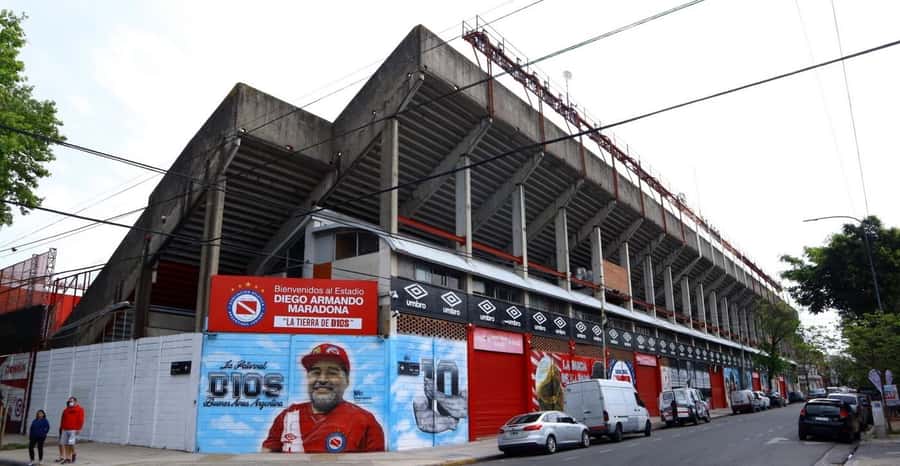
The Diego Armando Maradona Stadium sits in the Buenos Aires neighborhood of La Paternal, and that matters. This is not the kind of place that feels staged for tourists. You get a sense of a club rooted in local pride, where the museum and stadium tour are treated like part of the same story.
The tour is also built around a smart idea: football culture is not just about matchday noise. It is about where players first appear, how a club trains talent, and how supporters keep memories alive when the season ends. The Argentinos Juniors story is presented as a talent factory, known worldwide for the quantity and quality of players coming up through its lower divisions.
If you like stadium tours that feel personal and human, you’re in the right place. If you want a checklist of generic stadium sights, you may find you prefer a larger venue with more obvious global landmarks. Here, the value is in the narrative and the access to spaces most tourists never see.
More football stadium tours:
- Buenos Aires: Tickets to Boca Juniors Museum & Stadium
★ 4.5 · 581 reviews - Boca Juniors Tickets for a Match at La Bombonera
★ 4.5 · 140 reviews - Soccer Match in Buenos Aires with Transfers and Local Guide
★ 5.0 · 103 reviews
Inside El Templo del Fútbol: a museum built by supporters
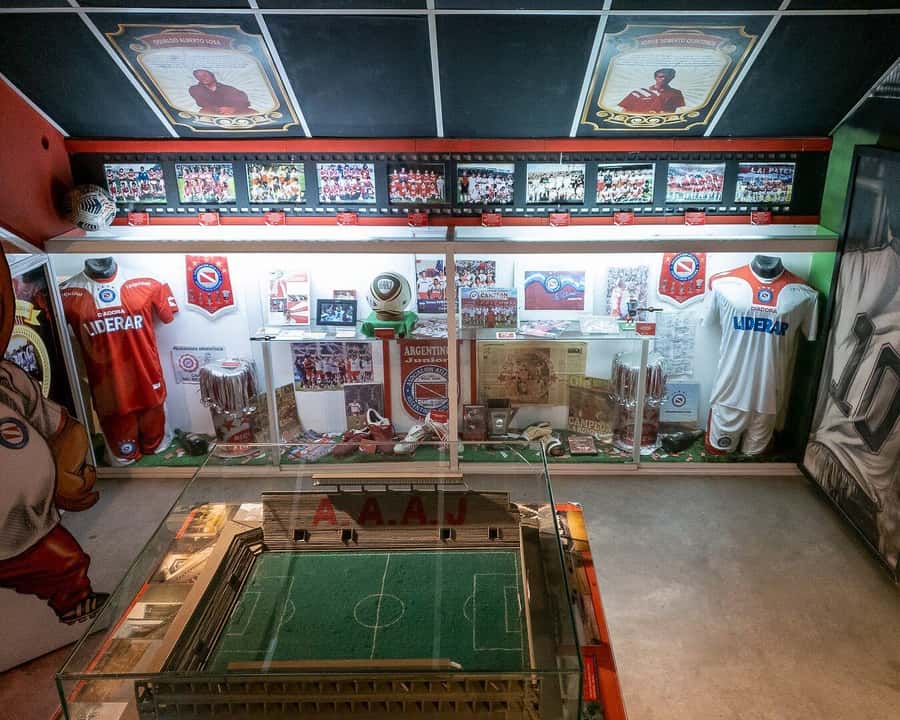
The star is the museum inside the stadium, called El Templo del Fútbol, often described as the Temple of Soccer. What makes it different is the origin story. This museum was made entirely by fans and members of the institution through voluntary work. That changes how it feels. Instead of a polished, corporate museum vibe, you get the feeling of a community collecting and protecting its own past.
You’ll see a mix of highlights that are emotionally specific:
- Photos, donated by supporters
- Cards and objects connected to club campaigns
- Trophies and memorabilia
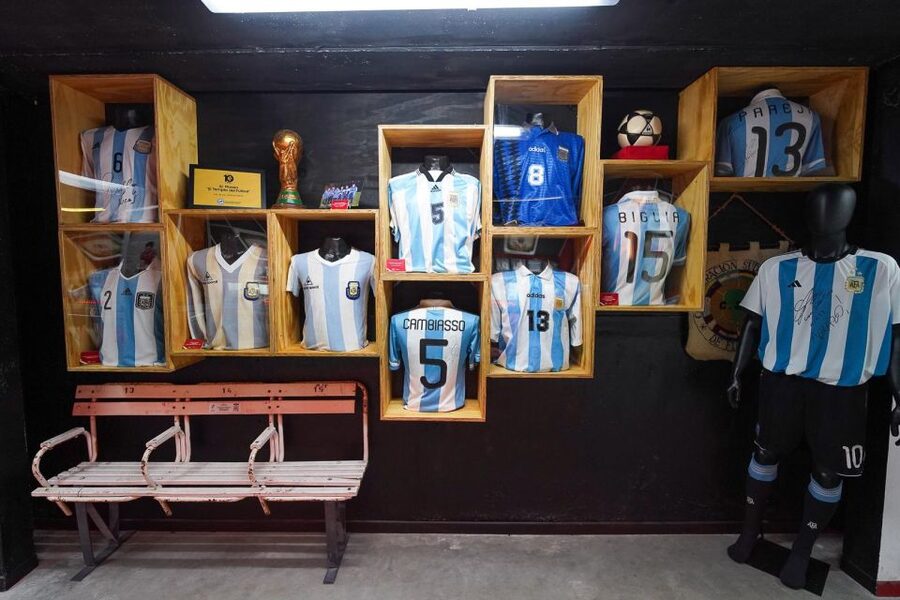
- Shirts linked to key eras
The museum is also tied directly to Diego Armando Maradona’s early path. The tour explains that Maradona debuted with the Argentinos Juniors jersey at age 15, and it frames that as the beginning of a global football legend.
There is also a talent legacy thread that connects Argentinos Juniors to the Argentine national team story and the Albiceleste, including Lionel Messi in the museum’s narrative. The point is not to turn this into a list of famous names. The point is to show how one club’s youth development culture can feed the biggest stages.
Practical note: because the museum content is story-driven and collectible, bring a little patience if you’re not a hardcore football historian. The guide helps you connect the objects to the bigger picture, and that is where the time value lands.
The guided stadium route: field, locker rooms, press room, and stands
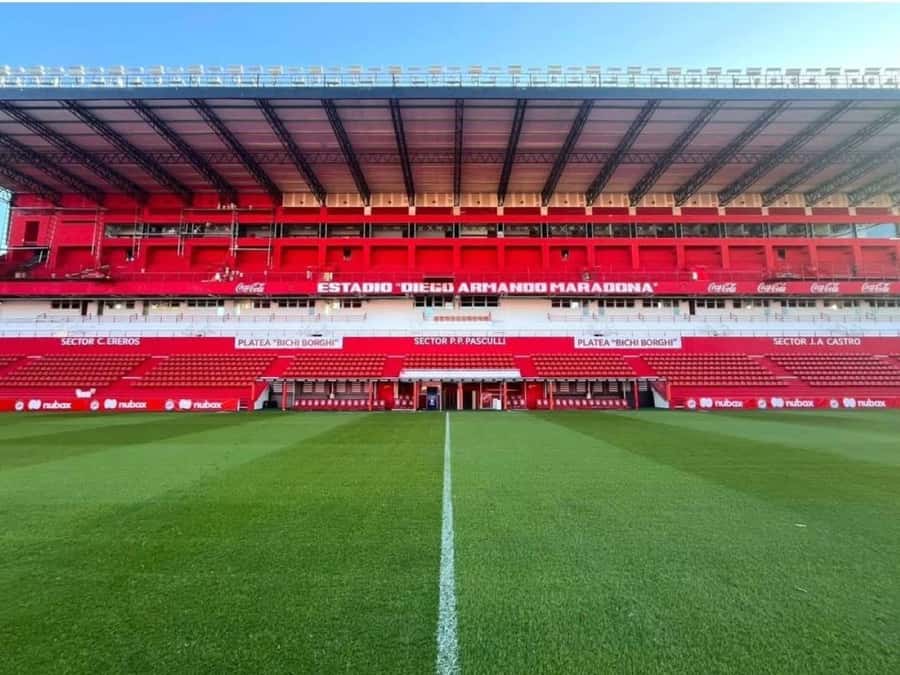
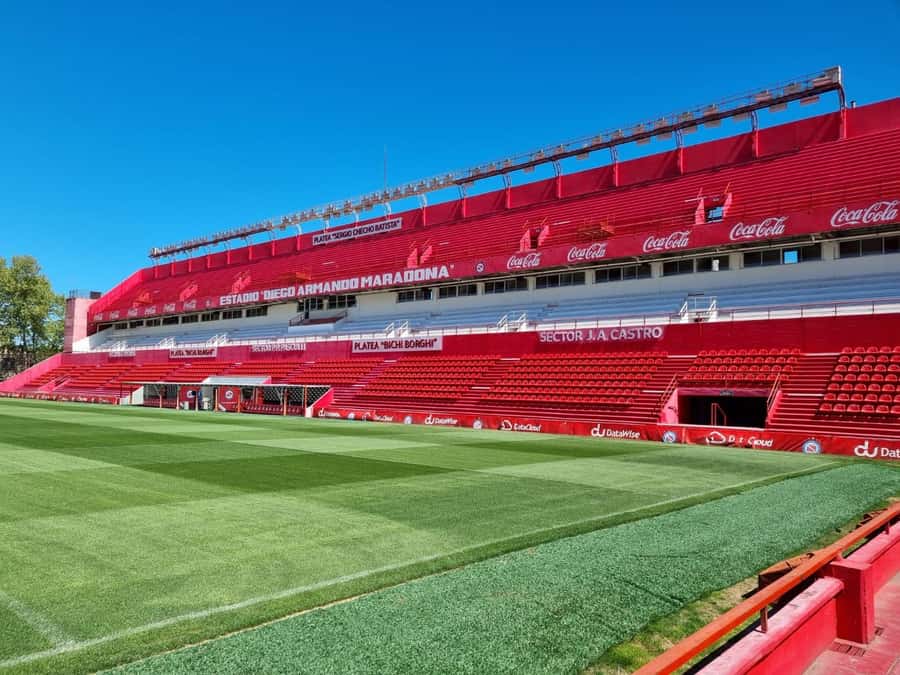
After the museum, you shift into stadium access. The tour route is where you feel you’re actually inside the club world rather than just outside looking in. You visit:
- The playing field
- The changing rooms
- The central hall
- The press room
- The stadium stands
Each stop has its own payoff. The playing field is the obvious one, but it’s also useful because it resets your perspective. You see the ground the tour story is built on, and you start imagining training and matches in the same physical space where the museum’s legends connect.
The changing rooms are where football stops being abstract. Even without a match happening, you can feel how this kind of place shapes players. If you’re traveling with kids, this is often the most hands-on section, and guides like Carmela are praised for keeping younger visitors engaged by mixing facts with fun storytelling.
The press room and central hall add another angle. You learn how the club communicates, how the match environment works beyond the pitch, and why that matters when football becomes national conversation. Then you step into the stands, which helps the whole tour click. From here, the museum does not feel like a side attraction. It feels like the memory archive for the stadium you just walked through.
One consideration: you should expect a guided path, not wandering time. If you love lingering, take a few extra seconds after each stop to ask a quick question in English or Spanish, then move on when the group does.
Maradona’s path through the club: why the story is structured this way
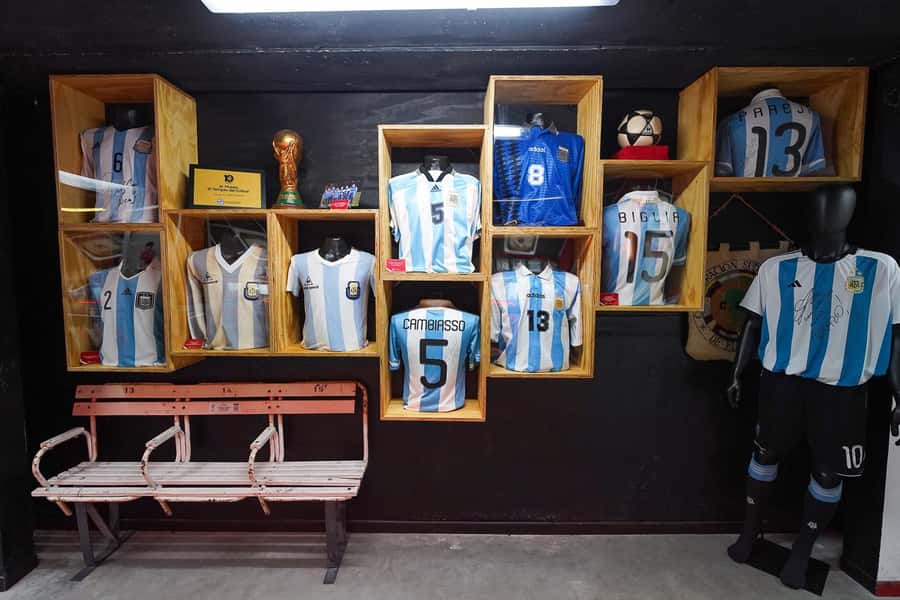
The tour’s storytelling is built around a simple timeline, with a bigger message tucked inside.
First is the Maradona origin moment: at 15, he debuted with the Argentinos Juniors jersey. That anchors the experience in a specific place and a specific age. It is a reminder that legends do not start fully formed. They start in clubs like this, with early opportunities and development.
Next comes the national team thread. The museum presentation includes a later moment when Maradona plays for the Argentine National Team shirt for the first time and the story connects to the Albiceleste and the broader talent path, including Lionel Messi. It is not only about one superstar. It is about how the club’s youth pipeline connects to multiple eras of Argentine football.
This is where the guide makes the difference. In multiple cases, guides like Fernando and Agustin are praised for making the history feel alive. They talk about the club with clear emotion, so you leave understanding why Argentinos Juniors fans treat their club like something more than a team.
A good tip: if you arrive with any questions, bring them. Even a simple one like who influenced the club’s youth development approach, or why supporters created a museum themselves, can turn the tour into a personal football education.
A few more Buenos Aires days worth comparing
- Local Foodie Adventure in Buenos Aires with Sherpa Food Tours
★ 5.0 · 6,875 reviews - Buenos Aires City Private Tour with Local Guide
★ 5.0 · 3,475 reviews - Buenos Aires Small-Group City Tour
★ 5.0 · 2,226 reviews - Buenos Aires Hop-On Hop-Off Bus, Free Walking Tours & Discounts
★ 4.5 · 2,218 reviews
The Maradona Sanctuary ending: a calmer finish after the noise
The tour ends with a visit to the Maradona Sanctuary. This is a smart way to close. You start with the energy of the museum and stadium spaces, then you move into a more reflective setting.
I like this kind of pacing for two reasons. First, it gives your brain time to absorb what you just walked through. Second, it respects the way football figures become part of identity, not only sports headlines. By the time you reach the sanctuary, the story has already been connected to places: the field, the rooms, and the spaces where a career becomes real.
You should expect a quieter atmosphere than the earlier stadium sections. If you’re the kind of person who likes to take a moment, plan for that here.
Price and value: what $80 covers and where it makes sense
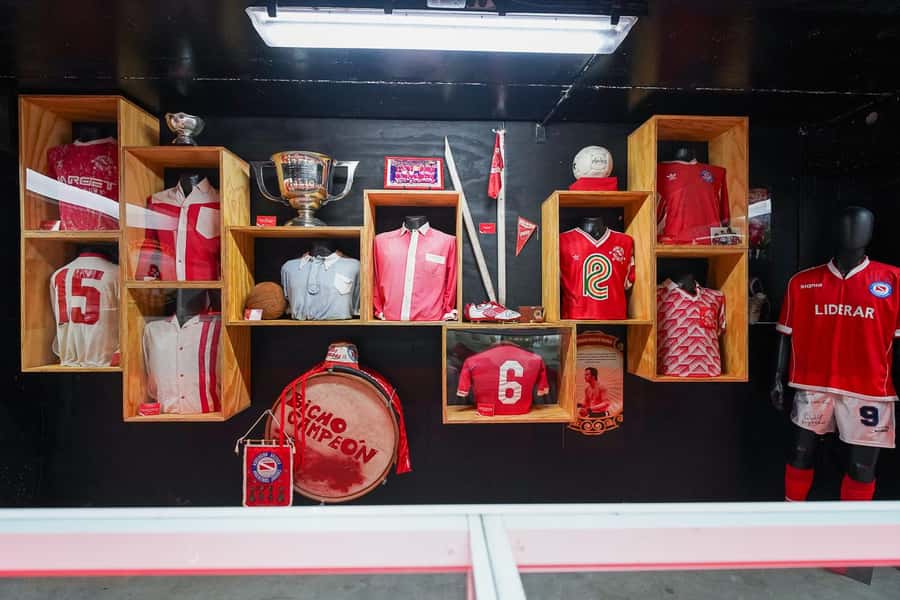
At $80 per person, the value depends on what you care about.
You get hotel pickup and drop-off within Buenos Aires City, plus a bilingual guide in Spanish and English. You also get museum entrance and a guided stadium tour that includes multiple key areas. On top of that, you skip the ticket line.
So you are not paying just for a chair-and-a-headphones experience. You are paying for time, access, and guidance. The small group size, limited to 10 participants, also matters. Smaller groups generally mean the guide can explain better and answer questions without rushing everyone.
What is not included: food and drinks. That’s normal for tours like this, but it affects your planning. Bring water if you tend to run thirsty on walks, or plan a snack before you’re picked up.
A nice bonus from the way this tour runs: drivers are sometimes helpful with small comfort touches, like offering water, which can make a long day feel easier. Just don’t count on anything beyond what is clearly included.
Logistics that actually affect your day: 150 minutes, small group, pickup included
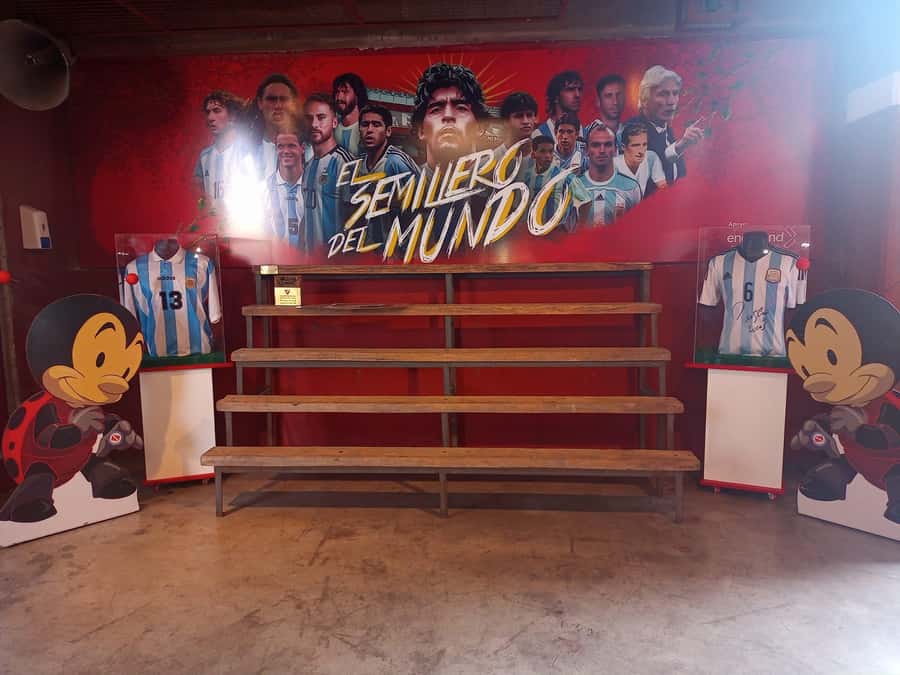
This experience runs about 150 minutes. That is long enough to cover museum, stadium rooms, and the final sanctuary visit without feeling like you’re rushed through a blur.
Pickup is included at the door of your hotel in Buenos Aires City, which is a big win if you do not want to figure out local transit for one targeted stop. It also keeps the day smooth if you already have other plans that might make it hard to navigate on your own.
The group is limited to 10 participants. That matters because stadium tours can feel chaotic when too many people bunch together in narrow spaces. In this format, you should feel more like you’re on a guided walk with a small group rather than managing a crowd.
Skip-the-ticket-line is also worth it. When you’re paying for a short, 2.5-hour window, every minute counts.
My practical advice: wear comfortable shoes. You’ll be moving between areas inside the stadium complex, and you want your feet to be happy. Also, think about timing. If you have other Buenos Aires sights planned that same day, pick a schedule where you are not immediately sprinting to another long activity afterward.
Who should book this Maradona Stadium tour
This tour is a strong fit if you want:
- A guided look at the Argentinos Juniors story tied to Maradona
- Stadium access beyond the basics, including changing rooms, press areas, and stands
- A museum with community spirit, not just big-name trophies
- A small group format with bilingual guidance
It is especially great for families who want a football-themed activity that does not rely on screens. One guide experience highlighted that kids stayed engaged because the guide kept the story moving and explained it in a fun way.
It’s also a good choice if you’re a Maradona fan but not only interested in highlights. This tour focuses on the earlier club connection and the development culture behind the legend.
If you are a hardcore stadium collector who wants to visit only the absolute largest, most famous venues, you may feel the stadium itself is less famous than the biggest names in Argentina. But you’d be missing what makes this stop special: the museum was built by supporters, and the tour route connects the legend to the club’s identity.
Should you book? My take on whether it fits your Buenos Aires trip
Book it if you want a focused, meaningful football experience in about 2.5 hours, with hotel pickup, a bilingual guide, and stadium access plus the fan-built museum. The combination of El Templo del Fútbol and the walk through key stadium spaces makes this more than a quick photo stop.
Skip it if you need a full day of activities, you want to eat and hang out on-site, or you prefer a self-guided tour where you can wander without a set route.
If you’re staying in Buenos Aires and your schedule is tight, this is one of the easier ways to add authentic football culture without turning your afternoon into logistics.
FAQ
Where is the stadium and museum located?
The stadium and the museum are in the La Paternal neighborhood of Buenos Aires (Argentina).
How long is the tour?
The duration is about 150 minutes.
How much does it cost?
The price is $80 per person.
Does the tour include hotel pickup and drop-off?
Yes. Pickup and drop-off are included from your hotel in Buenos Aires City.
What language is the guide?
The guide is bilingual, with Spanish and English.
What does the museum include?
You’ll visit the museum called El Templo del Fútbol (the Temple of Soccer), which includes items such as photos, cards, trophies, shirts, and donated objects, along with the club and Maradona-related story.
Which stadium areas will you see?
The tour includes visits to the playing field, changing rooms, central hall, press room, and stadium stands.
Is food or drinks included?
No. Food and drinks are not included.
Is there a skip-the-line benefit?
Yes, you skip the ticket line.
What is the cancellation policy?
You can cancel up to 24 hours in advance for a full refund. Free cancellation and a reserve now, pay later option are offered.
Recently reviewed around Buenos Aires
- Meet Locals: Language Exchange Café in Buenos Aires★ 5.0 · 10 reviews
- Piazzolla Tango Show Only In Buenos Aires★ 4.5 · 10 reviews
- Madero Tango Show Including Executive Dinner In Buenos Aires★ 3.5 · 10 reviews
- Private City Tour & Transfer to the International Airport★ 5.0 · 10 reviews
- Esquina Homero Manzi Tango Show Ticket Including Optional Dinner in Buenos Aires★ 4.5 · 10 reviews
- VIP Dinner & Tango Show at El Viejo Almacen★ 4.5 · 10 reviews
- Buenos Aires City Tour★ 4.5 · 11 reviews
- Premium service Buenos Aires city tour for small groups★ 4.0 · 11 reviews
Football Stadium Tours, compared.
Boca Juniors Tickets for a Match at La Bombonera
Read our review →
Soccer Match in Buenos Aires with Transfers and Local Guide
Read our review →
Buenos Aires Football Experience: Boca & River Stadium Tour
Read our review →
Boca Juniors Game at La Bombonera with Local & Transport
Read our review →Browse the lists this tour appears in