
Reviewed · PALERMO
Get Curious in Palermo SoHo
Palermo Soho is the kind of Buenos Aires neighborhood where the storefronts, clubs, and café lines make sense only after you know the people who built them. This tour threads together immigrant stories with the feel of today’s Palermo, so you walk away seeing the neighborhood in a new way. Two things I really like: it stays light on your feet with a leisurely walking format, and it asks smart questions that turn everyday details into real history.
The one thing to consider: you are on the move for about 2 hours 10 minutes, so if you prefer a sit-down history lesson, this may feel too street-level and pass by quickly.
Key highlights
- Small group size (max 10) keeps the pace easy and questions flowing
- University degree guide brings clear context to what you are seeing
- All stops are free admission, so you pay for the guiding, not entry fees
- Palermo Soho past meets present through immigrant community landmarks
- A sweet payoff at Helados Italia, with a chance to taste standout ice cream
- Finish at Plaza Serrano where the neighborhood’s social life is on full display
Palermo Soho’s street history, told through people, not plaques
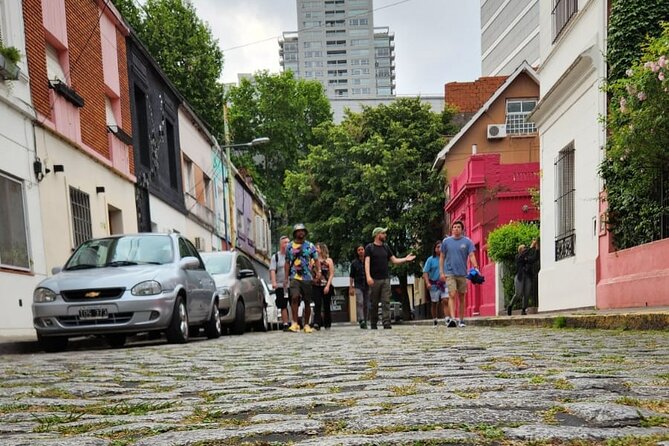
Palermo Soho can look like a design-forward playground for eating, shopping, and people-watching. But the magic of this tour is that it refuses to treat the area as just trendy scenery. You start to notice the layers: working-class Buenos Aires became a different place over time, and Palermo’s look today is tied directly to the waves of immigrants who found community here.
The guide approach is practical and human. Instead of burying you in dates, the tour connects changes in the neighborhood to what migrants needed, where they gathered, and how those groups shaped local life. That is why it feels memorable: you are not just passing sites, you are building a simple story in your head as you walk.
A second reason it works is the tone. The walk is relaxed. One guide, Nicholas (often nicknamed Nick), leads with the kind of knowledge that stays friendly and conversational, not lecture-y. In reviews, people describe him as fun and especially strong at linking the past to what you can still spot today.
More of Palermo:
- Palermo Graffiti Tour
★ 5.0 · 797 reviews - Palermo: Graffiti and Street Art Guided Tour in English
★ 4.8 · 684 reviews - Buenos Aires: Empanada & Alfajor Cooking Lesson in Palermo
★ 4.6 · 186 reviews
Meeting at Arcos de Palermo, then easing into Palermo Soho
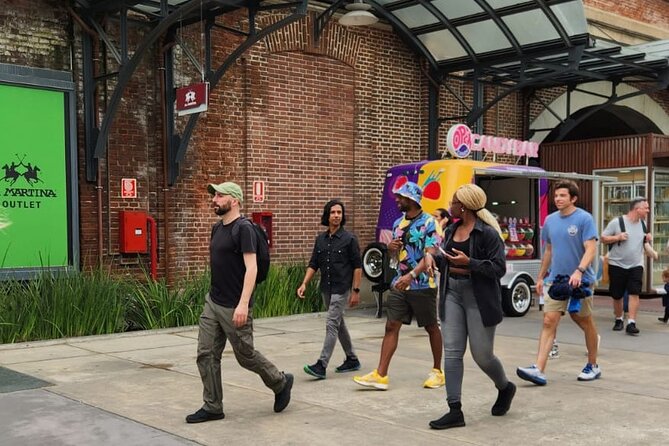
You meet near Arcos de Palermo Shopping Mall. This is a smart way to start because Arcos de Palermo is easy to spot, and it sets you up for the neighborhood rhythm right away. You are also walking from the first minute, which matters because Palermo Soho rewards attention to details, not just destination photos.
Right from the start, you get oriented on what to look for. You will hear how neighborhoods change when the local economy changes, when new groups arrive, and when old routines get replaced by new ones. The tour uses these themes to keep you engaged. Even when a stop lasts around 10 to 25 minutes, you are not left wondering what you are supposed to notice.
And because the group is capped at 10 people, the tour does not feel crowded. You should feel comfortable asking questions, or just letting the conversation guide your attention. The walking pace is leisure-first, not race-you-around.
Giol’s former winery life, and Palermo’s shift from working neighborhood to something else
One of the best context stops is Polo Científico Tecnológico, a space created from the former winery GIOL. Even if you do not care about industrial history, this one is worth it because it explains Palermo’s transformation in a concrete way.
Here is the idea you will leave with: Palermo did not magically become what it is now. It changed gradually. Businesses, jobs, and buildings evolved. Working uses and production spaces got repurposed. Cultural and institutional functions moved in. The neighborhood’s identity shifted along with what was housed in its structures.
You get about 15 minutes here, which is enough time to grasp the concept and then move on without dragging. The payoff is personal. After this stop, you start looking at buildings and thinking, What used to be here? Who worked here? Who would have walked these streets then?
Ukrainian roots, Polish clubs, and how to read the city as a map of communities
A big part of why this tour earns top ratings is the way it uses specific places to show broad patterns. You do not hear generic immigrant talk. You see groups anchored to real community institutions.
One stop features Asociación Ucrania de Cultura PROSVITA en la Republica Argentina, founded in 1924 by immigrants. This is one of the tour’s strongest “how the city worked” lessons. It helps you understand that late 19th century and early 20th century immigration to Buenos Aires was not small or symbolic. It was massive, organized, and life-shaping, and these communities built cultural organizations to keep language, identity, and connection alive.
Then the tour swings into Polish history with Klub Polaco, founded in 1929 by Polish immigrants. You will learn why these clubs mattered beyond recreation. They were social centers, support systems, and a place to feel at home in a new country. You can think of them as community infrastructure.
You also get stops that highlight Jewish immigrants (founded in 1919) and a separate segment centered on Armenian immigrants, including why so many established themselves in Palermo and what you can see there today. The Armenian focus is especially useful because it makes you think about why a neighborhood becomes a magnet for certain groups. It is not random. It usually ties back to networks, safety, opportunity, and the pull of others who arrived first.
A few more Buenos Aires days worth comparing
- Local Foodie Adventure in Buenos Aires with Sherpa Food Tours
★ 5.0 · 6,875 reviews - Buenos Aires City Private Tour with Local Guide
★ 5.0 · 3,475 reviews - Buenos Aires Small-Group City Tour
★ 5.0 · 2,226 reviews - Buenos Aires Hop-On Hop-Off Bus, Free Walking Tours & Discounts
★ 4.5 · 2,218 reviews
What you are really learning at these stops
Instead of memorizing names, you are learning how neighborhoods form. These institutions show you:
- how immigrants built community when they could not rely on mainstream institutions,
- how cultural identity survived through organizations and gathering spaces,
- how today’s streets still reflect those decisions even when the original purpose changes.
Mate, coffee shops, and why Palermo Soho can feel like a debate you can taste
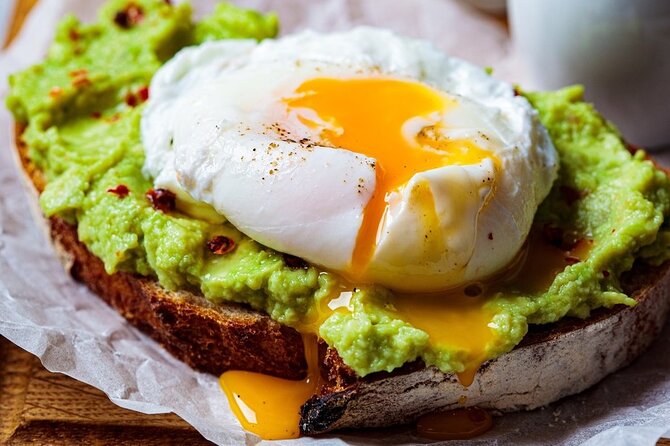
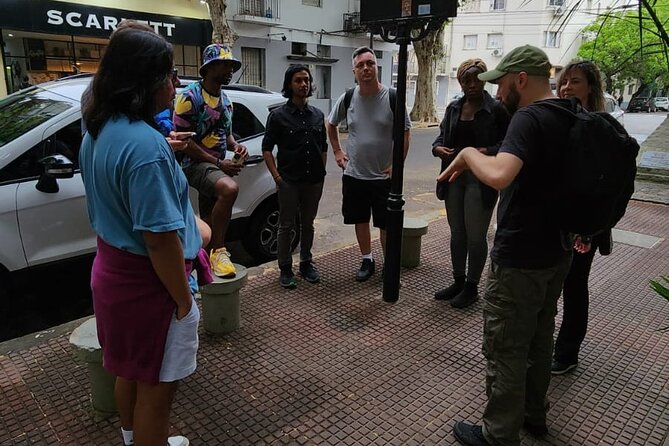
One of the most fun stops is at Scarlett Boutique Soho, where the tour turns into a question: mate or coffee? Why does Palermo Soho have so many coffee shops?
This is not random trivia. It is a gateway to understanding how neighborhood branding and daily life changed. You connect who lived here before, who moved in as the area modernized, and how café culture became a visible marker of the present.
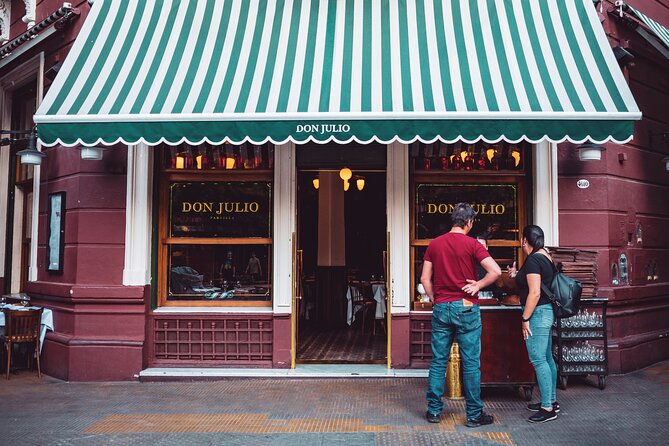
Then you hit a high-profile food stop with Don Julio Parrilla. The tour frames it as a fair question: trendy cafes and top internationally rated restaurants, is it really worth it? This is a good moment to slow down and decide how you feel about hype in a city that truly loves food.
I like that the guide does not force a verdict. Instead, the stop helps you practice judging for yourself. Look around. Notice who is there. Compare the vibe to what you have learned about Palermo’s changing identity. And then, if you choose to eat later, you will do it with more confidence.
Club Eros, milanesa culture, and the football heartbeat of porteños
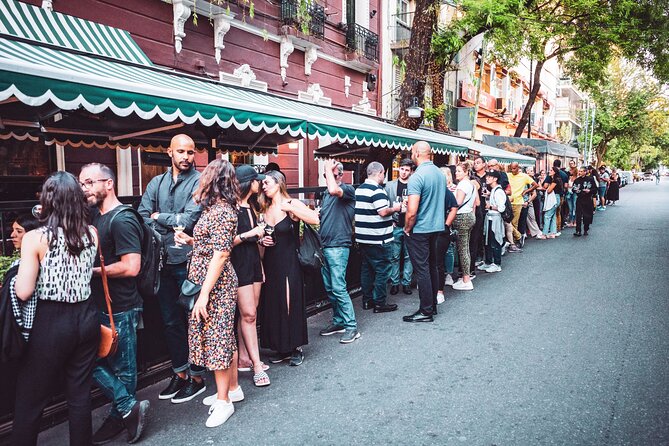
As the tour moves toward Plaza Serrano, you get one more very Porteño-style cultural lens at Club Eros. This is described as a traditional club and bodegón, and that combination matters.
You are not just learning about food. You are learning about daily life and social bonding, especially around football. The guide ties football passion to what people eat, including milanesa a la napolitana. That link sounds simple, but it is powerful because it shows how culture travels through habits, not only through big historical events.
This is also where the tour feels extra authentic. Palermo Soho can sometimes feel like it is designed for visitors. Stops like Club Eros remind you that Buenos Aires runs on locals’ routines. Food and football are not side topics here. They are part of how people connect, talk, and belong.
Gelato at Helados Italia, then Plaza Serrano with the neighborhood on display
At Helados Italia, founded in the 1970s by Italian immigrants, you get a chance to taste one of the best ice creams in the world. Even if you are not a serious gelato person, this stop works because it is short, memorable, and connected to real migration history.
After that, you reach the heart of Palermo Soho: Plaza Serrano. This is where the neighborhood energy is easiest to see. On weekends, the Feria de artesanos runs from morning to afternoon. If your timing lines up, you will feel why Plaza Serrano is a magnet. It is not just scenery, it is a marketplace and a meeting point.
You will finish the tour at Plaza Serrano, specifically by the big letters of PALERMO. That ending location is convenient because it is also one of the best places to keep exploring afterward on your own. You can branch out for a snack, a browse through nearby streets, or just a relaxed hang in the neighborhood flow.
Price, time on your feet, and practical value for $25
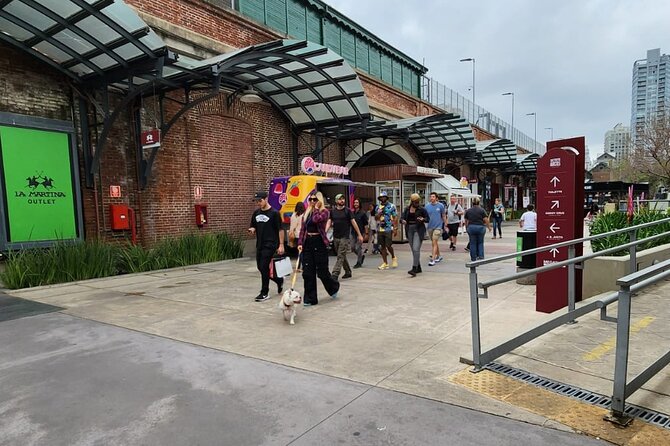
At $25 per person for about 2 hours 10 minutes, this is strong value, mainly because it is not a ticket-only checklist tour. You are paying for a university degree guide and for thoughtful context at multiple stops, each with free admission.
A few practical points that affect your experience:
- Group size is max 10, so the tour should stay conversational instead of turning into a herd.
- It is walking only in the sense that the experience is built around moving between stops, so wear comfortable shoes.
- Snacks are not included, so plan to eat separately. The gelato moment is part of the experience, but you should still expect to buy your own extra food if you get hungry.
- It is near public transportation, so you are not stuck planning your entire day around one car ride.
The “value” part also includes what you get mentally. This tour is a quick bridge from Palermo Soho’s present-day look to its immigrant-driven past. If you are staying in Buenos Aires for a short time, this helps you place what you see later, in other neighborhoods too.
Who should book Get Curious in Palermo SoHo
You will likely enjoy this if you:
- like city history, but prefer it connected to places you can see,
- enjoy immigrant stories told through real institutions and not just general explanations,
- want a walking tour that stays easygoing, not exhausting,
- plan to spend time in Palermo Soho anyway, since the end at Plaza Serrano makes it easy to keep going.
You might choose another style of tour if you want mostly indoor museum stops or you get uncomfortable with sustained street walking. Still, the pacing described as leisurely makes it a strong option for many people.
Also, if you care about food culture, you will appreciate how the tour links cafés, a parrilla stop, gelato, and milanesa to community life. It gives you a reason to taste and observe, not just eat because it is famous.
Should you book this Palermo Soho walking tour?
Yes, I think you should book it if your goal is to understand Palermo Soho beyond the surface. The best version of this tour is the one where you leave with a simple map in your head: immigrants shaped institutions, institutions shaped social life, and social life shaped what the neighborhood looks like now.
Between the high rating of 5 and the consistent praise for the guide’s knowledge and fun delivery, this is a safe bet for a morning or afternoon slot. Just go in expecting a walking conversation, not a textbook. If that fits your style, it is a smart way to turn a trendy neighborhood into something you actually understand.
FAQ
How long is the Get Curious in Palermo SoHo tour?
It runs for about 2 hours 10 minutes.
Where do I meet the guide?
You meet at Av. Juan B. Justo 634 in Buenos Aires, near Arcos de Palermo Shopping Mall.
Where does the tour end?
The tour ends at Plaza Serrano, by the big letters that say PALERMO.
What is included in the price?
The tour includes a guide with a university degree. The information provided also indicates that admission tickets are free at the stops.
Are admission tickets required at each stop?
No. Each listed stop has admission ticket free.
Are snacks included?
No, snacks are not included.
Is the tour mostly walking?
Yes. It is a walking tour format with multiple stops around Palermo Soho.
How big is the group?
The tour has a maximum of 10 travelers.
Is free cancellation available?
Yes. You can cancel for a full refund up to 24 hours before the experience start time.
Is this tour suitable for people who need public transportation or service animals?
It is near public transportation, and service animals are allowed. The tour notes that most travelers can participate.
Recently reviewed around Buenos Aires
- Meet Locals: Language Exchange Café in Buenos Aires★ 5.0 · 10 reviews
- Piazzolla Tango Show Only In Buenos Aires★ 4.5 · 10 reviews
- Madero Tango Show Including Executive Dinner In Buenos Aires★ 3.5 · 10 reviews
- Private City Tour & Transfer to the International Airport★ 5.0 · 10 reviews
- Esquina Homero Manzi Tango Show Ticket Including Optional Dinner in Buenos Aires★ 4.5 · 10 reviews
- VIP Dinner & Tango Show at El Viejo Almacen★ 4.5 · 10 reviews
- Premium service Buenos Aires city tour for small groups★ 4.0 · 11 reviews
- Buenos Aires City Tour★ 4.5 · 11 reviews
Palermo, compared.
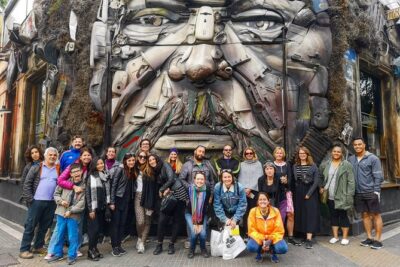
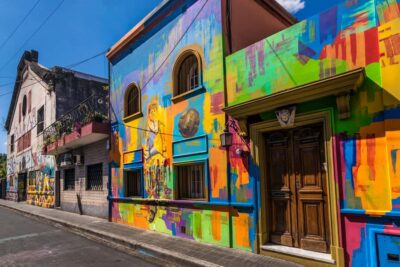
Palermo: Graffiti and Street Art Guided Tour in English
Read our review →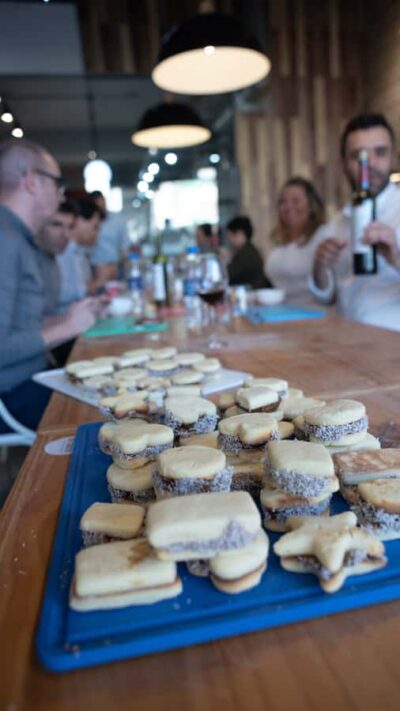

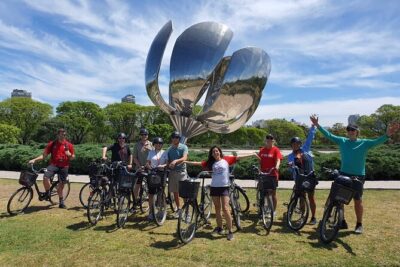
Half-Day Recoleta and Palermo Bike Tour in Buenos Aires
Read our review →
AsadoAdventure and Street Art Tour in Palermo Viejo
Read our review →
BA: Empanadas and Alfajores Cooking Experience in Palermo
Read our review →Browse the lists this tour appears in