
Reviewed · WORKSHOPS
Twilight in Buenos Aires – Photography Workshop
Buenos Aires has a very specific kind of light in the evening, and this workshop is built around timing it right. You’ll learn how to photograph the magic hours in an urban setting, where buildings, street shadows, and bright windows all fight for attention.
I especially like the small group size and the fact you can actually get feedback while you shoot. I also like that the guide, Nicolas, focuses on practical camera use and patient, clear guidance for both architecture and tricky contrasting lighting.
One thing to consider: this experience depends on good weather. If the light and skies don’t cooperate, you may be offered a different time or a full refund, so keep your schedule flexible.
Key points
- Magic hours in an urban setting, with help choosing what to frame and when
- Hands-on composition and exposure guidance as evening light shifts
- Architecture-focused tips for scenes with bright and dark areas
- Small group (1 to 6) so you get individualized attention
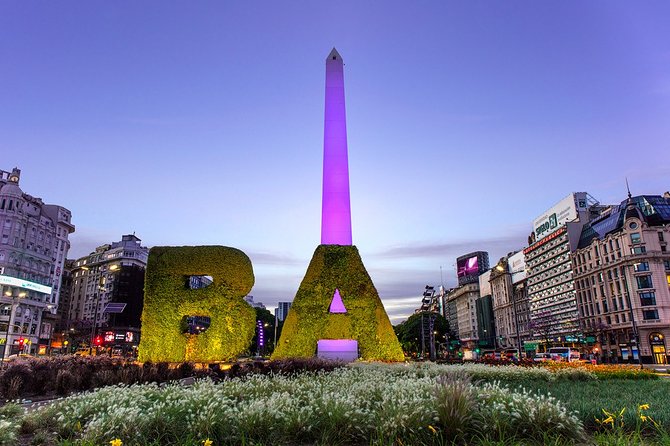
- Stops across central landmarks and city glow, including Obelisco, Casa Rosada, and Puerto Madero
- Tripods available on request (2 free) so you can stabilize at dusk
Buenos Aires Twilight, Up Close and Photographed the Right Way
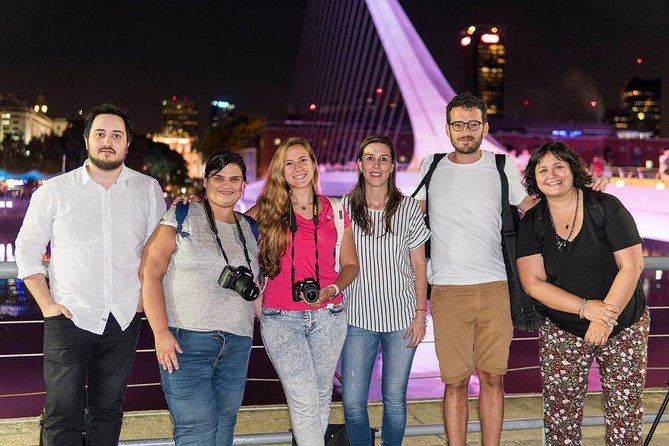
This is not a museum-style photography talk. It’s a short, focused walk-and-shoot session timed for the exact moment when the city starts looking cinematic. You’ll work during the window when shadows soften, highlights start to separate nicely, and the first evening lights begin to matter.
What makes it especially appealing for a photo trip is that Buenos Aires gives you variety in a small area. You get monumental landmarks, wide avenues, and waterfront-style atmosphere. So you can practice the same core skill, exposure control, across totally different lighting challenges.
And because the format is built for photography enthusiasts from beginner to advanced, you’re not stuck in a one-size-fits-all class. If you’re new, you’ll still get a clear path. If you’ve been shooting for a while, you can refine how you see and how you set up your camera when the light changes fast.
A few more Buenos Aires days worth comparing
- Private Photography Tour in Buenos Aires
★ 5.0 · 35 reviews - Photo Session in Buenos Aires
★ 5.0 · 26 reviews - Your Personal Photographer in Buenos Aires
★ 5.0 · 24 reviews
The 3-Hour Format That Keeps You Shooting, Not Waiting
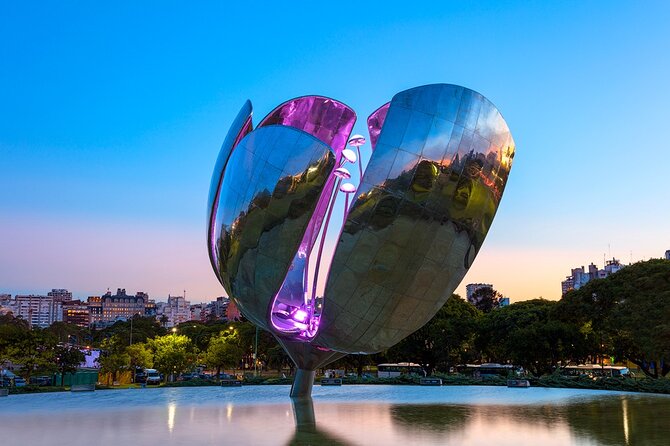
The workshop runs about 3 hours, from 6:00 PM to 9:00 PM, and it ends back at the meeting point. That timing matters because twilight is brief. If you arrive late or spend too long listening, you miss the most teachable light.
Right after you meet, you get an intro on photography if you need it, followed by a detailed explanation of what you’re going to do. Then the group evaluates where to position tripods and where to stand for the best angles. This is a key part of the value: the instruction isn’t only technical, it’s also about place and viewpoint.
The loop is simple and effective. You get guidance, you shoot, you adjust, you shoot again. By the time evening lights begin dropping the overall contrast, you’ll already have practiced how to keep control of the exposure while the scene changes.
What You’ll Learn About Twilight (And Why It’s Harder Than It Sounds)
Twilight sounds easy until you try photographing it. The tricky part is that the sky, the buildings, and the street lighting do not shift together. The result is mixed lighting: cooler ambient light in the background, warm light from lamps and signage, and bright highlights on facades.
This workshop is designed to teach you the difference between the types of twilight in practical terms. Instead of only naming phases, the guide helps you translate that timing into camera choices. You’ll learn how to compose a scene, then keep the correct exposure while evening lights go down.
You’ll also work on scenes with contrasting lighting, where one part of your frame is much brighter than another. The goal is not to make everything look identical. The goal is to understand what you’re exposing for so your final image looks intentional, not random.
From the feedback I’ve seen about this experience, a big strength is how the guide gives clear tips for architecture and explains how small position changes can make a big difference. That is often the difference between a tourist snapshot and a photo that looks like you planned the moment.
Stop-by-Stop: Obelisco to Puerto Madero at the Moment the City Glows
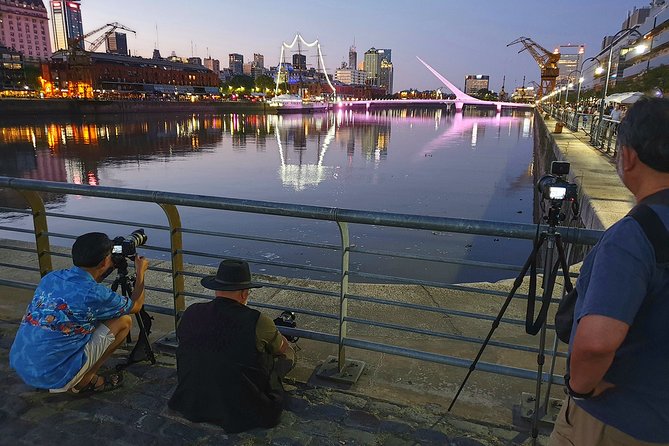
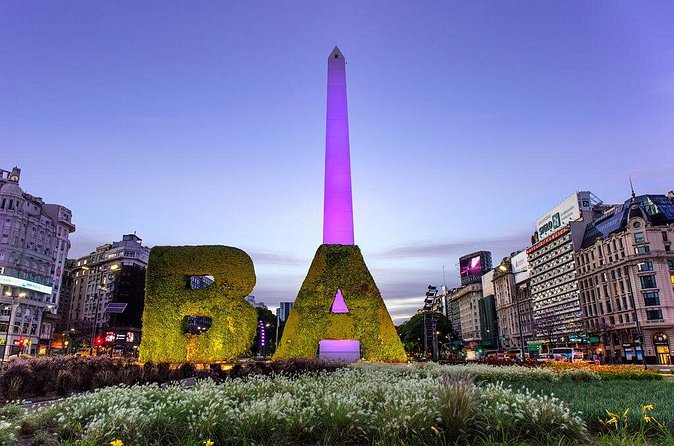
The route covers central Buenos Aires landmarks and then pushes toward the look of a city that’s lit up, not just naturally lit. You’ll be stopping for shooting at several points, including Obelisco, Casa Rosada, Plaza de Mayo, Avenida de Mayo, and Puerto Madero.
Here’s what each stop is likely to give you as a photographer, and what you should watch for.
A different sort of day out of Buenos Aires:
- Local Foodie Adventure in Buenos Aires with Sherpa Food Tours
★ 5.0 · 6,875 reviews - Buenos Aires City Private Tour with Local Guide
★ 5.0 · 3,475 reviews - Buenos Aires Small-Group City Tour
★ 5.0 · 2,226 reviews - Buenos Aires Hop-On Hop-Off Bus, Free Walking Tours & Discounts
★ 4.5 · 2,218 reviews
Obelisco: Learn Framing With a Bright Landmark in a Changing Sky
Obelisco is a great first stop because it’s bold, vertical, and easy to identify. It also gives you a clear subject against a bigger urban background. When you shoot it during twilight, you can practice keeping lines straight, controlling highlights, and deciding how much sky to include.
Expect to work on composition and tripod setup early in the session. This is useful because it gives you a baseline before things get darker. Once your camera settings start to shift for evening, you can compare how your earlier images look versus later ones.
Casa Rosada and Plaza de Mayo: Controlled Architecture With Real Contrast
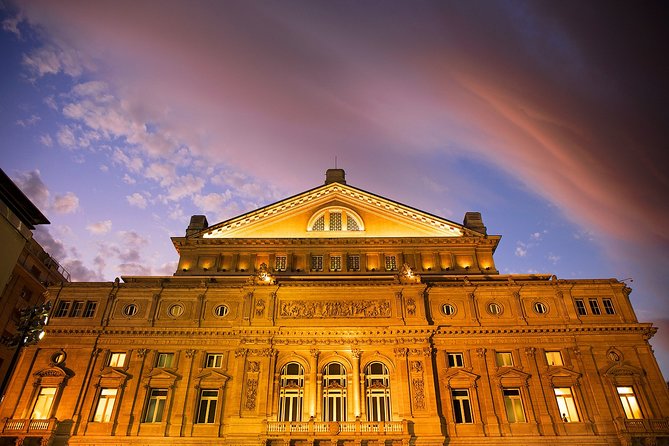
Casa Rosada and Plaza de Mayo bring architecture and open space together. This combination is where your exposure skills get tested. You’ll likely see bright reflective surfaces, shadowed areas under structures, and deeper tones around the edges of the square.
This is also the kind of place where learning the significance of locations helps your photos. When you understand what you’re photographing, you frame with more intention. The guide also explains context and helps you adjust positioning, which matters when you want symmetry, leading lines, or a particular balance between subject and surrounding space.
A practical takeaway here is how to handle mixed brightness. You’re not only photographing a building, you’re managing a scene where several light sources are competing.
Avenida de Mayo: Practice With Avenue Light and Decision-Making
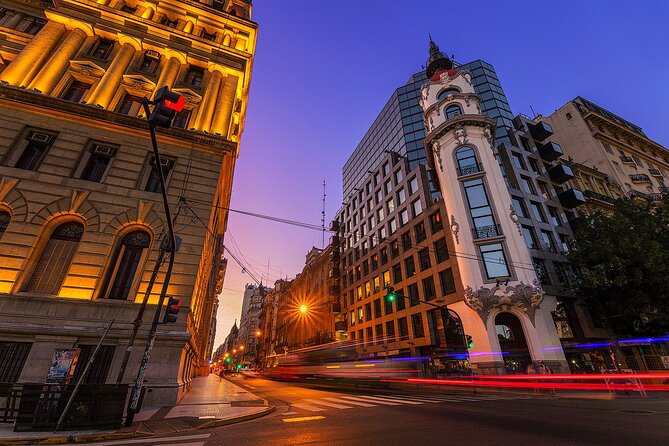
Avenida de Mayo is excellent for practicing how to shoot a wider scene without losing subject control. Avenues add complexity: you get multiple layers of street lighting, more moving traffic-like energy even if you’re standing still, and background elements that can distract.
This is where you’ll learn to compose with choices. Do you emphasize the avenue’s rhythm by keeping multiple elements in frame, or do you isolate one key part? Twilight makes both approaches possible, but your exposure decision will change how the final image feels.
If you’ve ever wondered why two people shot the same avenue and got totally different results, it’s usually because one person exposed with purpose and the other didn’t. This workshop is all about making those decisions explicit.
Puerto Madero: Water and City Lights, Great for Learning Exposure Tradeoffs
Puerto Madero is a strong end-of-route stop because it often shifts the scene from daylight-like to evening glow. Water and reflective surfaces intensify the effects of light changes, so you can see quickly whether your exposure is working.
This is a chance to revisit your earlier settings and refine them. As evening deepens, you’ll likely feel the urge to brighten everything. The guide’s focus on keeping correct exposure helps you avoid that common problem, where images turn too flat or highlights get blown.
You’ll also benefit from practicing stabilization. Even if you don’t use a tripod all the time, knowing when you want it helps you get sharper results at dusk.
Nicolas’ Teaching Style: Clear, Patient, and Actually Fun
What made the experience feel high value in the feedback is the human side of the workshop. Nicolas is described as patient, and the tips are both clear and practical. This matters because photography instruction can get technical fast, and then people either freeze or stop shooting.
Here, you’re encouraged to make slight adjustments to positioning. That’s not abstract advice. It’s the kind of instruction that helps you immediately. Move your viewpoint a few steps, change your angle, and suddenly the light falls better on your subject.
People also mention that the experience was genuinely fun, including lots of laughter. That’s not just a nice detail. When you’re relaxed, you take more photos and experiment more. Twilight photography rewards experimentation, and this workshop gives you permission to try.
Exposure at Dusk: The Skill This Workshop Really Trains
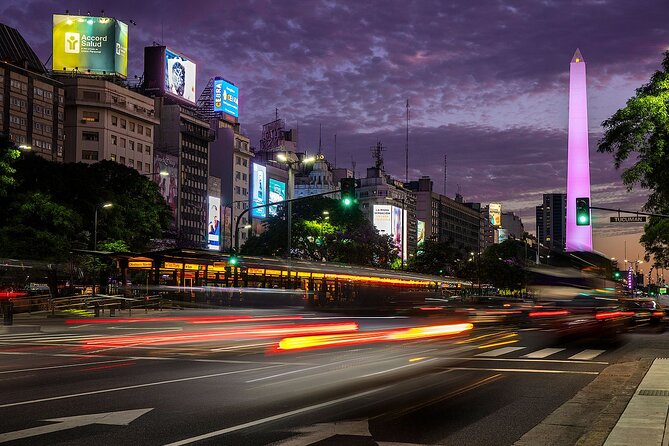
The workshop’s biggest promise is that you’ll learn to keep correct exposure while evening lights go down. That’s the core challenge of twilight photography, and it touches everything else.
In practice, you’re dealing with a scene where:
- the background sky gets darker over minutes
- the city lights start becoming stronger than ambient light
- highlights can appear suddenly in reflective surfaces and windows
- contrast can jump, depending on where you point your lens
The instruction focuses on the idea that you’re not simply pressing the shutter and hoping. You’re composing, then making choices to manage exposure as your environment shifts.
If you’re a beginner, this kind of guidance helps you understand camera features instead of just following random preset settings. If you’re more advanced, it helps you sharpen your decision-making. Either way, you leave with a better sense of how to adjust in real time.
Tripods, Small Groups, and Why the Session Feels Practical
The group stays small, from 1 to 6. That’s a big deal. With fewer people, the guide can notice what your camera is doing and help you adjust without you feeling like you’re being ignored.
Tripods are also available on request, free of charge, with two tripods provided. Even if you travel with your own gear, it’s a helpful safety net. Twilight shots often look best when you’re stable, and not everyone has the same setup.
If you’re deciding whether to bring your own tripod, ask yourself this: do you want sharp, steady results for architecture and longer twilight exposures? If yes, bring it. If no, you can still participate and get support, since tripods are available.
Price and Value: What $175 Buys You in Real Shooting Time
At $175 per person for about 3 hours, you’re paying for a guide plus hands-on photography support in prime light. You’re also paying for the route logic: central landmarks, multiple lighting conditions, and a guided timing window that matters.
This isn’t the kind of experience where you sit for hours and watch someone else shoot. You move through several stops and get feedback while you’re actively photographing. For many people, that is where the value shows up. A good guide can save you hours of frustration.
Also, the cost is easier to justify because the group stays private to your party only. That means your time with the professional travel photographer is focused on you, not a large open group where questions get lost.
Who This Workshop Is Best For
This experience fits best if you want your camera skills to improve through real scenes, not only through reading or classroom practice.
It’s a strong match if:
- you enjoy city photography and want to learn how twilight changes your results
- you’re learning exposure control and want direct help in the field
- you like architecture photos and want tips for challenging contrast
- you travel with a camera but feel stuck on what settings to use as the light shifts
It may feel less ideal if you only want casual sightseeing and do not care about photography instruction. This is a photography workshop first, sightseeing second.
Practical Tips to Get More From the Experience
Here are smart ways to make your time count.
Bring what helps you compose quickly:
- a camera you know enough to operate during low light
- extra memory cards if you shoot a lot during twilight
- a lens that you can use for both landmarks and closer architectural details, if you have options
Arrive ready for fast light changes:
- plan to be at the meeting point early enough to start smoothly
- treat the session like a shooting block, not a relaxed stroll
Think about your goal before you arrive:
- do you want images that emphasize sky tone, or do you want city-light drama
- pick a priority so you can make exposure decisions with purpose
And remember, the guide focuses on adjusting positioning. So don’t be afraid to experiment with small movement. In tight city spaces, a few steps can change everything.
Should You Book Twilight in Buenos Aires?
If you care about photography and you want to learn how to handle twilight in a real city, I think this is a solid booking. The small group size, the focused teaching on exposure as light drops, and the architecture and contrast tips make it feel practical, not generic.
Book it if you want hands-on help across multiple iconic locations, and you like the idea of shooting during the magic hours with a professional guiding your decisions. Skip it if you’re looking for a pure sightseeing tour or you hate any instruction and prefer to wander with no feedback at all.
FAQ
What is the duration of the Twilight in Buenos Aires photography workshop?
It lasts about 3 hours.
How much does it cost?
The price is $175.00 per person.
Where does the tour start and end?
It starts at Av. de Mayo 501, C1066 Cdad. Autónoma de Buenos Aires, Argentina, and it ends back at the same meeting point.
When does it run?
It operates Monday through Sunday from 6:00 PM to 9:00 PM.
How big are the groups?
The group is small, from 1 to 6 people.
Is the tour private?
Yes, it is private, with only your group participating.
Does the tour include a tripod?
Tripods are available on request, and 2 tripods are provided free of charge.
What is included in the price?
A professional travel photographer guide and assistance are included.
Is it suitable for beginners?
Yes. The experience is designed for photography enthusiasts from beginner to advanced.
What happens if the weather is bad?
The experience requires good weather. If it is canceled due to poor weather, you will be offered a different date or a full refund.
Recently reviewed around Buenos Aires
- Meet Locals: Language Exchange Café in Buenos Aires★ 5.0 · 10 reviews
- Madero Tango Show Including Executive Dinner In Buenos Aires★ 3.5 · 10 reviews
- Piazzolla Tango Show Only In Buenos Aires★ 4.5 · 10 reviews
- Esquina Homero Manzi Tango Show Ticket Including Optional Dinner in Buenos Aires★ 4.5 · 10 reviews
- Private City Tour & Transfer to the International Airport★ 5.0 · 10 reviews
- VIP Dinner & Tango Show at El Viejo Almacen★ 4.5 · 10 reviews
- Buenos Aires City Tour★ 4.5 · 11 reviews
- Premium service Buenos Aires city tour for small groups★ 4.0 · 11 reviews
Workshops, compared.

Cooking Class Designed by Michelin Chef @ Argentine Experience
Read our review →
Polo Match, BBQ and Lesson Day-Trip from Buenos Aires
Read our review →

Private Cooking Lessons and Food Tasting in Buenos Aires
Read our review →
3-Hour Buenos Aires Empanadas and Alfajores Cooking Class
Read our review →Browse the lists this tour appears in