
Reviewed · HISTORICAL TOURS
Argentine Art History Tour in Retiro neighborhood
If you like your art history with real street-level context, this Retiro tour is a smart way to see how Buenos Aires thinks. You start with the famous Edificio Kavanagh and its legends, then shift to contemporary galleries and the 1960s avant-garde scene that made this neighborhood matter.
Two things I really like: the route connects architecture to ideas, not just names, and the pace is human. You also get moments built for conversation, including the chance to meet artists or curators when a stop allows it, and that small-group size helps.
One consideration: because the tour centers on looking closely and discussing exhibitions, it can feel less satisfying if you prefer big museum halls and long, quiet time with masterpieces.
Key highlights you will actually feel
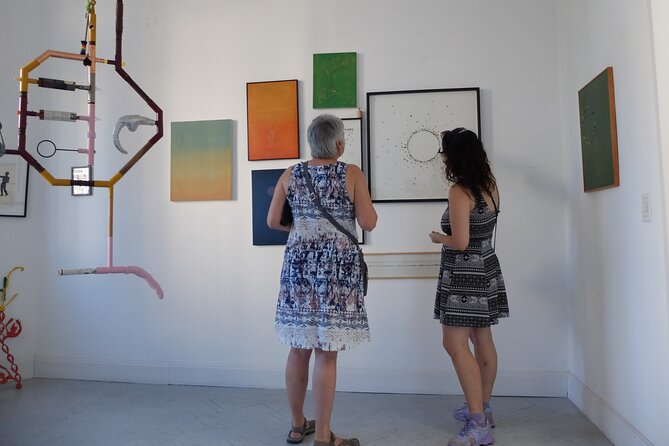
- Retiro as a living art scene, moving from iconic buildings to working galleries
- Di Tella legacy in context, with Cold War and US cultural influence woven into the story
- Close-up conversation time, and sometimes talks with gallerists or curators
- Six focused stops in about 3 hours, with short, well-timed viewing windows
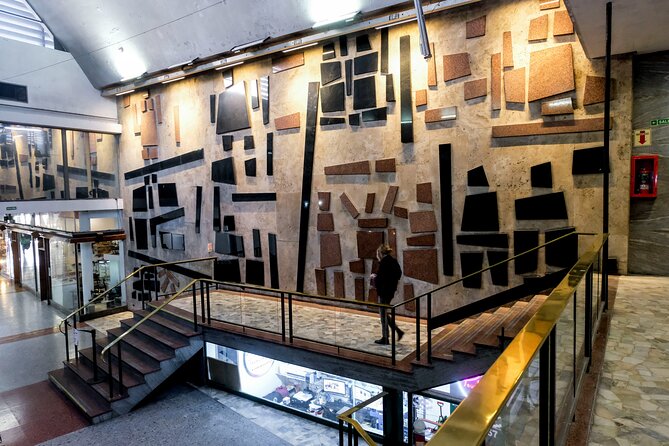
- Finale under the Galerías Pacífico dome murals, where art shows up in a commercial landmark
- Admission tickets included for the key visits, so you are not constantly doing extra research
Retiro at 3:00 pm: a short, story-led art walk that makes you look twice
This tour is built for late afternoon energy, starting at 3:00 pm at Plaza San Martín (Retiro) and finishing at Galerías Pacífico (Av. Córdoba 550). It lasts about 3 hours, and it keeps the group small, with a maximum of 12 people. That matters because you are not sprinting between stops, and you can ask real questions when the guide is covering an artwork or a building detail.
You will walk through Retiro, but the emphasis is not on sightseeing like a checklist. The emphasis is on how art, architecture, and power connect in Buenos Aires, especially from the 1960s onward. With this kind of structure, you come away not just knowing facts, but learning how to read an exhibition and a façade the way locals do.
More Historical Tours in Buenos Aires
- Historical Sherpa Food Tour of San Telmo with Street Food, Drinks
★ 5.0 · 920 reviews - Nazis in Buenos Aires: a historical walking tour
★ 4.9 · 193 reviews - San Telmo: Historical Guided Tour with Street Food & Drinks
★ 5.0 · 87 reviews
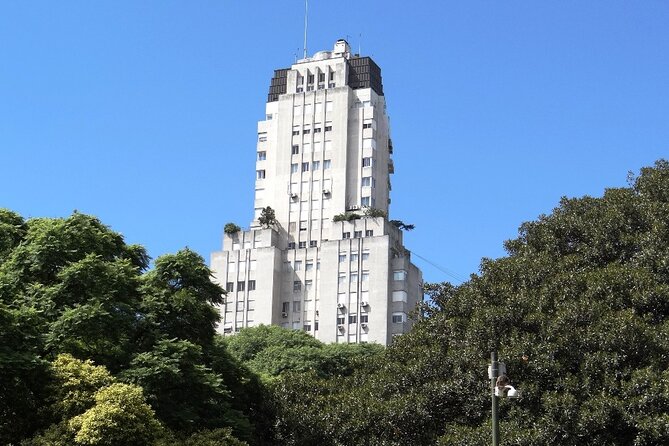
Edificio Kavanagh: Art Deco glamour, plus the legend that built the myth
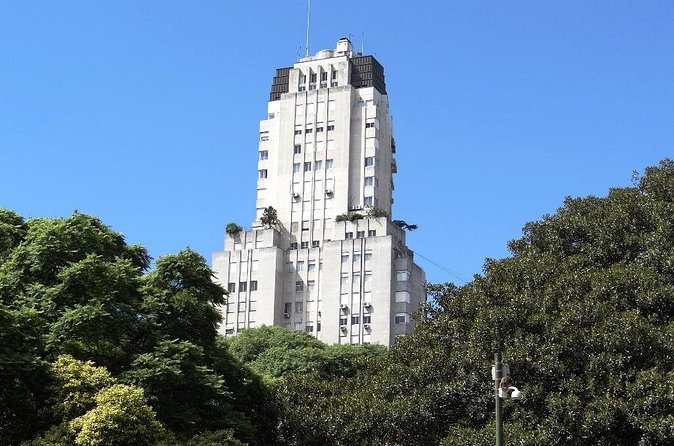
You begin right in front of the Kavanagh Building, which is a major architectural landmark in Buenos Aires. The tour starts with introductions and neighborhood context, then zooms into the building itself. Expect a discussion of why it became cultural heritage, not just a striking high-rise.
Here is what you can focus on during this stop:
- Look at the building as a statement of modern ambition in the city.
- Listen for the construction legend the guide shares, because the story explains why the building became part of Buenos Aires folklore.
This first stop is only about 15 minutes, so treat it like a fast “why this matters” briefing. If you go in expecting an architectural lecture, you might feel slightly underfed. If you go in ready to notice details and pick up the big meaning quickly, it sets the tone perfectly.
Plazoleta Alberto Ginastera: Peralta Ramos and the sculpture that mixes art with life
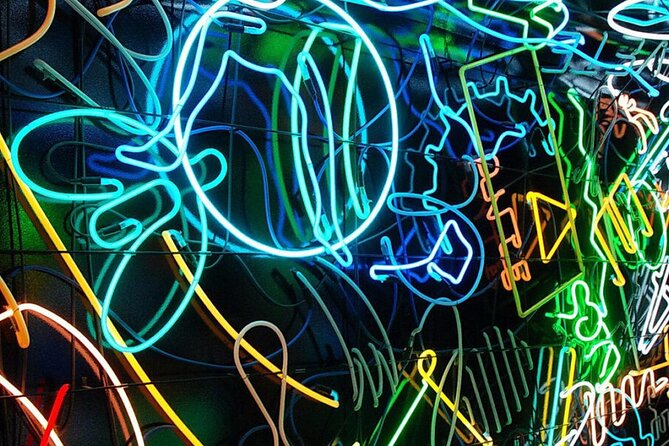
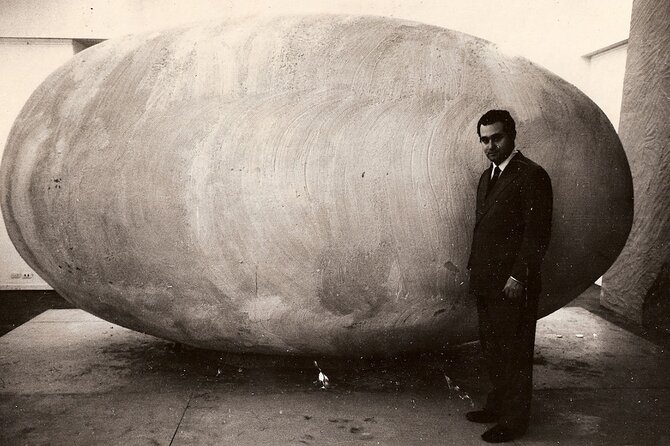
Next you move to Plazoleta Alberto Ginastera. The focus is the sculpture Nosotros Afuera by Federico Manuel Peralta Ramos. This is where the tour starts pulling you from architecture into the mood of Argentine modern art.
The guide frames Peralta Ramos in human terms, including his belief that art and life were inseparable. That is not just personality trivia. It connects directly to why the 1960s experimental spirit felt urgent, even a little chaotic, and why Retiro became a stage for bolder, more provocative ideas.
You will also hear about his connection to the Di Tella Institute in the 1960s. The sculpture stop works well because it gives you a concrete object to hold in your head while the tour later talks about institutions, politics, and movements.
Stop time here is around 20 minutes, which is enough to understand the work without turning it into a long detour. If you are the type who likes art theory but also needs a real “anchor,” this sculpture is a good one.
Aldo de Sousa gallery: current exhibitions, and why galleries are different from museums
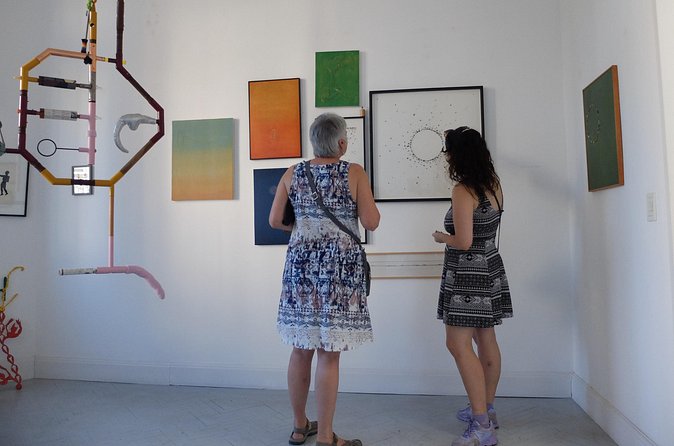
The third stop is a visit to a contemporary art gallery (Aldo de Sousa). Expect to spend about 40 minutes here, which is your main looking time. The tour centers on whatever exhibition is on view during your visit, so you are responding to art that is alive right now, not just history behind glass.
During this section, you will:
- Analyze artworks with an eye on social, political, and economic contexts
- Learn how galleries function inside the art world, including how they represent artists
- Contrast galleries with museums, since they are not the same machine for public culture
What makes this stop valuable is that you are taught how to think about the art system, not just the artworks. You start to see a gallery show as an argument. Even if the works feel difficult at first, the guide gives you language to interpret choices like what gets displayed, how it is presented, and what that might signal.
When possible, the tour may include conversation with gallerists or curators. That piece is repeatedly praised because it turns the visit from watching to understanding. You can ask practical questions and get answers tied to the exhibition itself.
A different sort of day out of Buenos Aires:
- Local Foodie Adventure in Buenos Aires with Sherpa Food Tours
★ 5.0 · 6,875 reviews - Buenos Aires City Private Tour with Local Guide
★ 5.0 · 3,475 reviews - Buenos Aires Small-Group City Tour
★ 5.0 · 2,226 reviews - Buenos Aires Hop-On Hop-Off Bus, Free Walking Tours & Discounts
★ 4.5 · 2,218 reviews
Galerías Larreta and the former Di Tella Institute: Cold War pressure on Argentine art
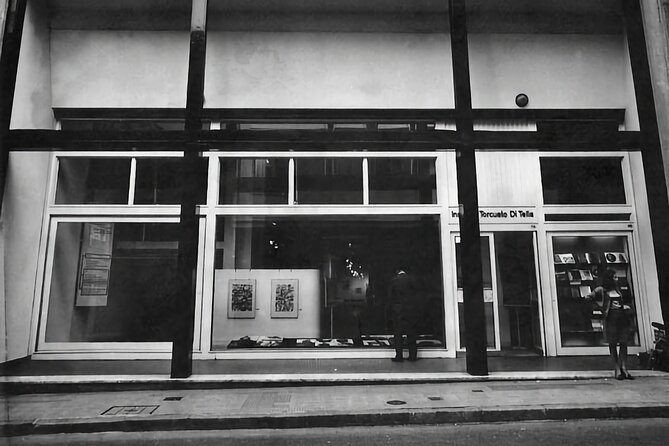
Stop four brings you back to a major “where history happened” moment: the area in front of the former Di Tella Institute, explained through Galerías Larreta. This part is about 20 minutes, but it is information-dense because it connects the art scene to international forces.
You will hear about the 1960s international context, including the Cold War and the cultural influence of the United States in Latin America. The guide introduces the Di Tella Generation, then recounts key episodes and milestones of the artistic avant-gardes from that era.
This is one of those stops where you can feel the tour changing gears. Earlier, you were looking at objects and exhibitions. Now you are learning how institutions and politics shape what artists can do, what audiences expect, and what people are willing to risk.
The takeaway is simple but powerful: art, politics, and power are connected. Retiro becomes more than a neighborhood. It becomes a center where cultural change gathered momentum.
Vía Monte Galería: how to read scale, materials, and curatorial choices
Next is Vía Monte Galería, another contemporary art stop, also about 40 minutes. The format stays “look and interpret,” but the emphasis shifts to how contemporary artists build meaning using materials, scale, and display choices.
Here is what you are training yourself to notice:
- How physical form can signal political or personal themes
- How curatorial decisions affect your reading of the work
- How exhibitions operate as part of the art field, not just a neutral container
The guide also ties this stop back to the 1960s legacy, specifically how current artists engage with or challenge Argentine modern tradition. That link matters because it prevents you from treating contemporary art as disconnected from the past. Instead, you learn to see it as a continuation of arguments, not a brand-new language with no roots.
This stop is where the tour can feel most “transformative” for you as a visitor, because you start leaving with a method for viewing. Not every person will love that. If you just want names and dates, you may find it a little more demanding. If you enjoy thinking while you look, this is a highlight.
Galerías Pacífico: murals over the dome and the lesson that art lives beyond museums
The final stop ends at Galerías Pacífico, a landmark building from 1891 inspired by the big Parisian department stores. Instead of ending with another contemporary gallery, the tour pivots back toward a different kind of art experience: mural work in a public-facing, commercial space.
You spend about 20 minutes here, and the focus is the dome murals painted in the late 1940s by major Argentine artists, including Antonio Berni, along with Spilimbergo, Castagnino, and Urruchúa. Standing beneath the dome is the point. It makes the idea real: art does not belong only to museums. It also occupies commercial buildings, transitional spaces, and everyday places.
This ending makes the whole tour click. Earlier you learned about galleries and contemporary exhibitions as active parts of culture. Now you see how art was once integrated into a high-traffic public interior, turning a shopping landmark into a cultural stage.
If you remember one thing from the entire walk, make it this: Retiro’s art story is built into the neighborhood’s architecture and institutions. Not separate from them.
Why this tour feels like value at $75
At $75 per person for about 3 hours, this is priced in a way that can work well if you like guided context, small-group attention, and included entry. The fact that admission tickets are included at the key stops lowers the friction. You are paying for the experience, not for a pile of separate costs.
The other value factor is the structure. You get:
- Iconic architecture (Kavanagh)
- A sculptural stop tied to experimental art culture (Peralta Ramos)
- Two contemporary gallery visits, built around current exhibitions and how art connects to society
- Institutional history that explains why the 1960s mattered (Di Tella)
And the group size capped at 12 people means it does not turn into a lecture for a crowd. It is designed to keep you in the conversation. The guide behind this tour is Tamara Kerzberg, and the tour is clearly shaped around thoughtful explanation, strong organization, and a relaxed pace that still covers a lot.
Who should book, and who may prefer a different afternoon
This tour is a great match if you:
- Want Argentine art history that moves through Retiro, not just standard museum routes
- Like contemporary art, but also want the 1960s context that explains how people got here
- Enjoy walking and learning with a guide who can connect artworks to broader social and political forces
- Prefer smaller groups and the possibility of meeting a curator or gallerist when available
It might not fit if you:
- Want long stays in one museum collection
- Only want purely factual timelines with no interpretation and no art-system discussion
- Need lots of downtime. This tour has a steady rhythm and short stops, so the learning stays front and center.
Should you book this Retiro art history tour?
Yes, if you want a smart, guided way to understand how Buenos Aires art culture works across eras, with real places to anchor the ideas. The Kavanagh and Galerías Pacífico stops give you visual drama, while the contemporary gallery sessions give you a practical way to look at what is on view today. The Di Tella framing helps you connect the dots between experimentation and the political weather of the time.
If you are curious, this is one of those afternoons where the walk itself becomes part of the learning. You will finish with more than photos. You will finish with better questions for the art you see next.
FAQ
When and where does the tour start, and where does it end?
It starts at 3:00 pm at Plaza San Martín (Retiro). It ends at Galerías Pacífico, Av. Córdoba 550.
How much is the tour?
The price is $75.00 per person.
How long is the experience?
The tour is about 3 hours.
What stops are included?
The route includes: Edificio Kavanagh, Plazoleta Alberto Ginastera (Nosotros Afuera), Aldo de Sousa, Galerías Larreta (former Di Tella Institute area), Vía Monte Galería, and Galerías Pacífico.
Are admission tickets included?
Yes. Admission tickets are included for the listed tour stops.
Is it a small-group tour, and is it suitable for most people?
It is limited to a maximum of 12 travelers. The tour notes that service animals are allowed, it is near public transportation, and most travelers can participate.
Is there free cancellation?
Yes. There is free cancellation, and you can cancel up to 24 hours in advance for a full refund. Canceling less than 24 hours before the start time does not result in a refund.
Quick decision
Book it if you want a guided art route that connects architecture, 1960s institutional history, and current exhibitions in Retiro. Skip it if you want a slow, museum-only afternoon with minimal discussion, because this is built for conversation and looking with purpose.
Recently reviewed around Buenos Aires
- Meet Locals: Language Exchange Café in Buenos Aires★ 5.0 · 10 reviews
- Piazzolla Tango Show Only In Buenos Aires★ 4.5 · 10 reviews
- Madero Tango Show Including Executive Dinner In Buenos Aires★ 3.5 · 10 reviews
- Private City Tour & Transfer to the International Airport★ 5.0 · 10 reviews
- Esquina Homero Manzi Tango Show Ticket Including Optional Dinner in Buenos Aires★ 4.5 · 10 reviews
- VIP Dinner & Tango Show at El Viejo Almacen★ 4.5 · 10 reviews
- Premium service Buenos Aires city tour for small groups★ 4.0 · 11 reviews
- Buenos Aires City Tour★ 4.5 · 11 reviews
Historical Tours, compared.
Historical Sherpa Food Tour of San Telmo with Street Food, Drinks
Read our review →
Nazis in Buenos Aires: a historical walking tour
Read our review →
San Telmo: Historical Guided Tour with Street Food & Drinks
Read our review →
Recoleta Cemetery – Small Group Tour of History & Secrets
Read our review →
Private Evita and Peronism Historical Tour in Buenos Aires
Read our review →Browse the lists this tour appears in