
Reviewed · HISTORICAL TOURS
Private Evita and Peronism Historical Tour in Buenos Aires
Eva Peron is not just a figure in Argentine history. In Buenos Aires, her story lives in the buildings, cemeteries, and political landmarks you pass every day. This private 3-hour tour connects the headlines to real places, with a guide who keeps the story grounded in how Argentina’s 20th-century politics worked.
Two things I really like: you get a professional historian guide and hotel pickup, so you are not piecing together logistics before you even start learning. And because it is private, you can ask your questions without waiting for a group moment. The one thing to watch is that not every entrance is included, so you should plan for separate ticket costs like the Museo Evita.
Key Highlights You Should Know Before You Go
- Private format means your guide can tailor answers to your interests in Evita and Peronism
- Historian-guided storytelling focused on Argentina’s politics, not just a biography
- Convenient hotel pickup and drop-off makes the 10:00 am start easier
- Casa Rosada and Recoleta Cemetery are major anchors for understanding her era
- Museo Evita costs extra (listed at $8 per person), but other stops are free
Why This Evita and Peronism Tour Feels Different From a Basic Sightseeing Walk
If you only do museums and photo stops in Buenos Aires, you can end up with a pile of names and dates. What I like about this tour is that it treats Evita and Peronism as something you can actually trace through the city. You move from the seat of power toward the places that became part of her public legacy.
The tone matters. Your guide is not just reciting. They explain why these locations mattered to the political story, and they connect that to what Peronism stood for during its rise and peak. In the guide feedback you can see this strength clearly. Guides like Julieta are praised for being extremely knowledgeable and answering lots of questions, and Leandro gets high marks for being pleasant, informative, and grounded in the history and politics behind Evita and Juan Peron.
That makes this a better choice if you want to understand the whys, not just the what. It is also a smart pick for your first or second day in Buenos Aires, because it helps you decode what you will later see on your own.
One more practical point: this is only your group. That means the pace stays sensible, and you can ask follow-ups without the guide having to move on quickly.
More Historical Tours in Buenos Aires
- Historical Sherpa Food Tour of San Telmo with Street Food, Drinks
★ 5.0 · 920 reviews - Nazis in Buenos Aires: a historical walking tour
★ 4.9 · 193 reviews - San Telmo: Historical Guided Tour with Street Food & Drinks
★ 5.0 · 87 reviews
Price and Value: What You’re Really Paying for at $133 per Person
At $133 per person for about three hours, this is not a budget museum pass. You are paying for three things that add up fast in a city like Buenos Aires.
First, you are paying for a professional historian guide. That is the core value here. You can visit places like Recoleta Cemetery on your own, but it is harder to understand how Evita’s life connects to the broader political movement without an expert guiding the story.
Second, you are paying for hotel pickup and drop-off. In the real world, that saves time and stress. It also helps you avoid the common problem of starting your day already tired.
Third, you are paying for a private experience. Even if you are a small group, private format usually makes the learning more efficient. You are not waiting for others to catch up, and your questions do not get squeezed.
Now the cost side you should plan for: the Museo Evita entrance fee is $8 per person, and the Casa Rosada stop notes that admission tickets are not included. Other stops listed as free help balance this out.
So in plain terms: you are paying to get your time, access, and context wrapped together. If you care about Argentine politics, this price makes more sense than it might for a purely scenic route.
Pickup, Timing, and How the 10:00 am Start Works With a 3-Hour Tour
The tour starts at 10:00 am and runs about 3 hours. The schedule is tight enough to feel focused, but not so packed that you are constantly rushing. It is built around five stops, with shorter on-site windows for the most important landmarks.
Pickup is available from any centrally located hotel or apartment in Buenos Aires. That matters because Buenos Aires can be spread out, and travel time eats into a half day quickly. Here, the tour handles the transfer, and you are not trying to coordinate meeting points on your own.
One small benefit that can make your life easier: the tour uses a mobile ticket. That helps if you do not want to track printed confirmations while you are walking around.
If you prefer a relaxed pace, this might still feel slightly structured, because it is designed to cover multiple political touchpoints. That said, the private format usually makes it easier to slow down for the parts you care about most.
Stop 1, Casa Rosada: The Political Stage Where Evita’s Era Hits Home
Your first major anchor is Casa Rosada, the presidential palace. Even if you have never studied Peronism in depth, this is the kind of place that instantly signals political power. You get about 15 minutes here, and admission tickets are not included.
What you should expect during this stop is more than sightseeing. The goal is to set the context for why Evita matters politically, not just culturally. Casa Rosada is a strong starting point because it pulls the story from the personal into the public.
Possible drawback: because admission tickets are not included, you may need to buy your entry separately. That is not a deal-breaker, but it is something to keep in mind so you do not lose time later in the day.
If you like history that connects to real power structures, you will appreciate starting here. If you only want to focus on Evita’s life at a personal level, you might find this first stop feels more political than emotional. Either way, it sets up the rest of the route.
A different sort of day out of Buenos Aires:
- Local Foodie Adventure in Buenos Aires with Sherpa Food Tours
★ 5.0 · 6,875 reviews - Buenos Aires City Private Tour with Local Guide
★ 5.0 · 3,475 reviews - Buenos Aires Small-Group City Tour
★ 5.0 · 2,226 reviews - Buenos Aires Hop-On Hop-Off Bus, Free Walking Tours & Discounts
★ 4.5 · 2,218 reviews
Stop 2, Museo Evita: Why the $8 Ticket Can Be Worth It
Next up is Museo Evita, with about 30 minutes on site. The entrance fee is $8 per person, so you are budgeting for this portion directly.
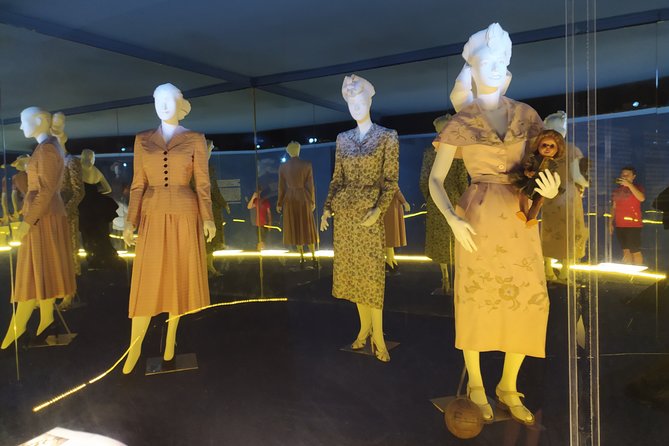
This stop is where the story starts to show up in objects and curated presentation, which can make the themes click faster than purely talking about politics. You are not just hearing about Evita. You are seeing how her image and legacy were constructed and preserved.
A useful tip here: treat the museum time as your chance to translate what the guide is explaining. If you are the kind of person who likes to connect narratives to details, this stop is where you can start matching the political storyline to specific elements of her life.
The time is limited, so do not try to read every label like you are writing a term paper. Instead, look for the parts that answer your questions. If you have a curiosity about Peronism’s appeal, or how Evita shaped public perception, you will probably find the museum helps.
Also, because this is a private guided tour, you can ask your guide what to focus on before you go inside. That is the kind of practical advantage that makes the $8 feel smaller.
Stop 3, Facultad de Ingenieria: A Quick Stop With a Reason Behind It
Your third stop is the Facultad de Ingenieria, with around 15 minutes. Admission is listed as free.
This is one of those stops where the timing tells you something. It is not a long museum-style visit. It is a context stop, likely used to connect the political story to institutions and public life in Buenos Aires during Evita’s era.
Because the tour keeps moving, you should come in with a mindset of listening for the “why this matters” explanation. If you tend to get bored by quick exterior stops, this one might feel short. But it is short by design, to keep the tour moving toward the bigger emotional and symbolic landmarks.
If you want your tour to cover both politics and cultural impact, this kind of institutional stop is where that balance happens.
Stop 4, La Recoleta Cemetery: Where Memory Takes Physical Form
Then you reach La Recoleta Cemetery, where you spend about 20 minutes. Admission is listed as free.
Recoleta is one of Buenos Aires’s most famous cemetery areas, and it carries heavy symbolism. In a tour focused on Evita, the cemetery stop helps you understand how memory, status, and national identity can all end up in the same place.
This is also where the tour gets more reflective. Even if you do not normally enjoy cemeteries, the guide framing matters. With a historian guiding you, the focus tends to be on how Evita’s story shifted from public life to lasting legacy.
Because the stop is free, it is also a strong value moment. You are getting one of the city’s standout locations without another ticket cost.
One practical consideration: cemeteries can mean uneven ground and lots of walking. Wear shoes that make you comfortable standing still when you want to listen.
Stop 5, Eva Peron’s Tomb: The Final Symbol, and What You Should Notice
Your last stop is Eva Peron’s Tomb, about 10 minutes, and it is listed as free.
Ten minutes sounds brief, and it is. But when the location is this specific, the goal is usually focused observation. This is the point where the political storyline ends for many people and becomes personal meaning.
If you want the tour to make sense end-to-end, this last stop should feel like a payoff. Casa Rosada gives the power context. Museo Evita connects the story to curated memory. Recoleta gives the physical place where legacy becomes permanent. Then Evita’s tomb turns everything from explanation into a final, quiet anchor.
If you are hoping for a long time here, you might feel you are leaving quickly. But the structure makes sense for a 3-hour tour with multiple major stops. Also, with private format, you can often ask your guide a question right at the spot and get an answer in context, instead of later in a vague way.
The Guides Matter: How Julieta and Leandro’s Styles Show Up in the Experience
One of the clearest themes from the feedback is that people love the guide’s command of the subject.
Julieta is highlighted for being extremely knowledgeable and for answering a lot of questions. That is a big deal on a tour about politics, because it is easy to get stuck if the guide cannot explain the connections clearly. The other standout is that she shows and explains the places tied to Evita during her time in Buenos Aires, which is exactly what you want on a route like this.
Leandro is praised for being pleasant and informative, with a focus on Argentine politics centered on Evita and Juan Peron. That matches the tour’s promise of helping you understand Peronism as more than a personality story.
So here is what you should do as a participant: come with at least one question you actually care about. For example, you can ask how Peronism worked socially, or why Evita mattered politically. Then listen for the guide to connect those ideas to what you are seeing outside your window.
In a private format, your questions shape the experience, not just the route.
How You Can Prepare to Learn More (Without Turning It Into Homework)
You do not need to be an Argentina expert to enjoy this tour. But you will get more if you arrive with a sense of what you want answered.
Here are a few ways to prepare that stay light:
- Pick one topic you want explained, like Evita’s role in public life or how Peronism appealed to people
- Decide if you want the focus to be more political or more biographical
- Bring comfortable shoes and be ready for short walking segments between stops
Once you are on the tour, keep your questions simple and specific. Ask something like why a location was chosen for the story, then let the guide lead. With a historian guide, that kind of question usually earns you a strong explanation.
Also remember the ticket reality: Museo Evita has an extra fee, and Casa Rosada admission is not included. If you show up knowing that, you stay in the learning mode instead of dealing with small surprises.
Who This Tour Is Best For in Buenos Aires
This is a great fit if you:
- Want to understand Argentine politics through the lens of Evita and Peronism
- Like guided context at historic sites, not just browsing on your own
- Prefer a private tour where you can ask questions freely
- Are visiting for a short time and want a focused route through the most meaningful places
If you are mainly looking for photography and broad city highlights, you might find the political framing more intense than you expected. But if you do want depth, this route gives it quickly, in a manageable 3-hour format.
It is also ideal if you are traveling with someone who likes history, politics, or biography but has trouble turning big national stories into something understandable. A good guide makes that translation.
Should You Book This Private Evita and Peronism Tour?
Book it if Evita and Peronism are on your “must understand” list. The private format, historian guide, and hotel pickup make it a practical way to get real context instead of wandering around historic sites without a thread.
I would hold back if you are allergic to extra ticket costs or if you dislike structured tours with fixed time windows for each stop. Casa Rosada admission is not included, and Museo Evita has an $8 entrance fee, so you should plan for that.
If you are the type who likes asking why, and you want someone like Julieta or Leandro to connect the dots for you, this tour is a strong match.
FAQ
How long is the Private Evita and Peronism Historical Tour?
It’s approximately 3 hours.
Is this tour private or shared?
It is private, meaning only your group participates.
Do you offer hotel pickup and drop-off?
Yes. Pickup and drop-off are included, and you can be picked up from any centrally located hotel or apartment in Buenos Aires.
What language is the tour offered in?
The tour is offered in English.
Are tickets for every stop included?
No. Casa Rosada admission tickets are not included, and Museo Evita has a separate entrance fee.
How much is the Museo Evita entrance fee?
The Evita Museum entrance fee is listed at $8.00 per person.
Which stops are free?
Facultad de Ingenieria, La Recoleta Cemetery, and Eva Peron’s Tomb are listed as free.
What is the cancellation policy?
You can cancel for a full refund up to 24 hours before the experience starts.
Recently reviewed around Buenos Aires
- Join the mate round and discover its ritual the Argentine way★ 5.0 · 3 reviews
- Shore Excursion: Buenos Aires, Customizable Private City Tour★ 5.0 · 3 reviews
- Carlos Gardel Tango Show Only In Buenos Aires★ 5.0 · 3 reviews
- Dinner Tango Show + Wine Tasting in Buenos Aires★ 4.0 · 3 reviews
- Sailing on the Rio de la Plata Postcards from Buenos Aires★ 5.0 · 3 reviews
- Private City Tour in Buenos Aires Including Lunch in Puerto Madero★ 5.0 · 3 reviews
- Private City Tour with Local Guide in Buenos Aires★ 5.0 · 3 reviews
- El Viejo Almacen Tango Show With Transfers From Port & Hotels In Buenos Aires★ 5.0 · 3 reviews
Historical Tours, compared.

Historical Sherpa Food Tour of San Telmo with Street Food, Drinks
Read our review →
Nazis in Buenos Aires: a historical walking tour
Read our review →
San Telmo: Historical Guided Tour with Street Food & Drinks
Read our review →
Recoleta Cemetery – Small Group Tour of History & Secrets
Read our review →
Private Evita and Peronism Historical Tour in Buenos Aires
Read our review →Browse the lists this tour appears in